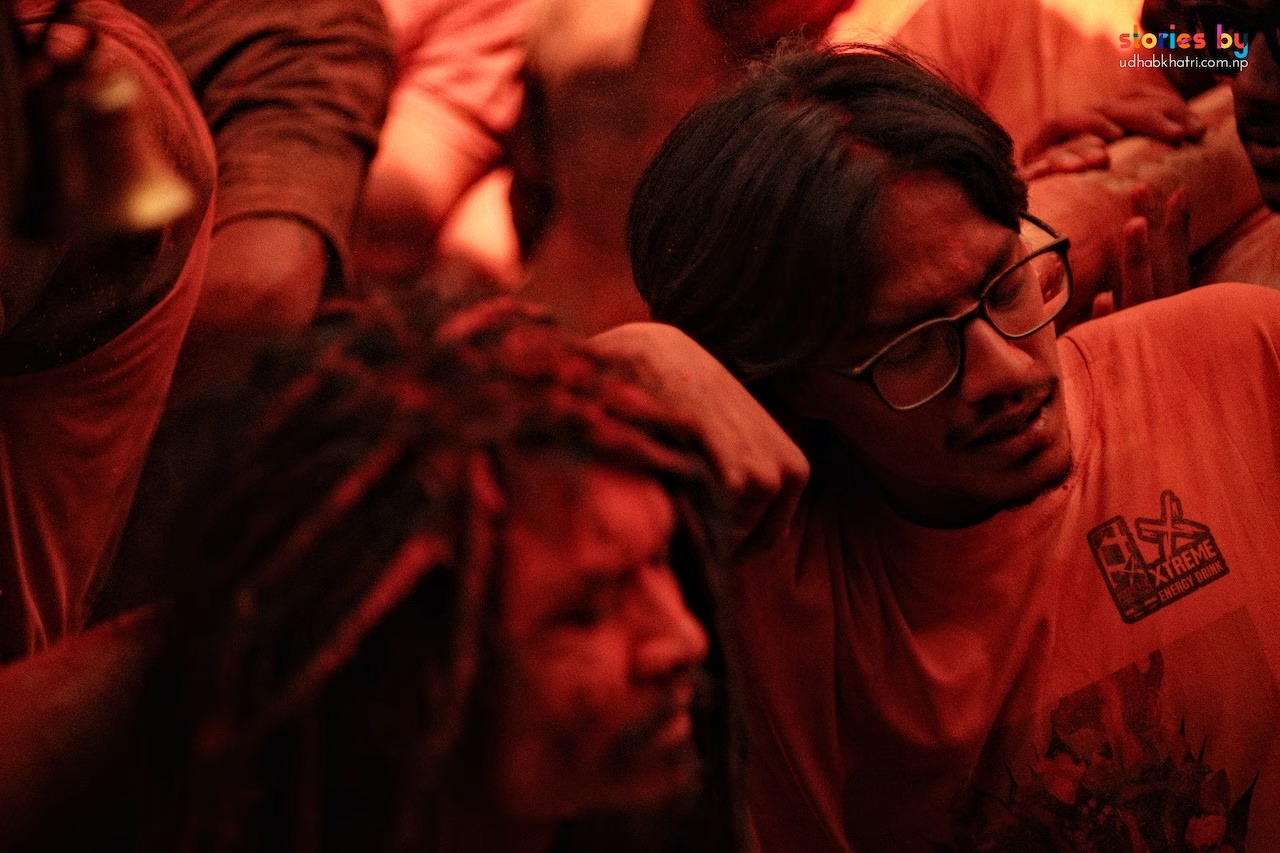
Light, Quiet, and One Lens
This isn't a review of any single camera. It's an argument for going small — and an honest account of what happened when I finally did.
The Long Search for the Right Feel
My first camera was a Canon EOS 550D, back in early 2012. I used it for nearly a year, but we never quite agreed on colour. Its warm, reddish, overly vibrant tones were — to my eye — frankly ugly. I couldn't get past it.
Then I moved to a Nikon D700, and that was magic. Cool tones, ease of use, and the ability to mount old manual lenses. For years I shot almost nothing else, using only three full-manual vintage primes: 24mm, 50mm, and 85mm. The feeling of that setup was hard to describe — it just felt right.
In 2017 I won a Sony A7 II as a national runner-up in the Sony World Photography Awards. I used it for about two years, but the flat colours never won me over. I went back to Nikon, this time a D810, and stayed there for a long time. The 28mm f/1.8 on that body was my go-to for almost everything. I loved it.
But by 2024, I was tired of the weight. Heavy cameras are exhausting on treks, and on the street they attract attention I don't want. I won a Nikon Z30 in a local contest and my head turned. It was light, easy, and stealthy — except it had no viewfinder, and I've never been comfortable shooting off a screen. I traded it for an Olympus E-M10 III, which I loved for its size and its compatibility with third-party manual lenses. But 16 megapixels was never quite enough for editing, and that slowly wore on me.
Last year I moved to a Fujifilm X-T50. The 40MP sensor, the photo recipes, and the manual lens support finally pulled me in. And for the first time in years, I stopped thinking about the camera.
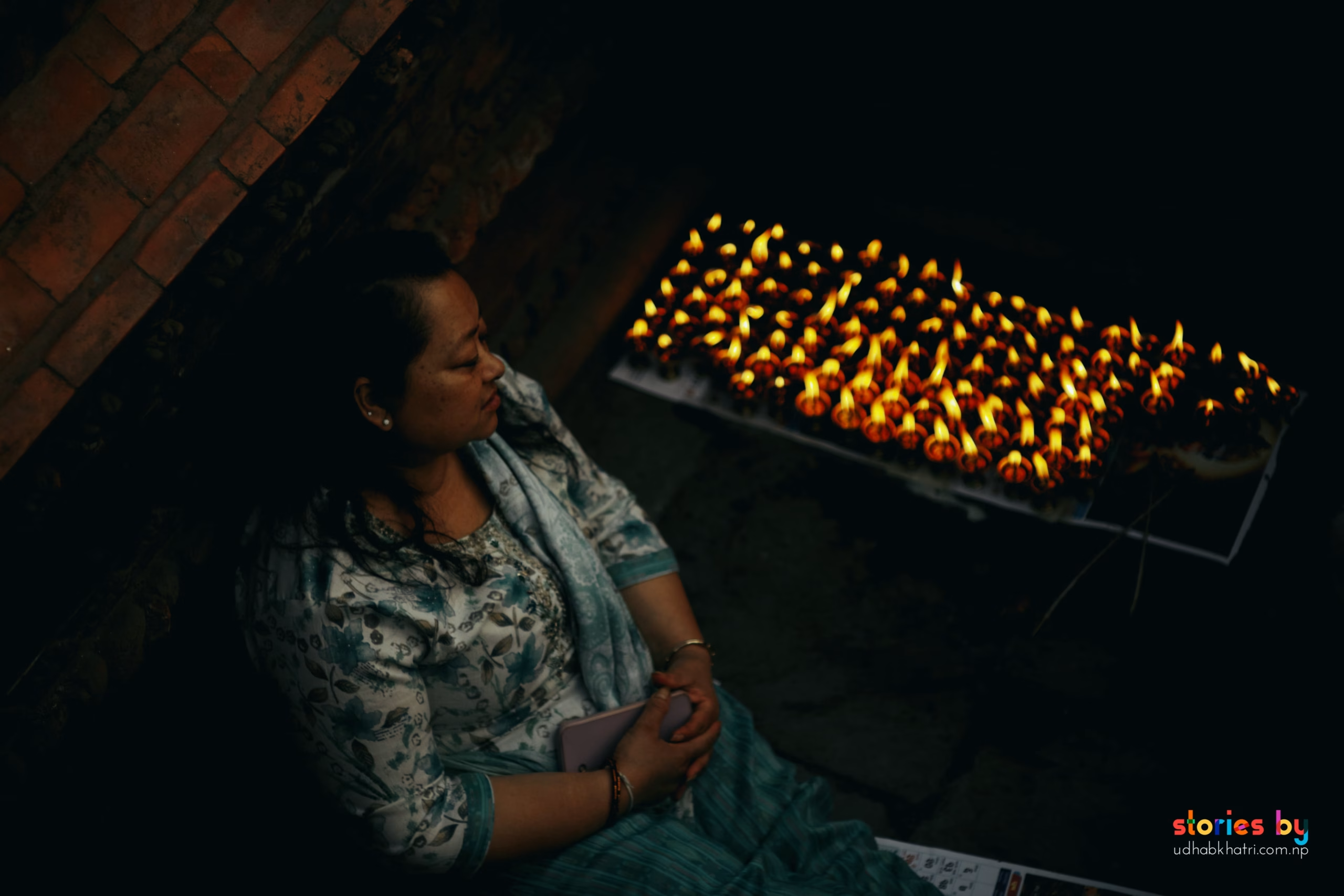 Street of Mangalbazar
What Changed When I Went Small
The most noticeable change wasn't technical. It was behavioural.
I take more photographs now. Not because the camera is more capable, but because it's light enough that I don't think twice about bringing it. I walk further. I stop longer. I spend more time on the street, and less time thinking about whether I should be there at all.
It's also discreet. In a crowded market, on a busy temple path, nobody really notices it. That matters more than any spec sheet can say. A camera people ignore is a camera you can actually work with.
One Lens, One Walk
Somewhere along the way, my lens habits changed too — without me really deciding.
On my Nikon bodies I was always a wide-angle photographer. 28mm, 35mm, layered compositions with lots of environment. On the Fuji, I've drifted almost entirely to a single lens: a 7artisans 55mm f/1.4 manual prime — around 82mm in full-frame terms, close to the classic 85mm.
I didn't plan this. It just happened.
Now when I go out, I take that one lens and nothing else. Committing to a single focal length for an entire walk does something to your eye. You stop scanning for "the right lens" and start seeing in that field of view. You move with your feet. You learn where to stand, when to wait, and what will and won't fit in the frame.
It's not a limitation. It's a discipline. And I've come to think it's one of the most useful things a street photographer can practise.
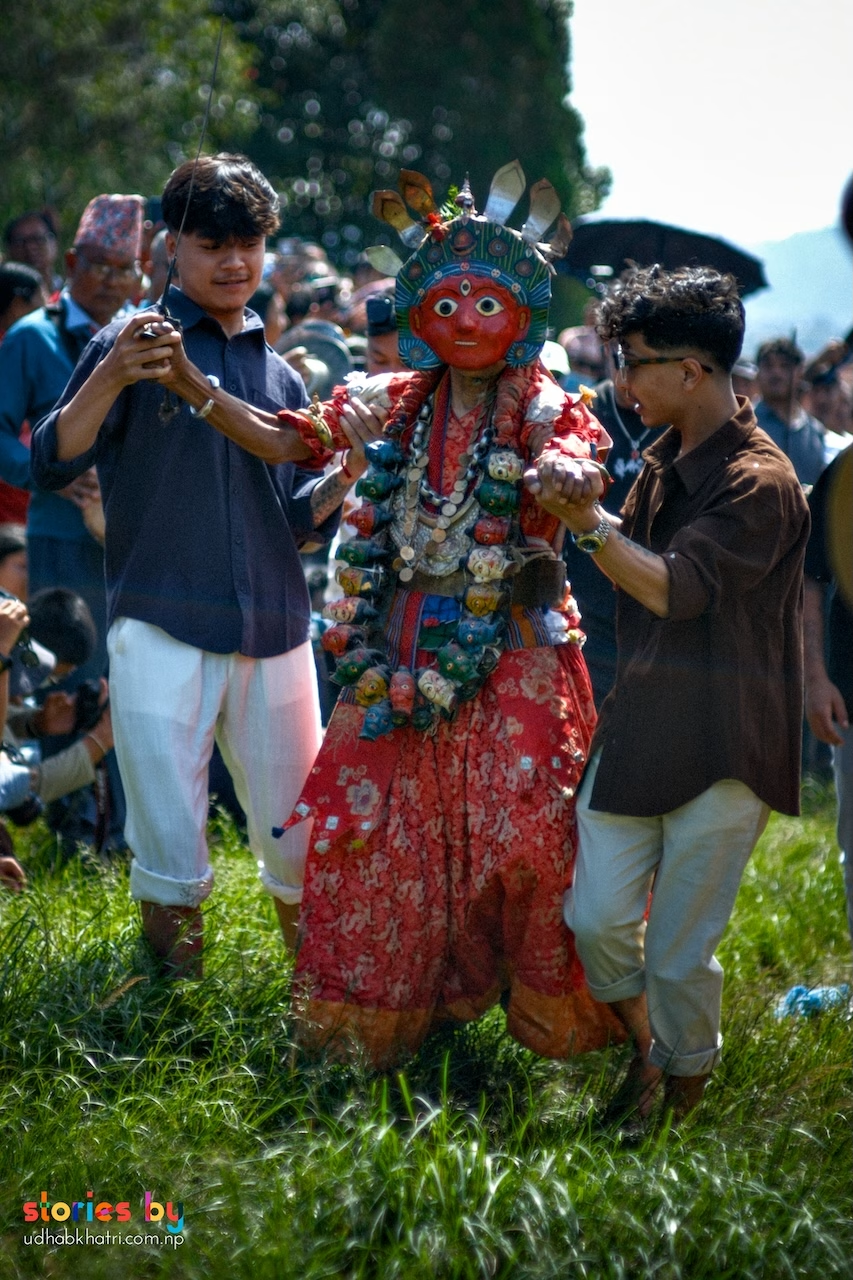 Sikali Festival at Khokana
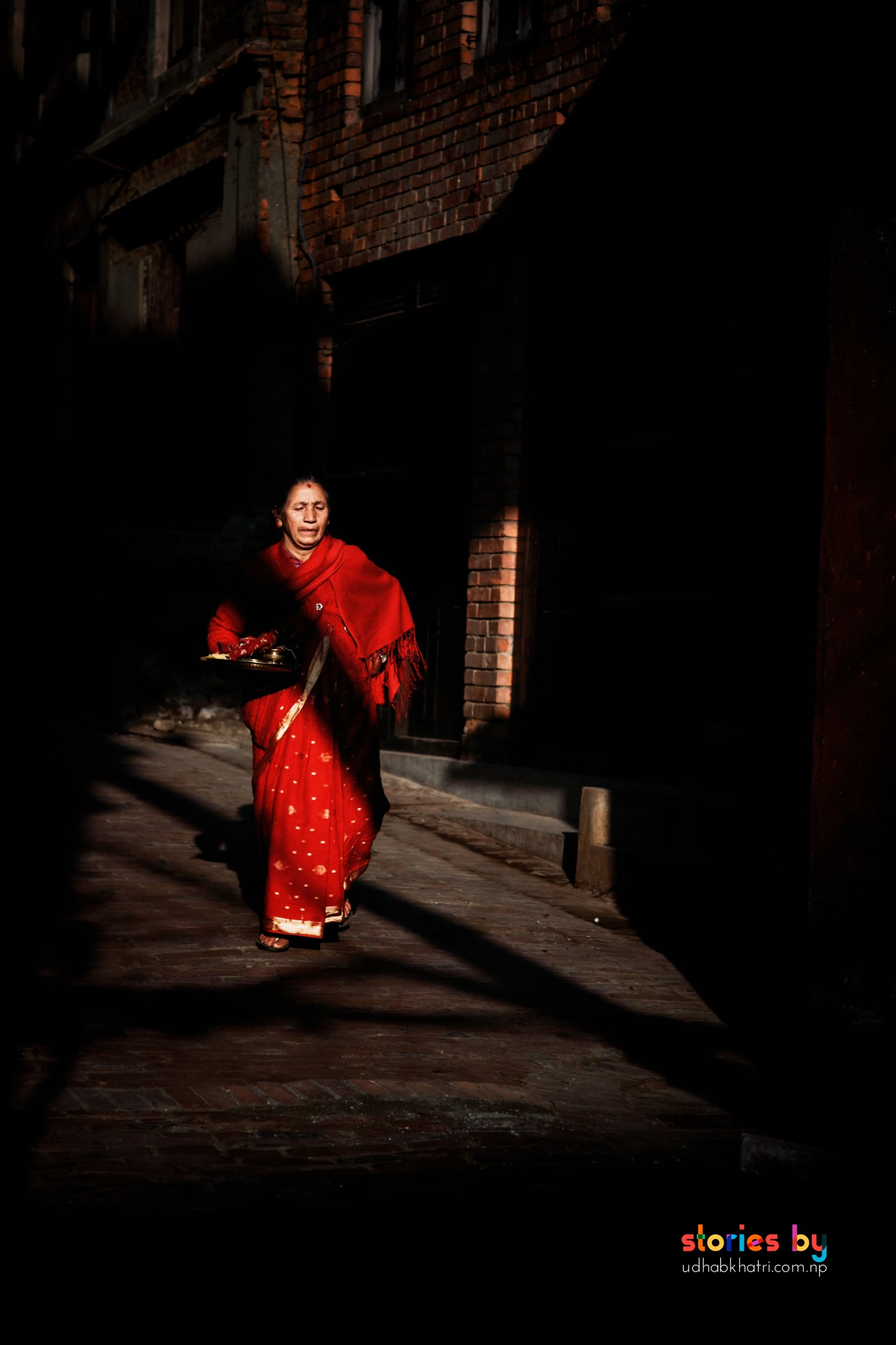 Morning at Bhaktapur
The Colour Surprise
The other thing I didn't expect was colour.
Remember that Canon I couldn't get along with, and its warm, reddish tones? The Fuji solved that problem in a way I didn't see coming. On one of my first walks with it, I took it into Ason market — one of the busiest, most colourful places in Kathmandu — and something shifted in how I saw.
The reds and the vibrant colours came out beautifully. Not garish, not distracting — eye-pleasing. And the cool tones were still there, still strong, much like the Nikon files I'd loved for years. What the X-T50 managed to do was handle the warm tones properly, without letting them take over the frame.
It sounds like a small thing. But it changed how I photograph. I shoot colour far more than I used to, simply because I now trust what comes out.
Letting the Camera Do the Work
For the last few years, I've hardly retouched my photographs. The X-T50 made that easier.
I set up a few photo recipes — mostly Classic Chrome, Kodak Portra 400, Ilford HP5 Plus 400, and Provia — and that's it. I shoot RAW plus JPEG, but I rarely open the RAW files. The JPEGs are good enough to use directly. For someone who would rather be outside than at a computer, this has been quietly liberating.
The Fujifilm X app helps too. I can move photos straight from the camera to my phone, do a quick edit only when it's truly needed, and share or upload them the same day. It's not a dramatic feature. But it changes your rhythm. You shoot in the morning and the photographs exist in the afternoon.
On battery life, in case you're wondering: it's decent. One charge gets me through roughly 400 photos, which for me is about three photowalks — I rarely shoot more than 100 frames in a session. I carry one spare battery just in case, but I've hardly needed it.
What It Still Gets Wrong
None of this means the camera is perfect.
The menu system still trips me up after a year of use, and after years of Nikon muscle memory I still hit the wrong dial sometimes. I fumble the ISO more often than I'd like to admit. There are moments where I miss the frame entirely because my fingers went somewhere unexpected.
Small cameras trade away some control and some speed. That's the honest price of going light.
But those frustrations fade the moment I look at what came out of the camera.
Would I Recommend Going Small?
I'm not going to tell you to buy an X-T50. That's not the point of this piece.
What I will say is this: if you've been carrying heavy gear and feeling it slow you down, and if you've been quietly wondering whether you'd photograph more if your kit weighed less — you probably would.
Pick one light camera. Pick one lens. Walk out with nothing else.
You'll take more photographs, edit fewer of them, and spend more time on the street than you have in years. The camera will stop being the thing you think about, and the street will start being the thing you see.
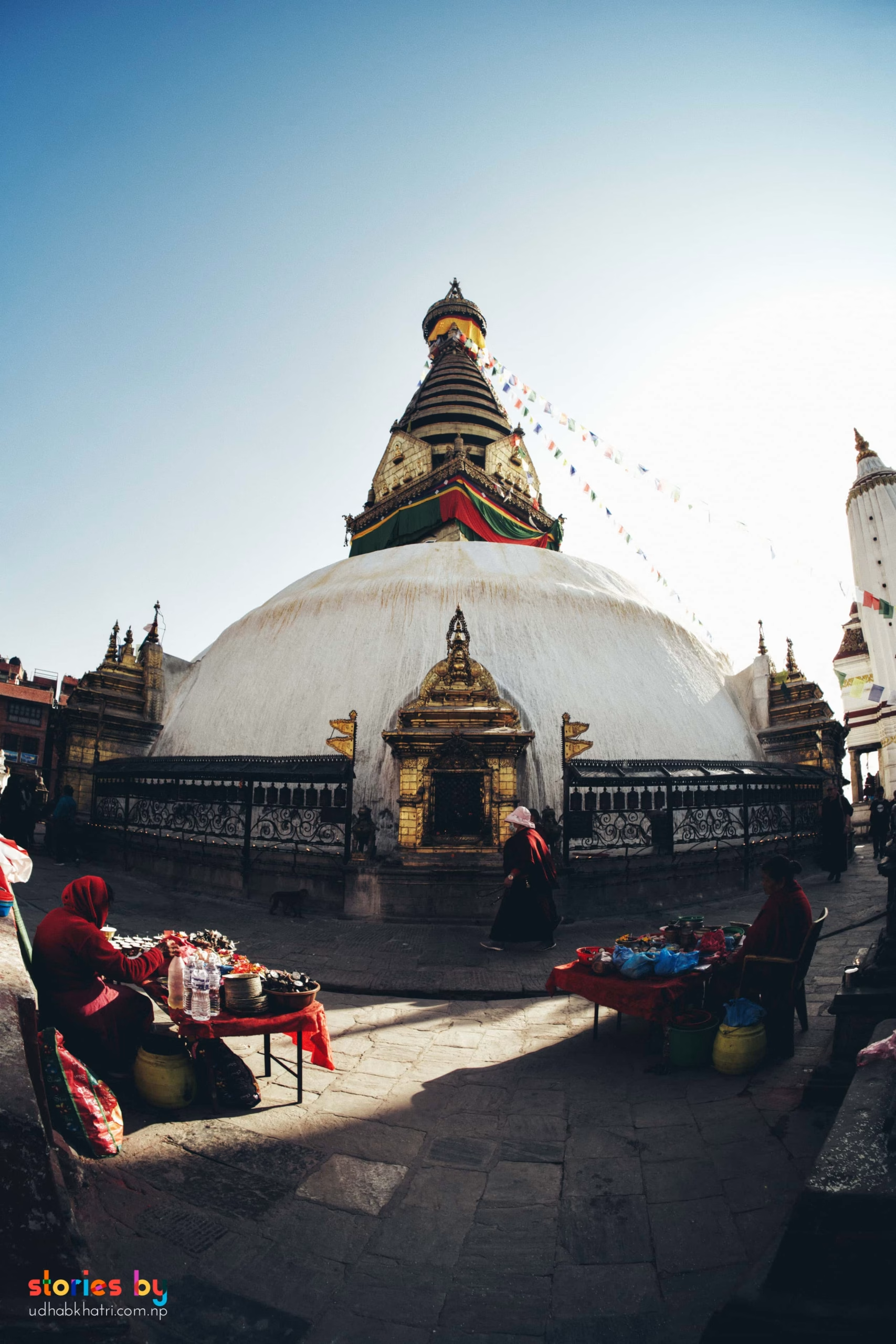 Morning at Swyambhunath Stupa
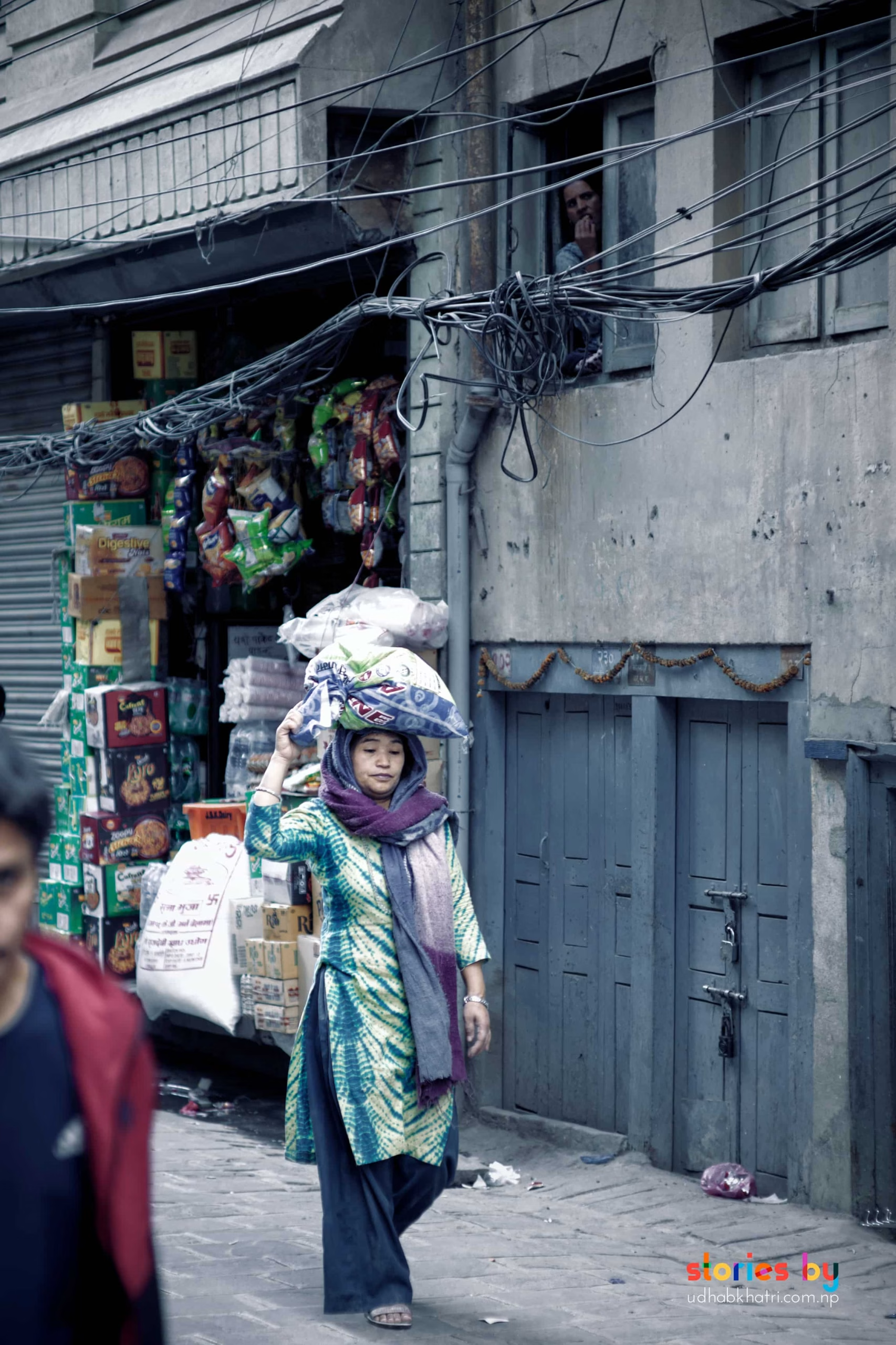 Street of Ason
Continue Learning