
Why It Works – The Geometry of a Single Lens
When you strip away the option to toggle fields of view, your brain stops managing gear and starts studying life. You begin to see your frame lines projected onto the street *before* you lift the camera to your face. Whether you are hunting for wide context or surgical isolation, committing to a single perspective for the entire walk forces you to adapt with your feet and your instincts.

Mapping the Toolkit to the Surroundings
In the layered architecture and dense crowds of the Kathmandu Valley, different areas demand completely different spatial strategies. The trick isn't to pack for every scenario, but to match your single chosen lens to the unique friction of the neighborhood you plan to map.
The Environmental Portrait Lens (My 28mm Setup): This is the ultimate contextual storyteller. It closely captures the wide peripheral perspective of human sight, making it perfect for the tight, sprawling markets of Asan or Indra Chowk. A wide environmental lens forces you to step directly into the chaos. It captures a merchant behind a pile of spices while keeping the crumbling brick arches, overhead hanging wires, and passing motorbikes intact at the edges of the frame. It tells the viewer: *“I was right there inside the room with them.”*
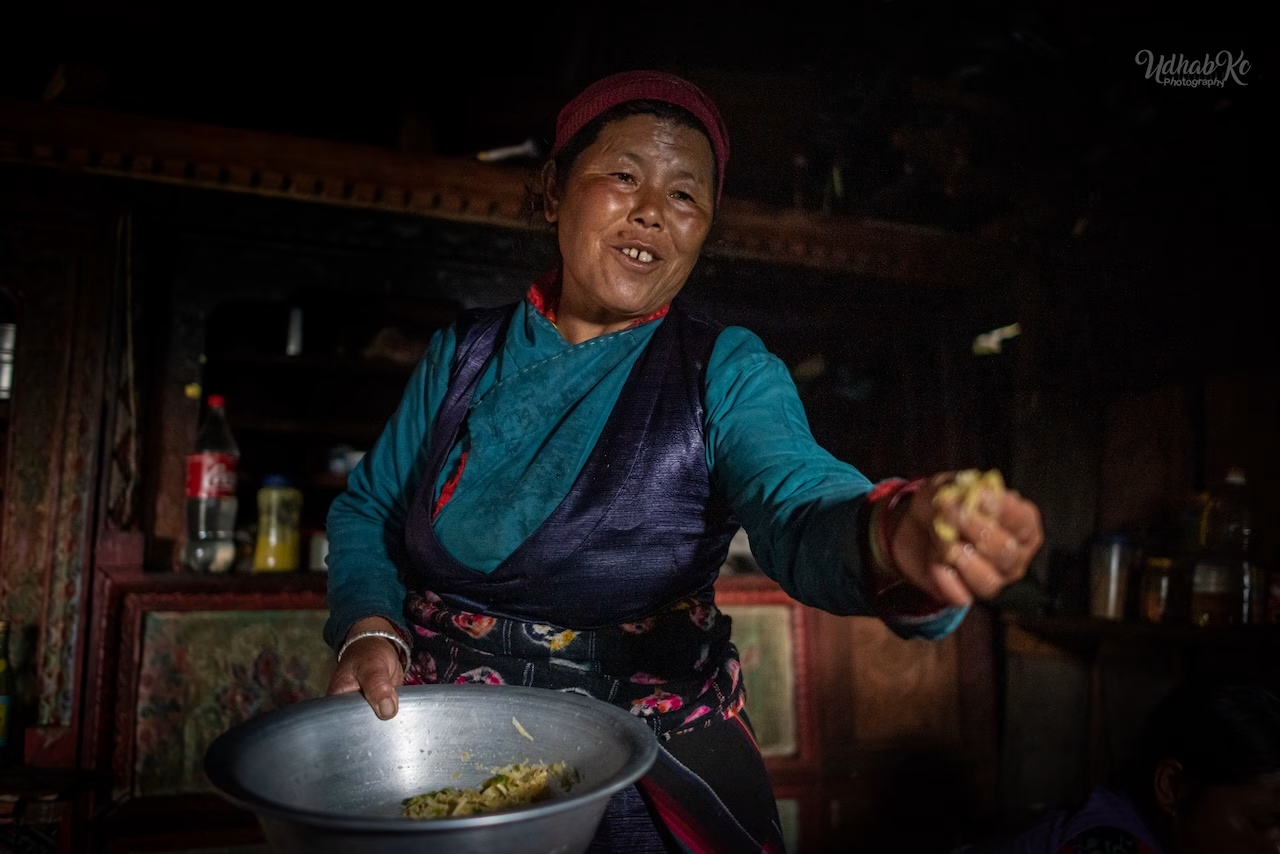
The Tight Portrait & Isolation Lens (My 85mm Setup): This is a scalpel. It strips away surrounding distractions and introduces a beautiful, cinematic compression that stacks elements cleanly. It excels at drawing order out of chaos—isolating the weathered hands of an artisan carving wood in Patan, or capturing an intimate silhouette crossing an open, sunlit temple courtyard from a distance. It requires more breathing room to execute, but it produces a clean, dignified focus that feels incredibly personal.
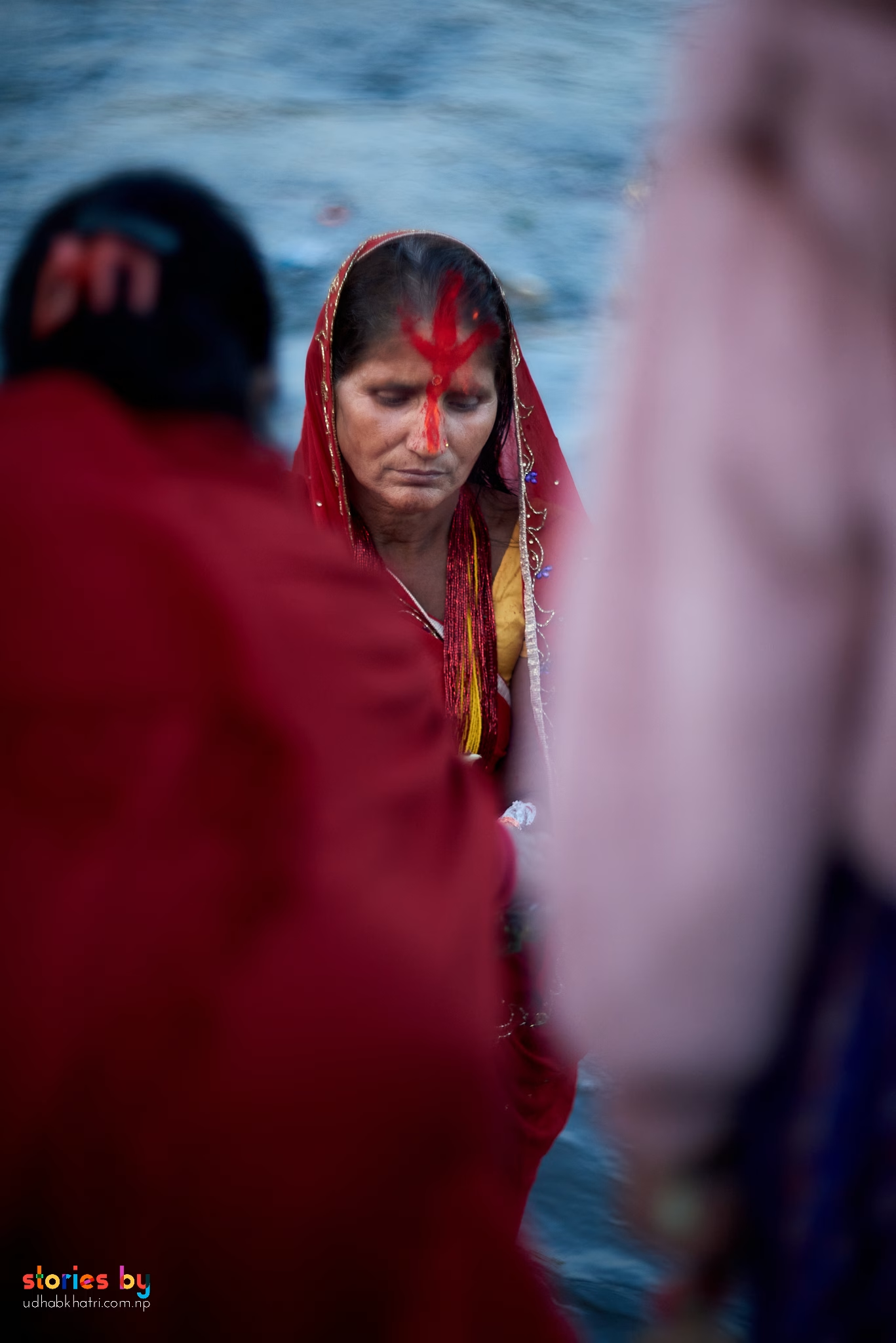
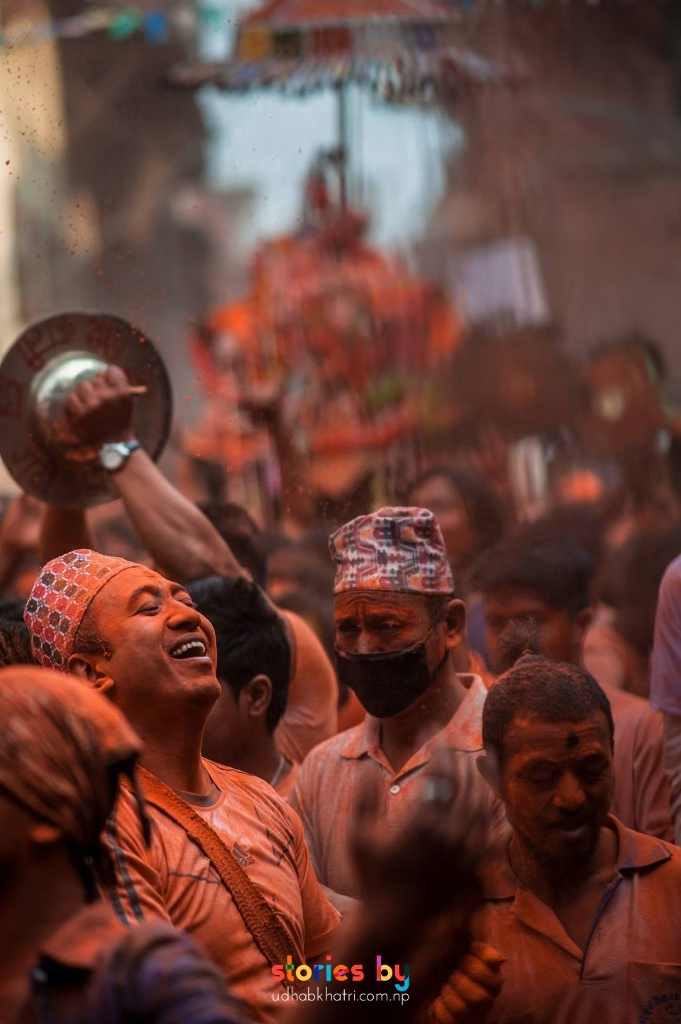
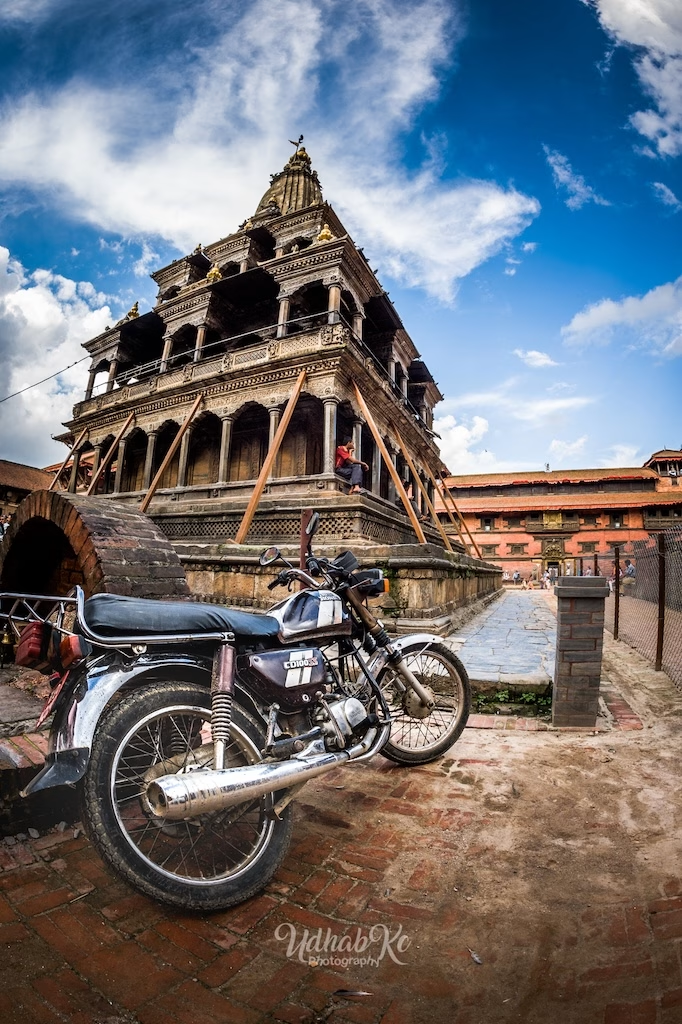
The Specialized Ultra-Wide (My Fisheye 11-16mm Setup): This is not a gimmick; it is an aggressive study of curve and scale. When you are hemmed in by massive vertical structures or shooting inside cramped, ancient spaces, a specialized wide lens bends reality to reveal the entire environment. It converts parallel lines into concentric energy, turning a tight courtyard staircase or an overhead canopy of prayer flags into an immersive, swirling vortex that swallows the viewer whole.

Super-Tight Opticals (Above 85mm): When you scale past standard portrait options into true telephoto territory, you enter the realm of extreme optical stacking. These long focal lengths flatten distance entirely, making a line of distant roofs look like they are stacked directly on top of each other. It is a highly specialized style that turns chaotic layers into a clean, graphic pattern.
The Pre-Walk Manifesto: Training Your Eye
To build genuine spatial muscle memory and find a cohesive rhythm on the pavement, you must commit to a strict set of field habits:
Field Guardrails: Dos and Don'ts
Do lean into the unique traits of your choice: If you are out with the wide 28mm, get low and get close to emphasize foreground depth. If you are shooting with the 85mm, use the compressed background separation to create clean, graphic negative space around your subject.
Do embrace the distortion of specialized glass: When tracking with the fisheye, watch how placing your subject dead-center preserves their natural proportions while the rest of the world dramatically warps around them. Use that geometry intentionally to frame human agency.
Don't standing-still zoom: If your subject is out of range, do not wish for a different piece of glass. Move closer or step back. The physical act of moving to frame a shot forces you to discover unexpected angles, light leaks, and reflections you would have completely missed by standing still.
Don't let gear paradox slow your momentum: If you step out onto the pavement wondering whether you should have brought a different focal length today, your mind is split before you even spot a story. Eliminate alternative choices to amplify your artistic focus.
How to Implement It: The Single-Vision Walk
For your next street walk through the old alleys of Patan or the busy crossings of New Road, apply the lockout rule strictly:
Select your lens based on your mood and the location's density. Slip the lens cap into your pocket, slide an extra battery into your jeans, and carry the camera raw in your hand. No bag, no straps, no extra glass.
When you strip away the mechanics of gear choices, you unlock absolute creative liberation. Your reaction times split in half, your compositions become instantly sharper, and your portfolio begins to speak with an authoritative, intentional, and cohesive visual voice.