Making of Khukuri
A Photo Essay
The Khukuri – Nepal's national weapon – holds a unique and important place in Nepalese culture and its people. It gained fame during World War I and II, when Gurkha soldiers used it as their primary weapon to great effect. These blades are powerful and durable, which is why they are still widely used in Nepalese households. They hold symbolic value as well as practical purposes. They are mostly used as a tool for chopping wood, slaughtering and processing meat. Some households even keep Khukuris for security reasons.
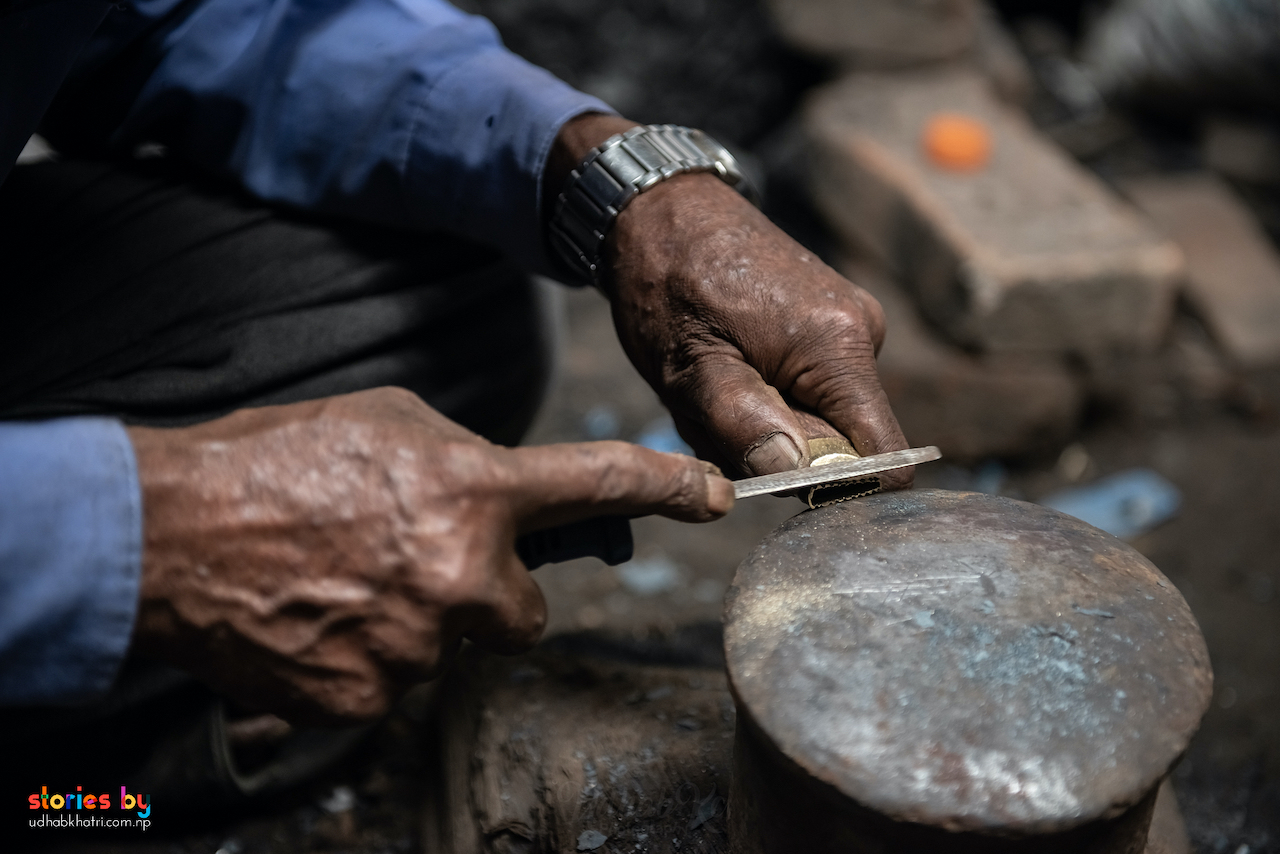
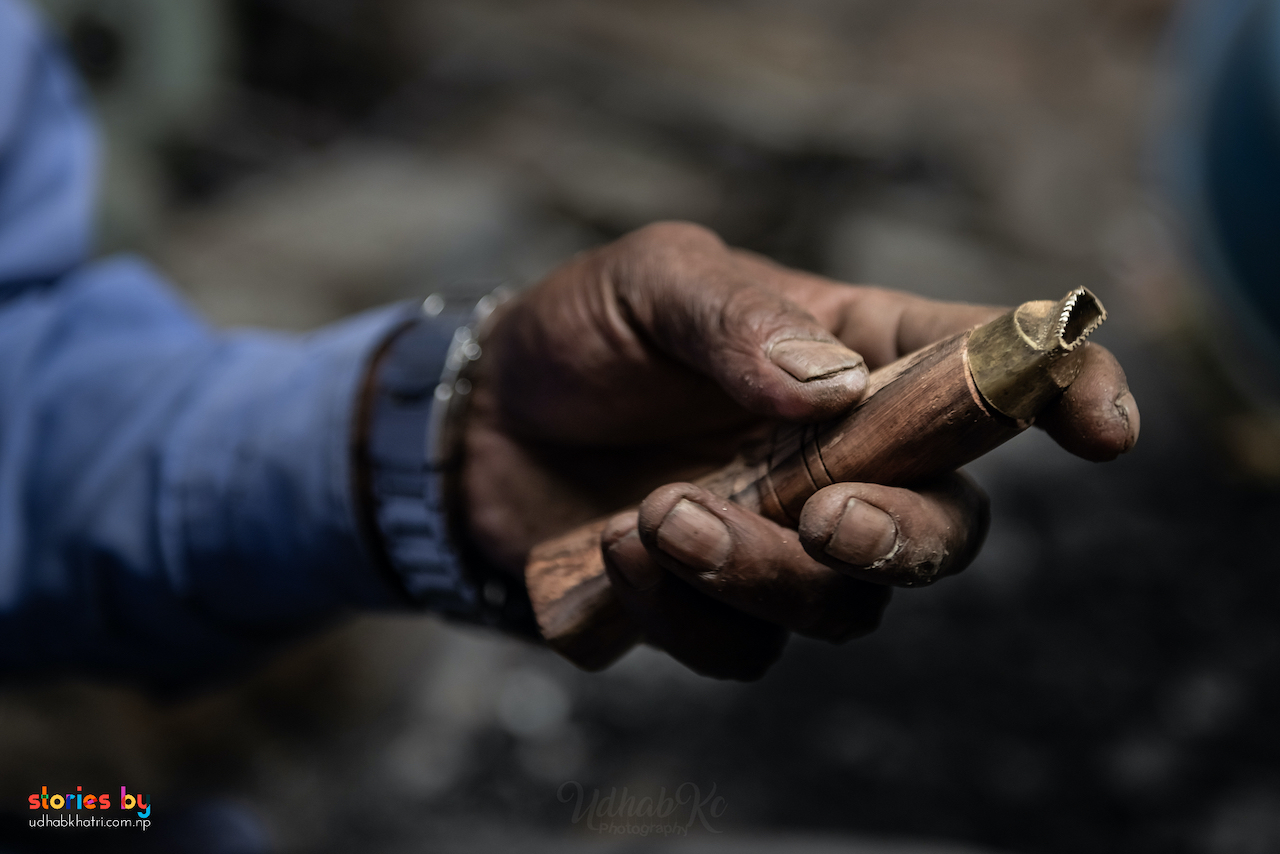
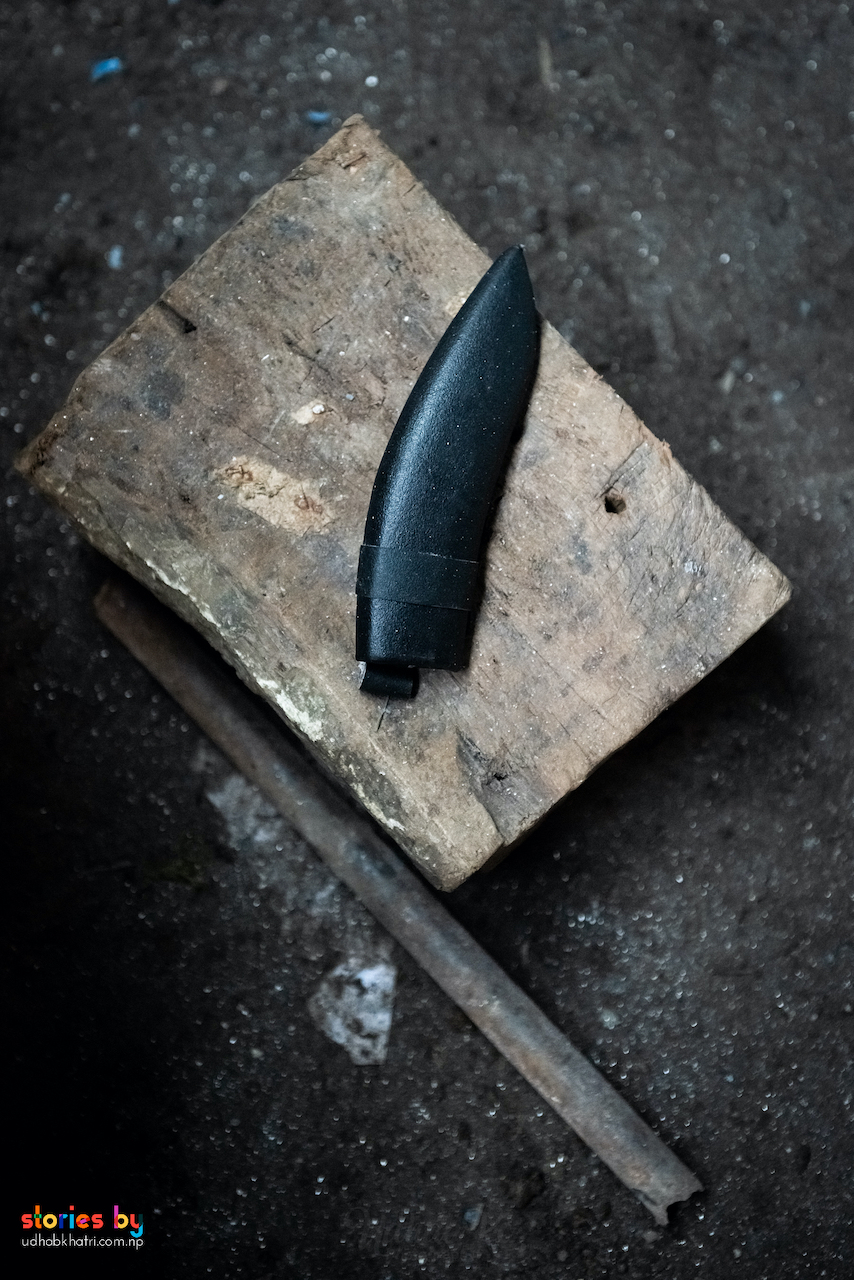
The Khukuri is much more than a knife or a weapon because of the religious values it carries and the beliefs that have been incorporated into Nepalese culture. The Khukuri is also worshipped on different occasions and festivals. It is thought to have spiritual power to ward off demons, evils, and nightmares.
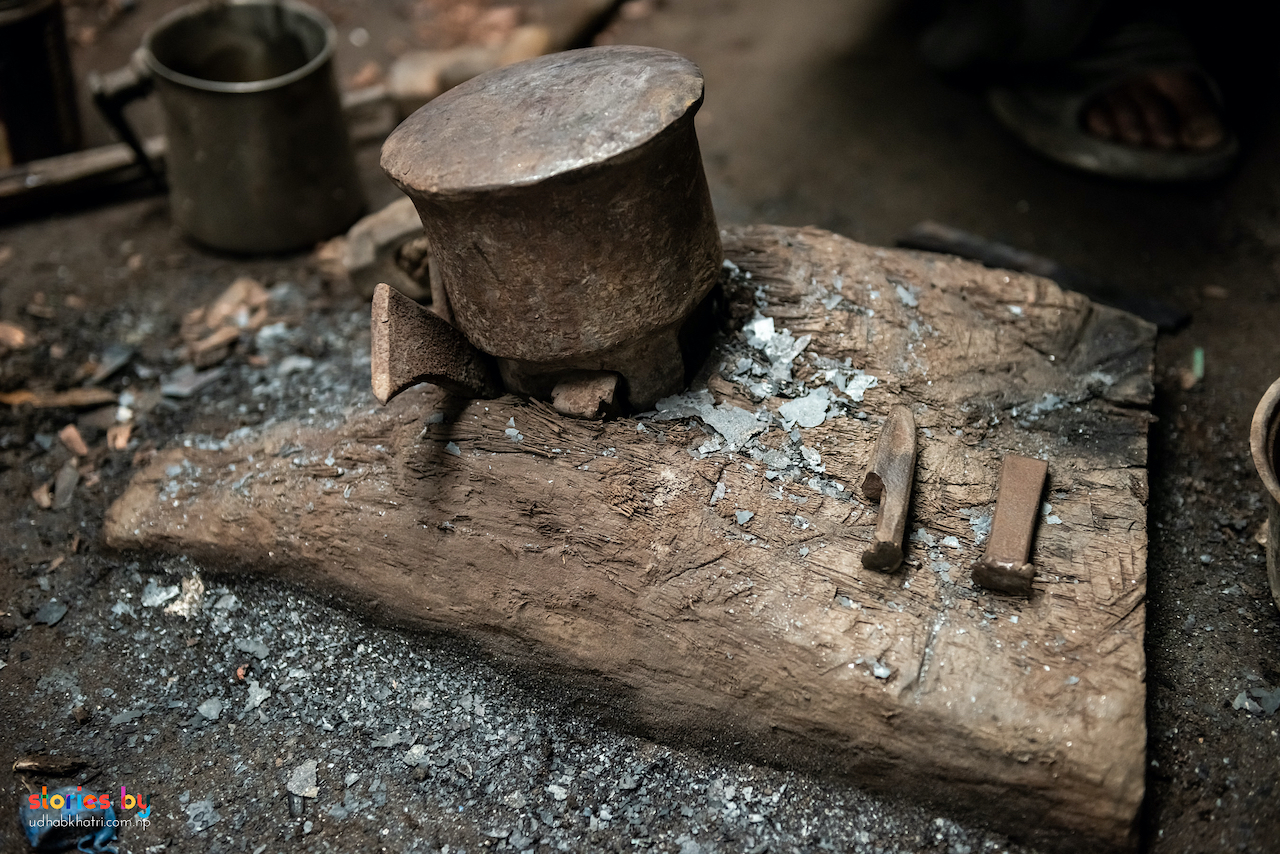
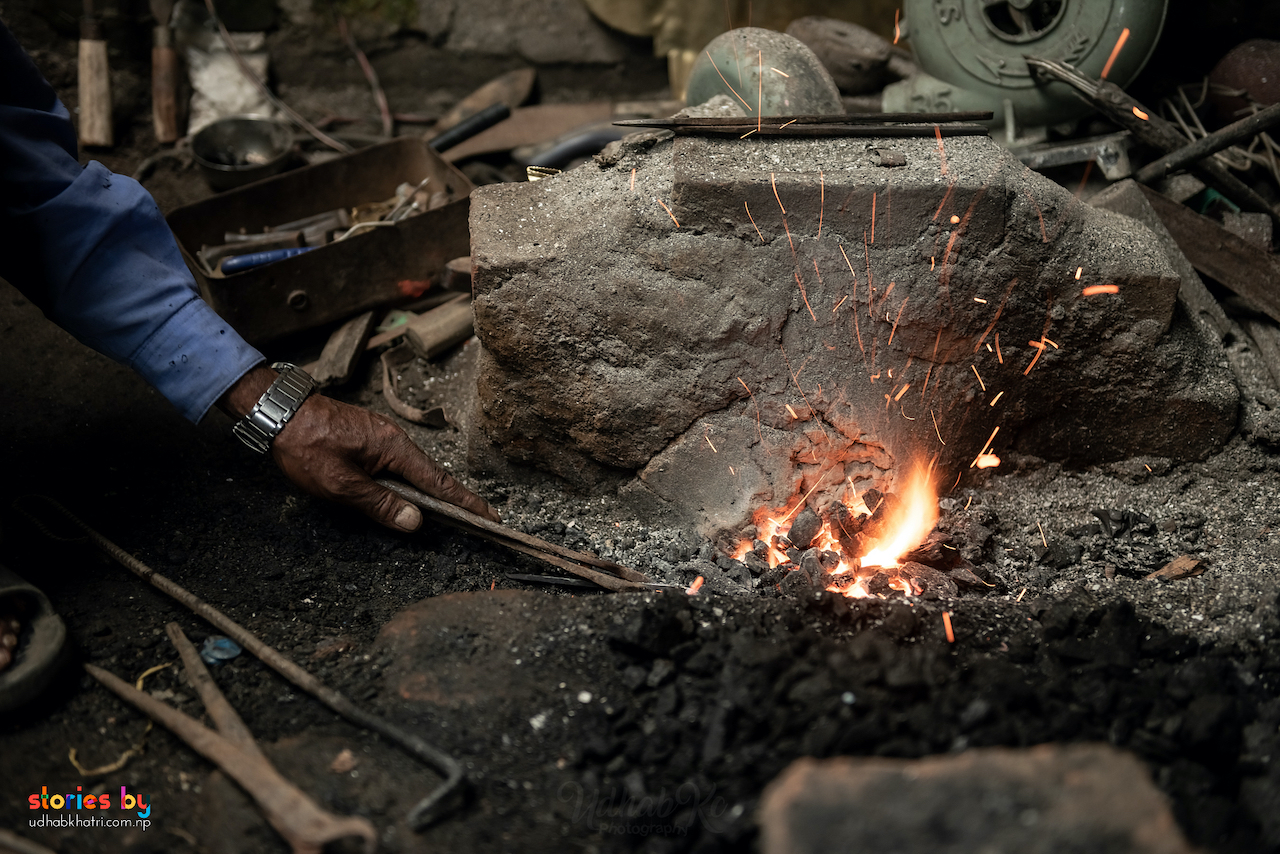
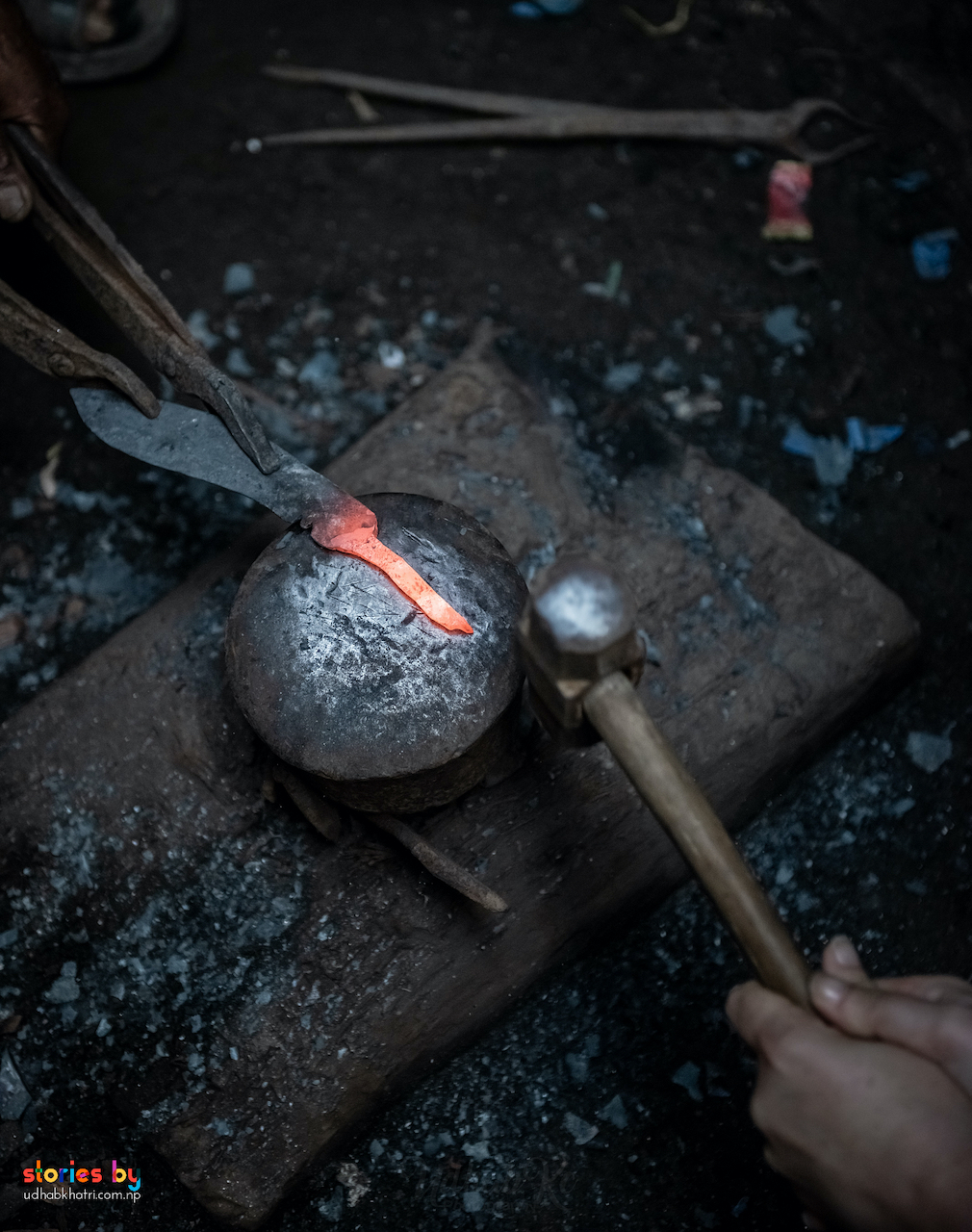
Traditional Kukri knives range from 25 to 32 centimeters in length, although expensive custom blades can be twice that long. The normal-sized daggers weigh between 500 and 800 grams, which makes them hefty yet still maneuverable in battle.
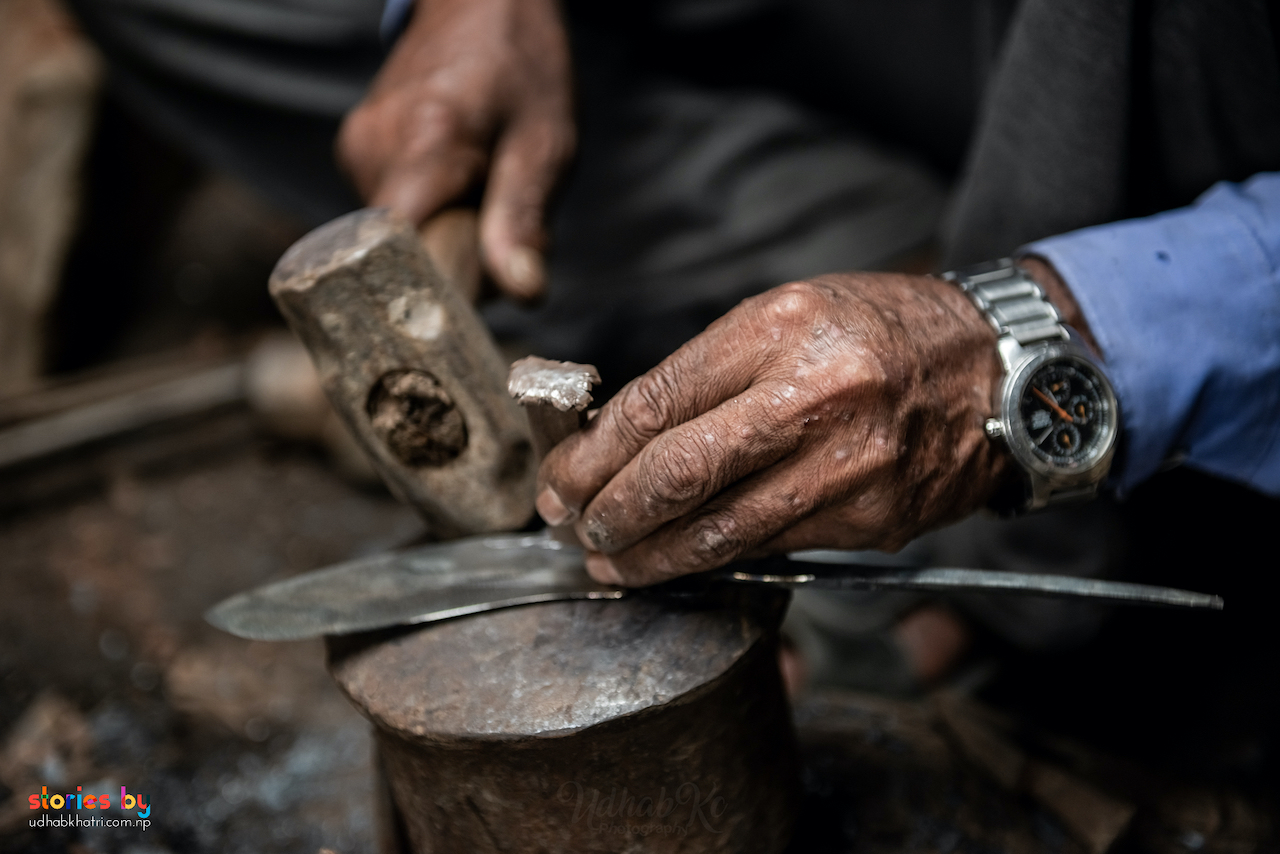
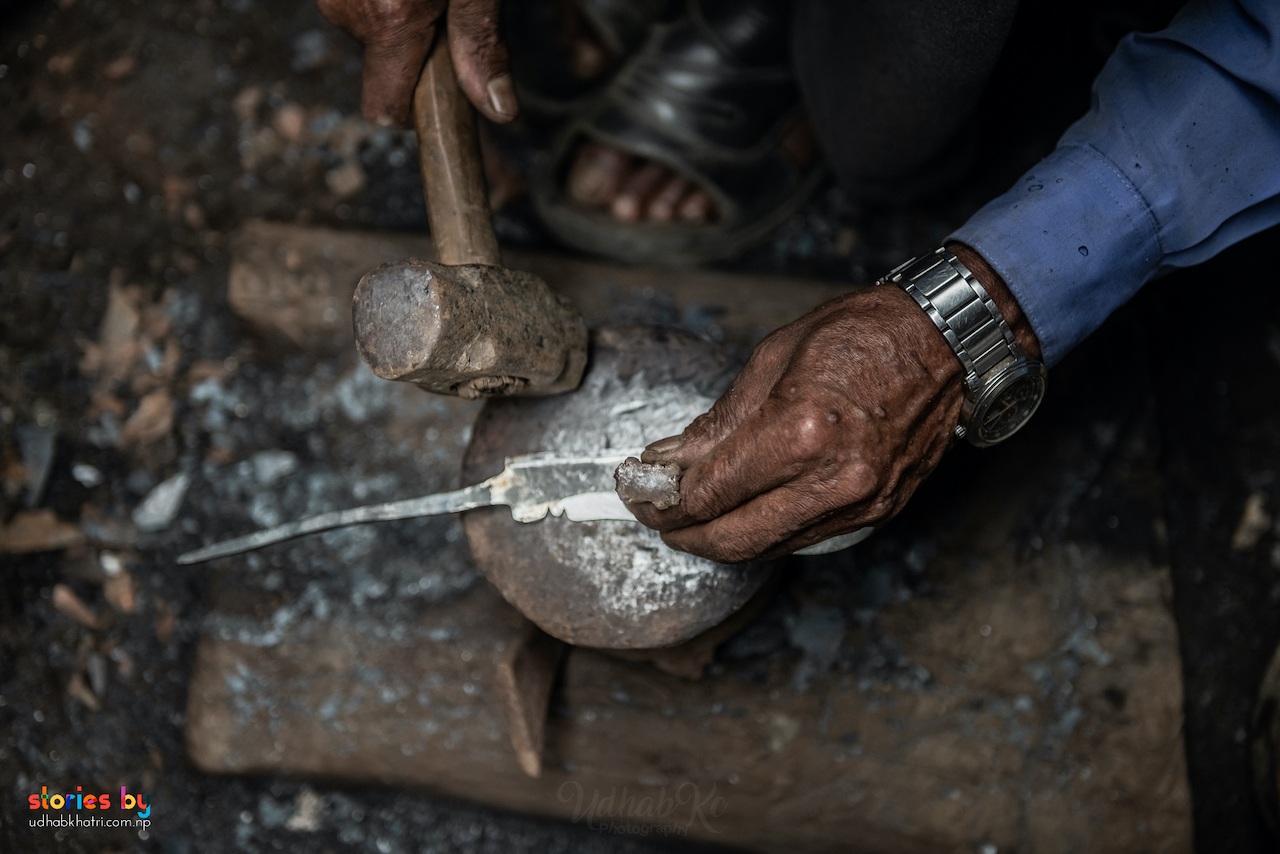
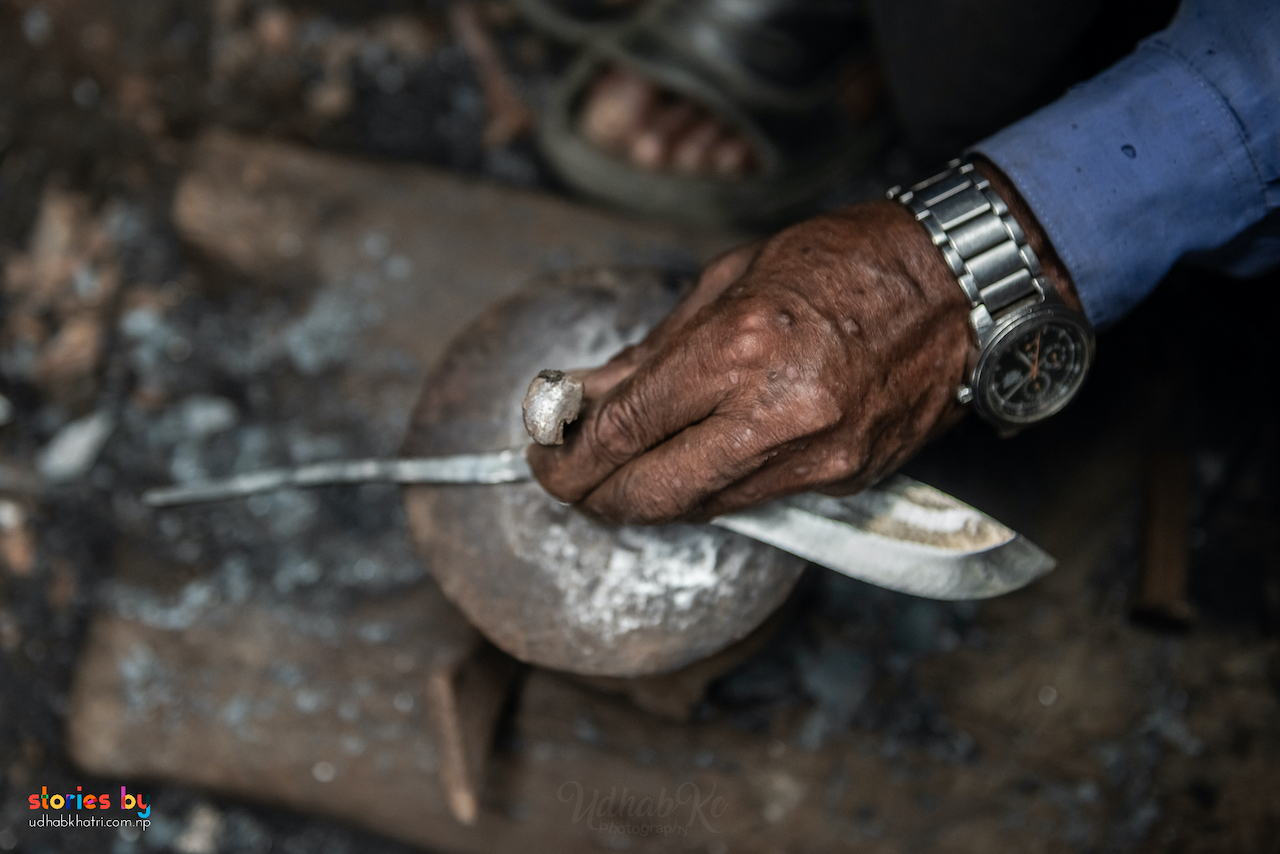
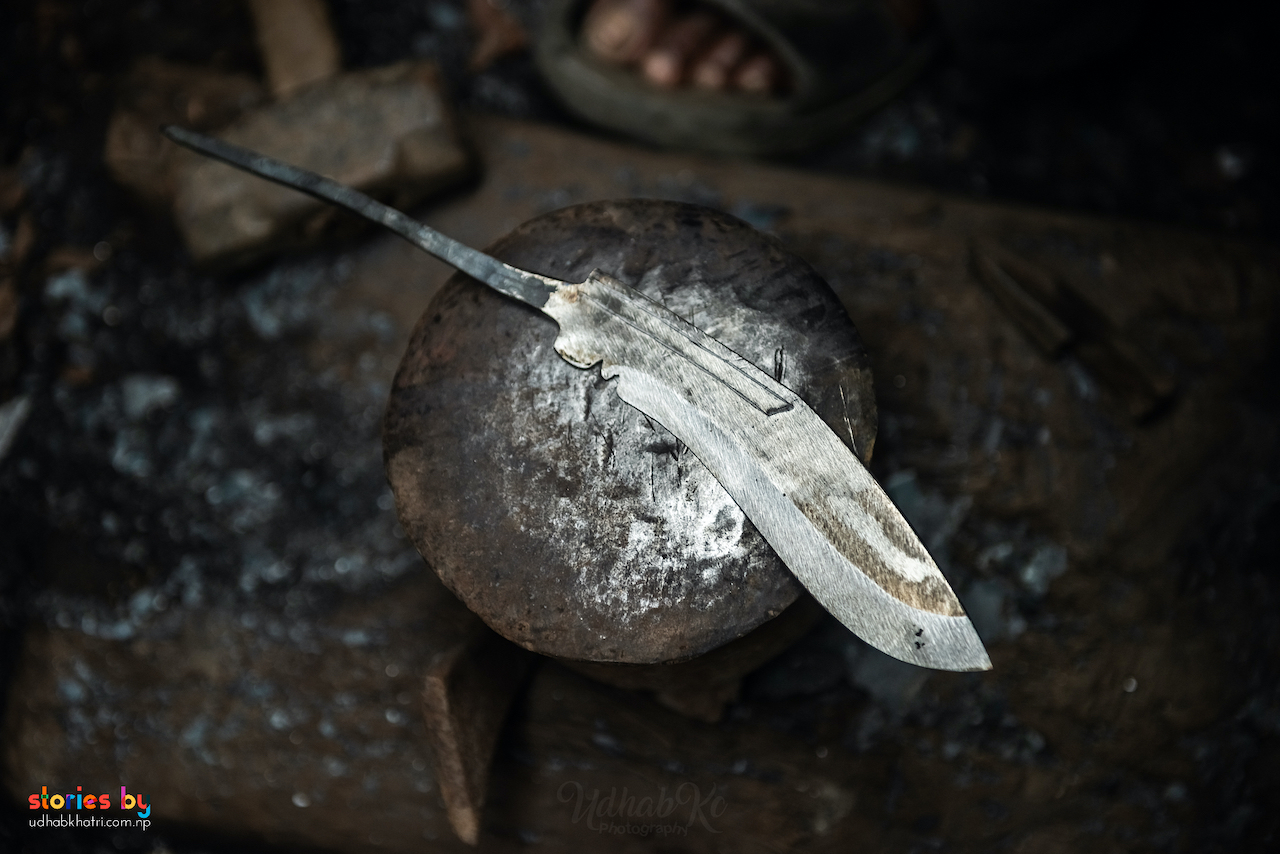
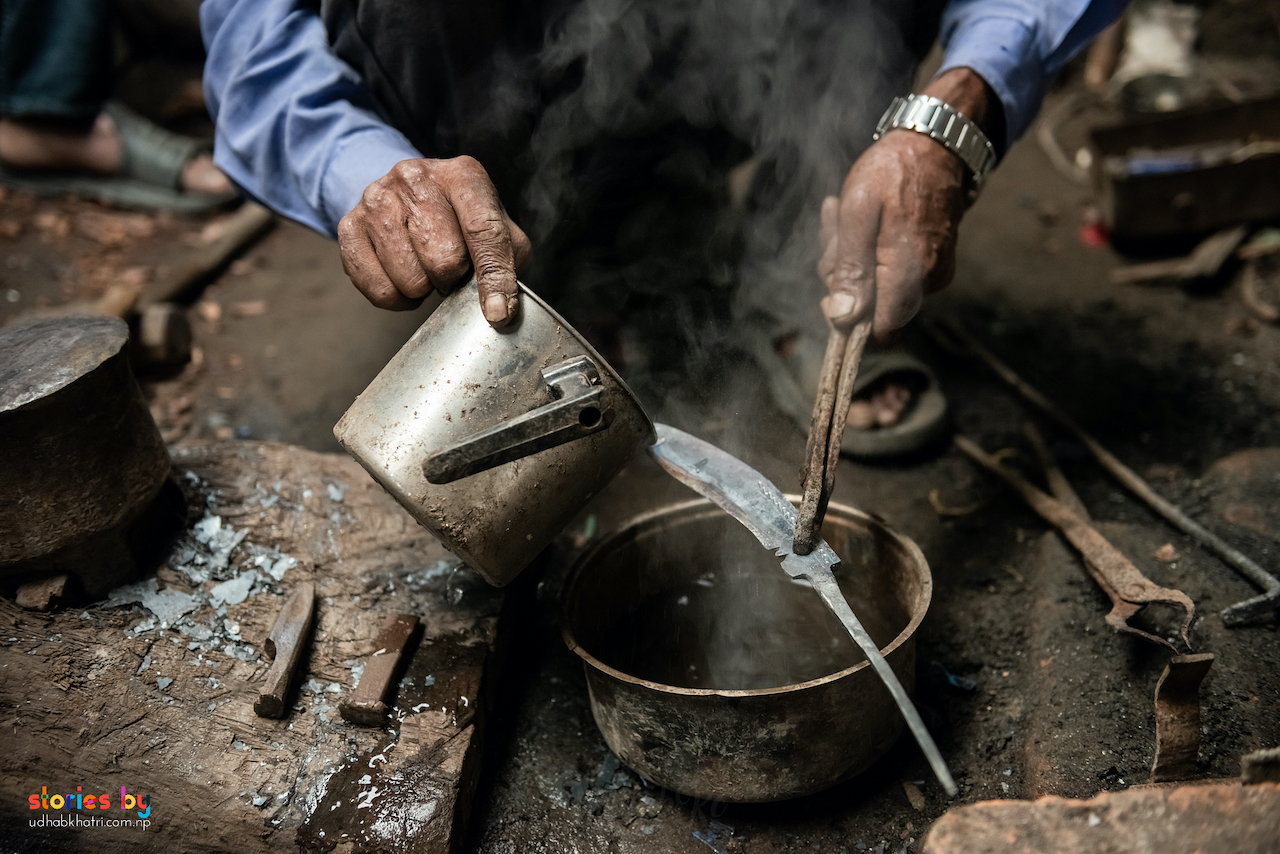
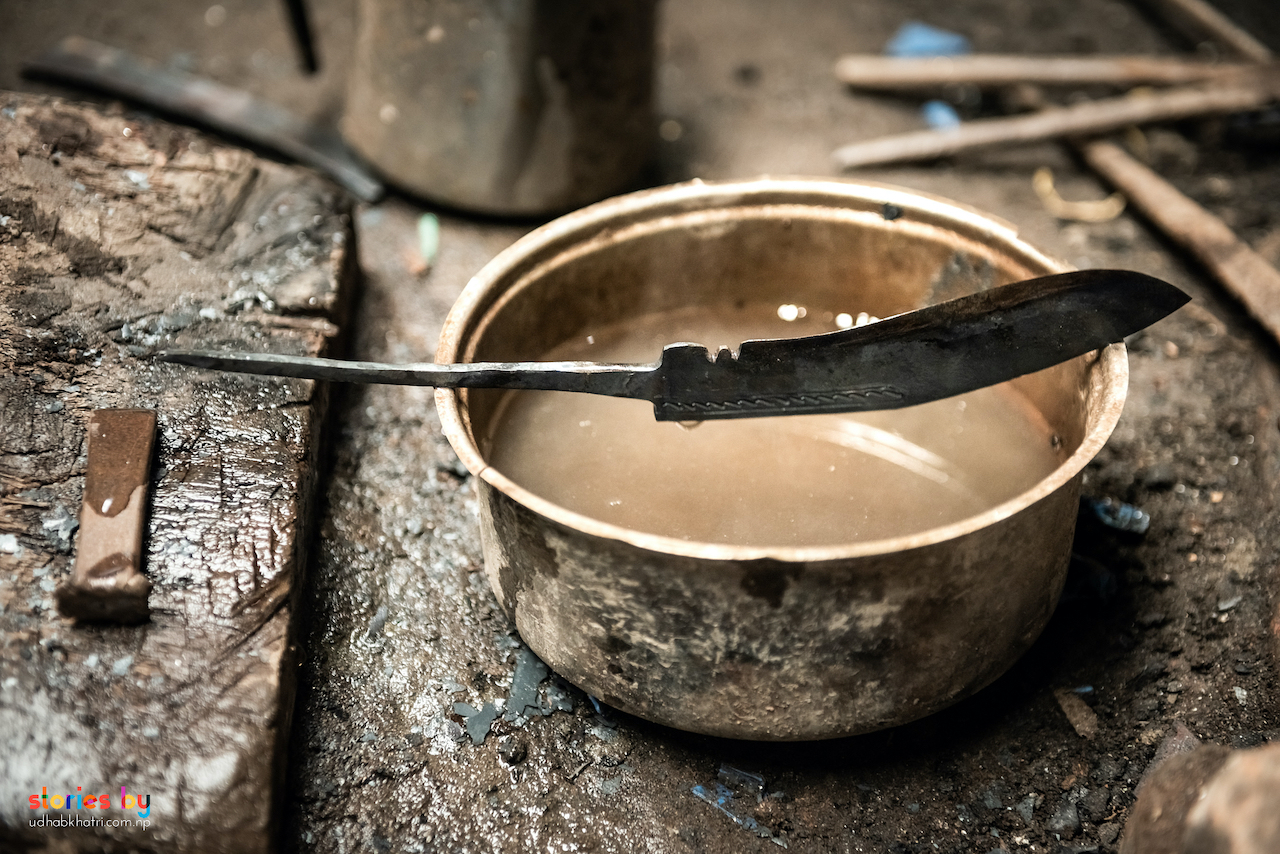
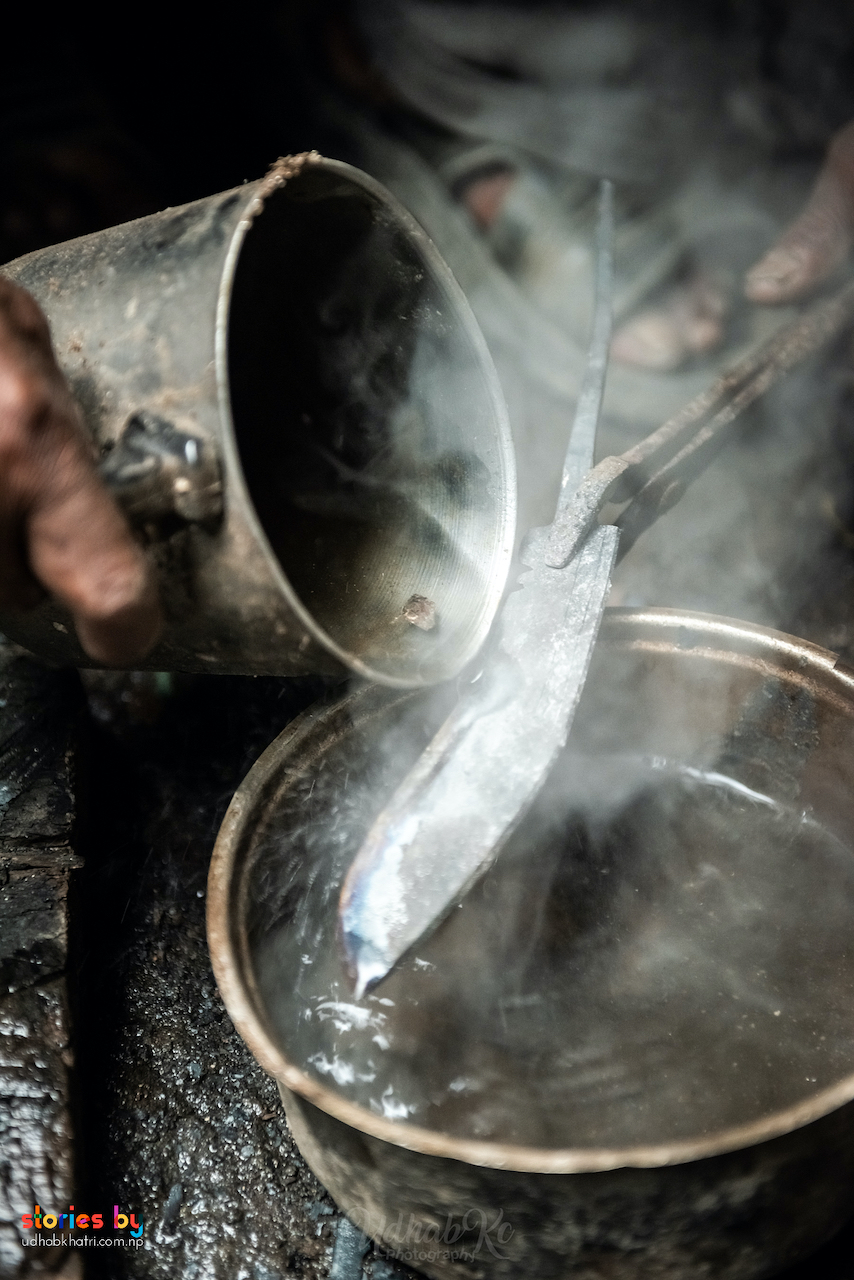
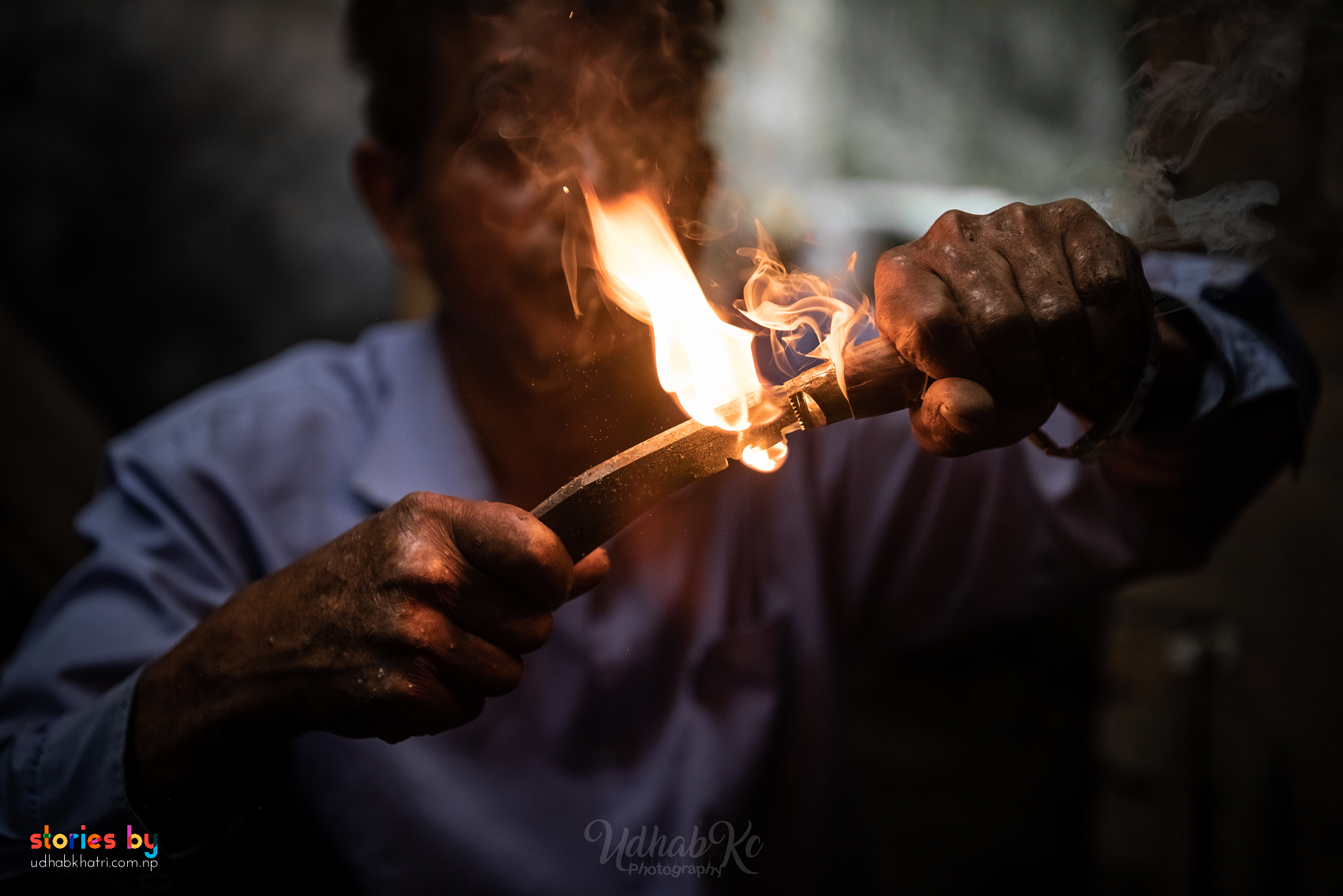
Indra Sunar has been making Khukuris in the traditional way for more than 40 years, over an open flame in the backyard of his Kathmandu home. The meticulous, centuries-old process of making one of these blades was taught to Sunar by his uncle when he was a teenager.
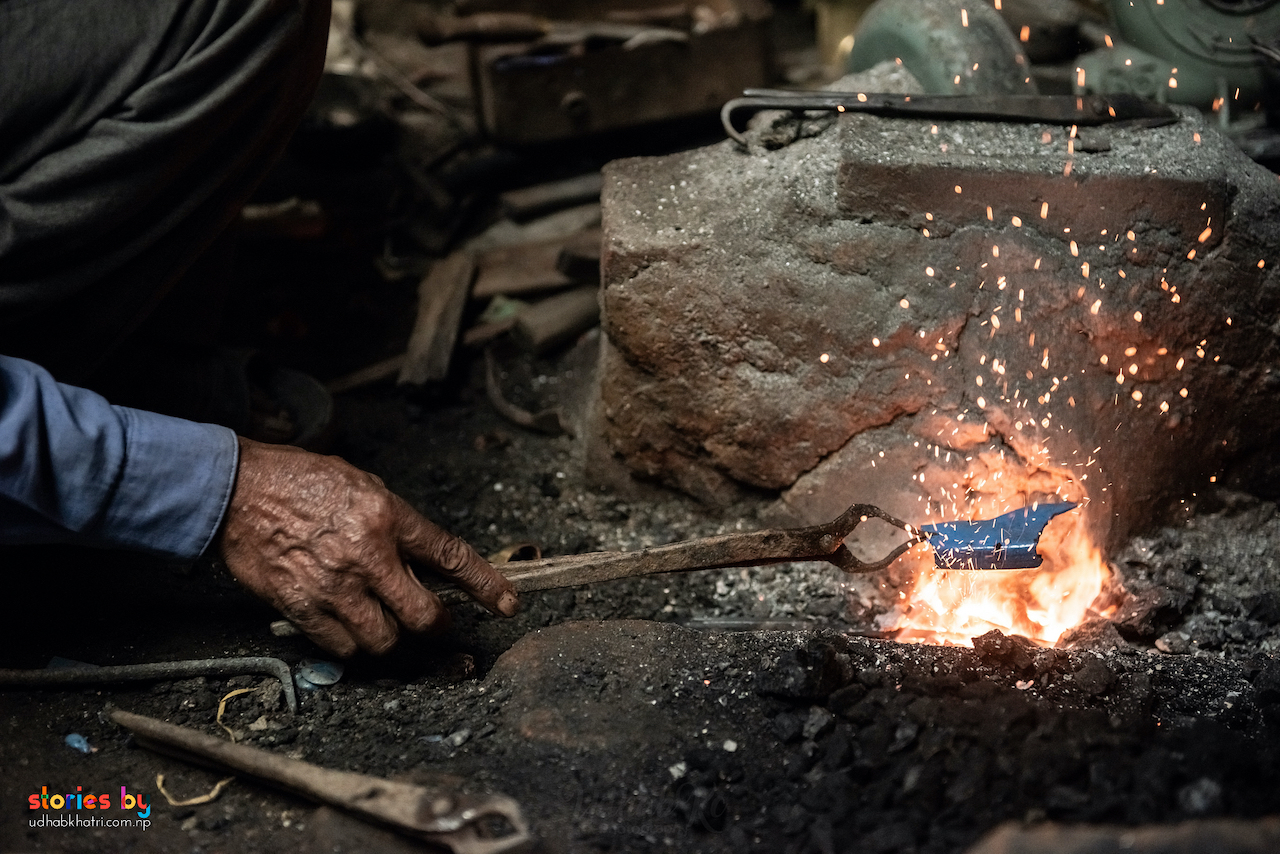
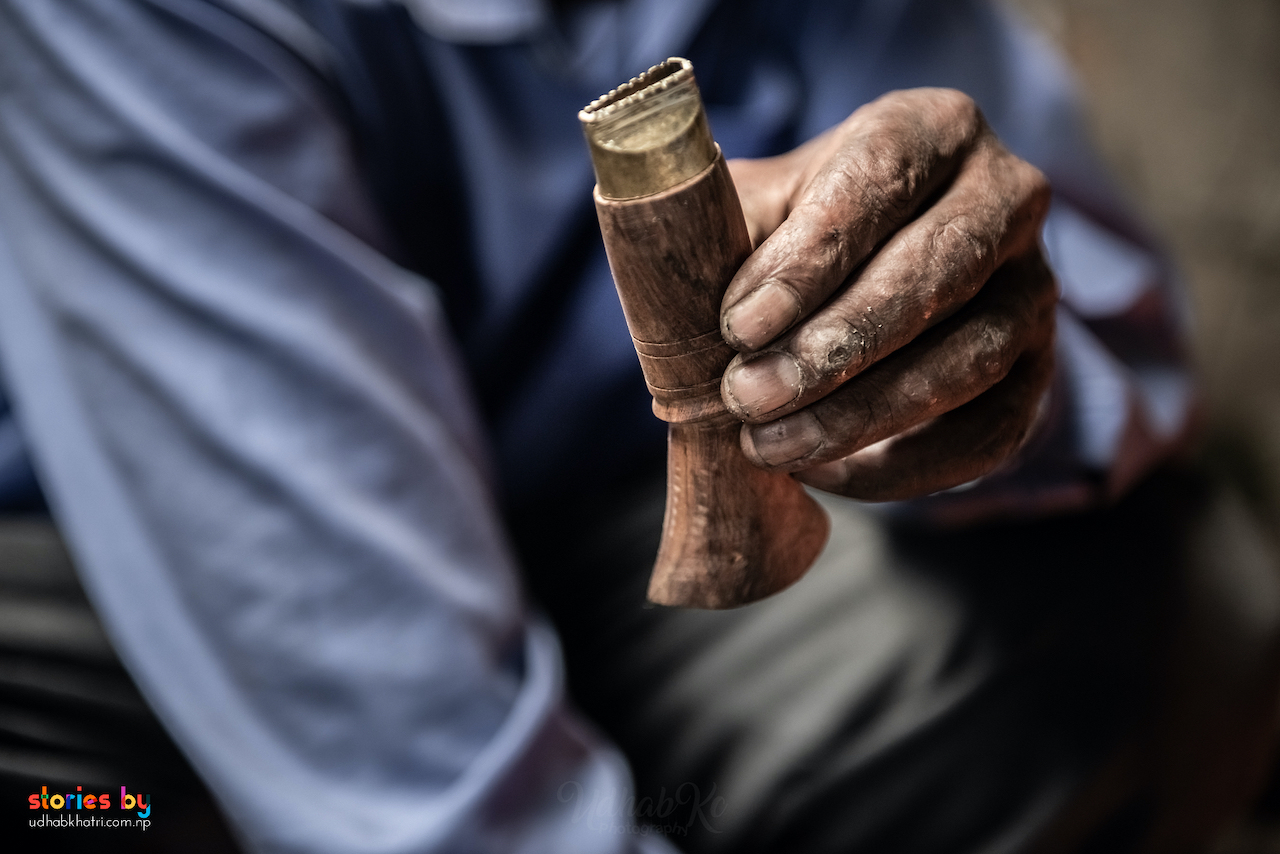
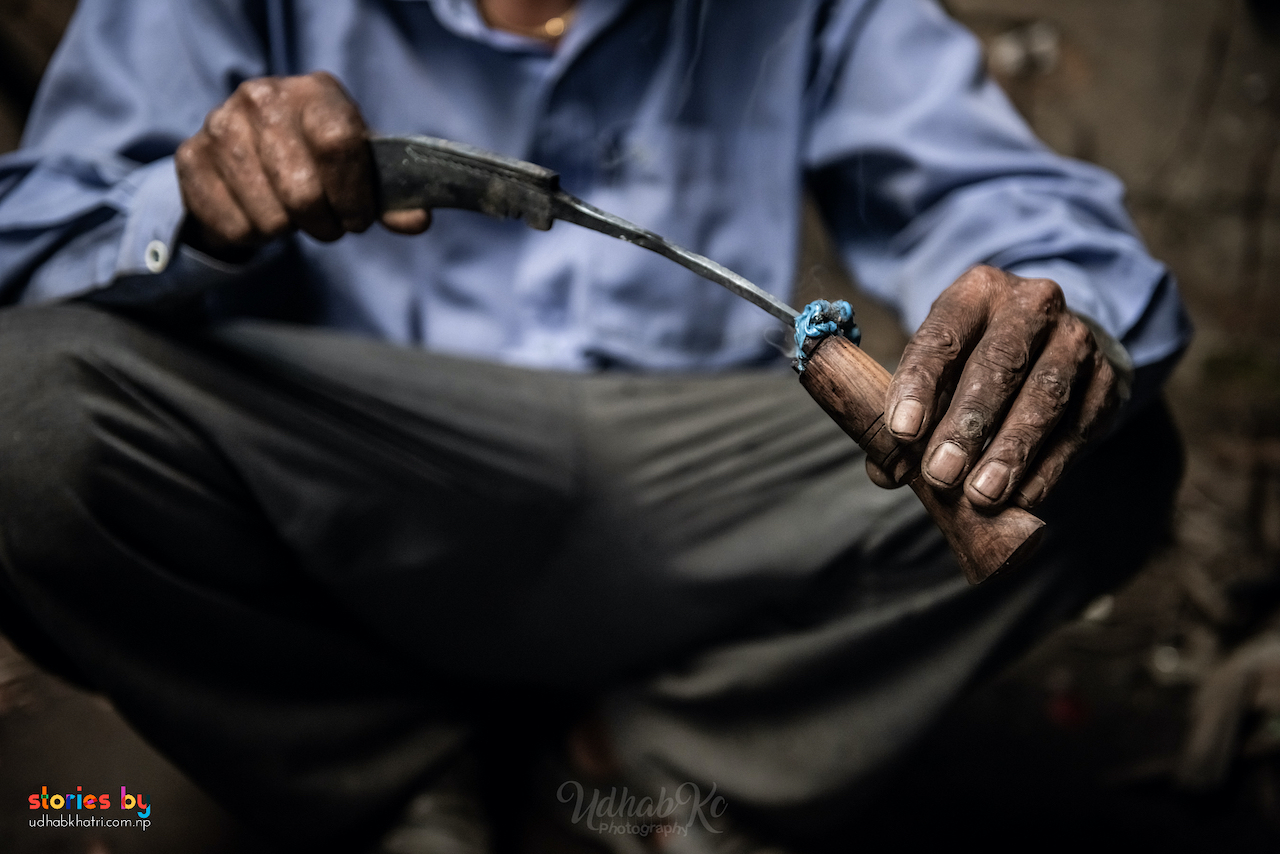
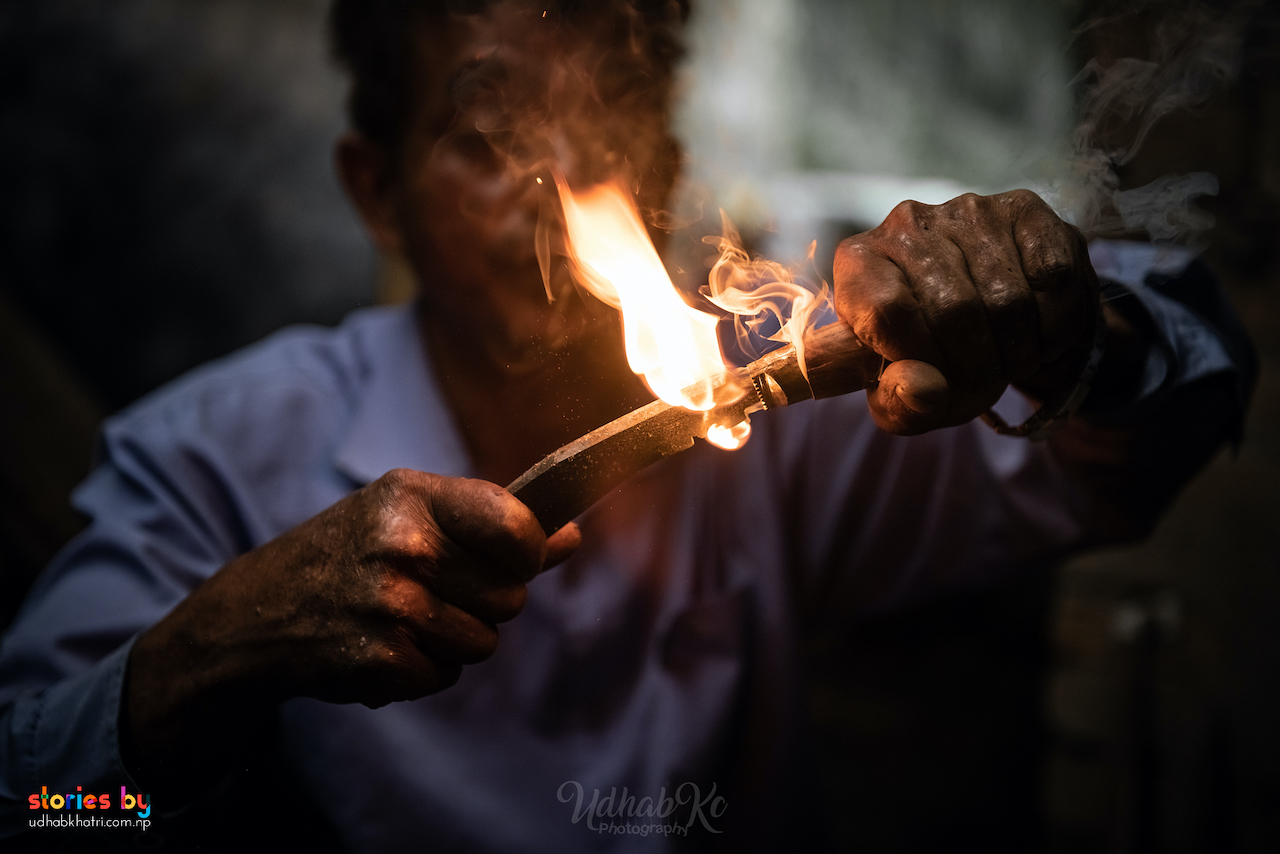
High-carbon steel is used to make Khukuris traditionally. The small portion of the metal that protrudes through the end of the handle is hammered flat to secure the blade. The handles of Khukuris, which are typically made of buffalo horn, are frequently secured with laha (Himalayan epoxy).
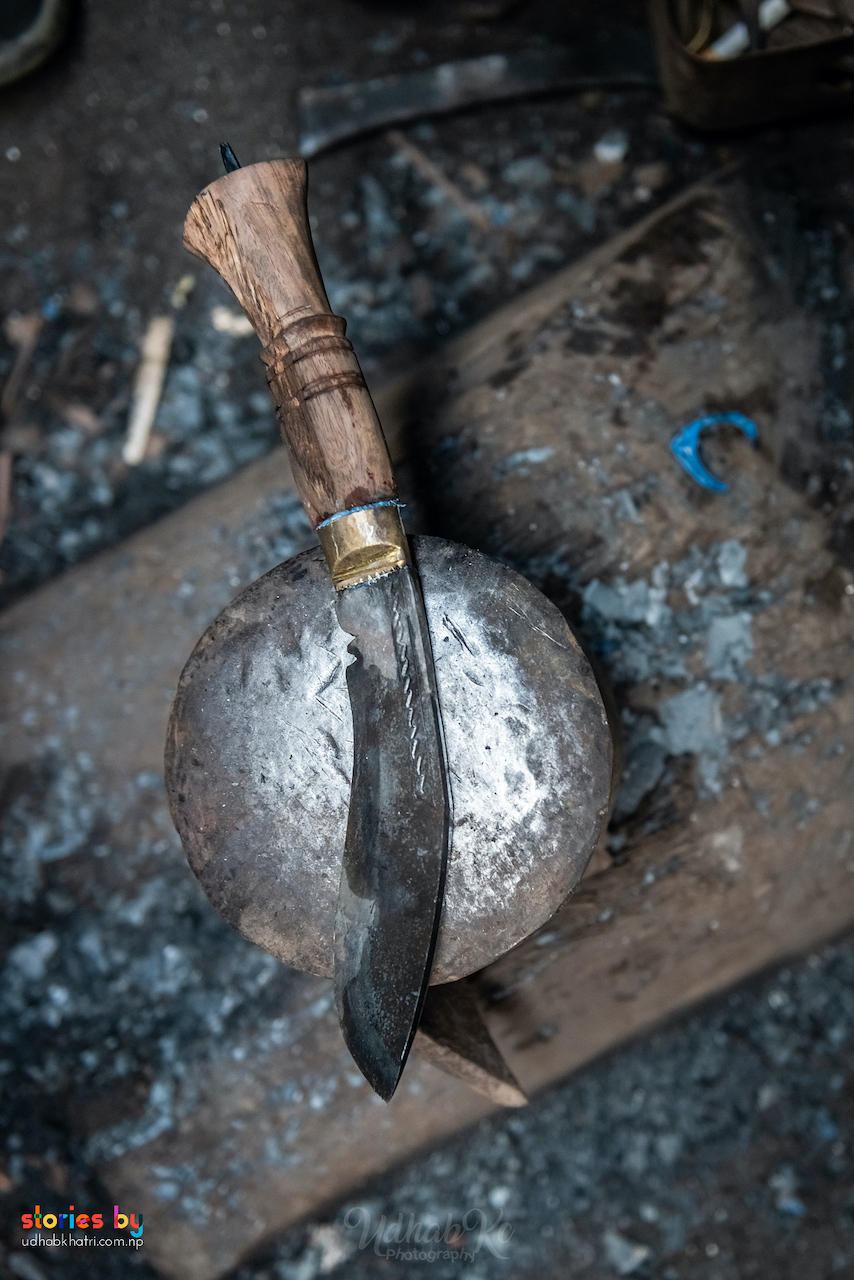
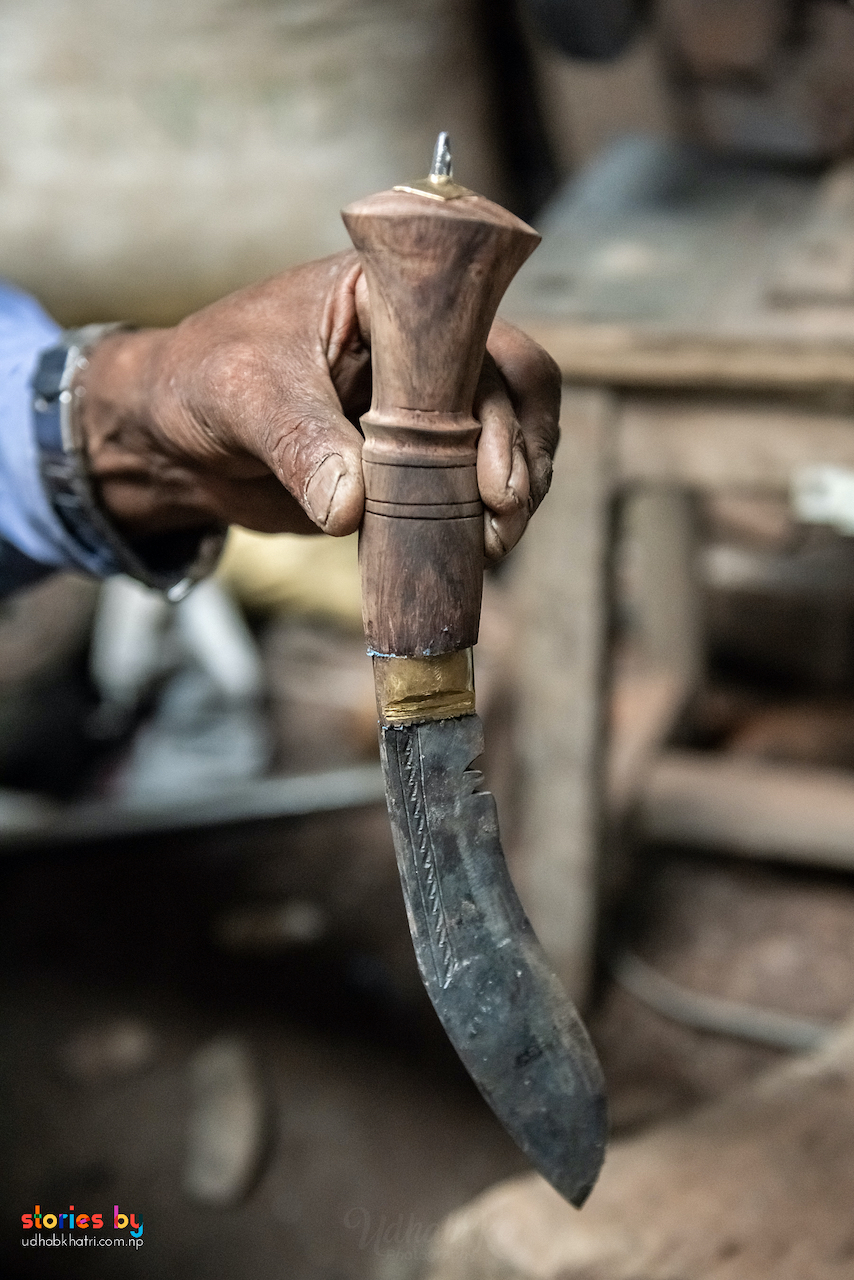
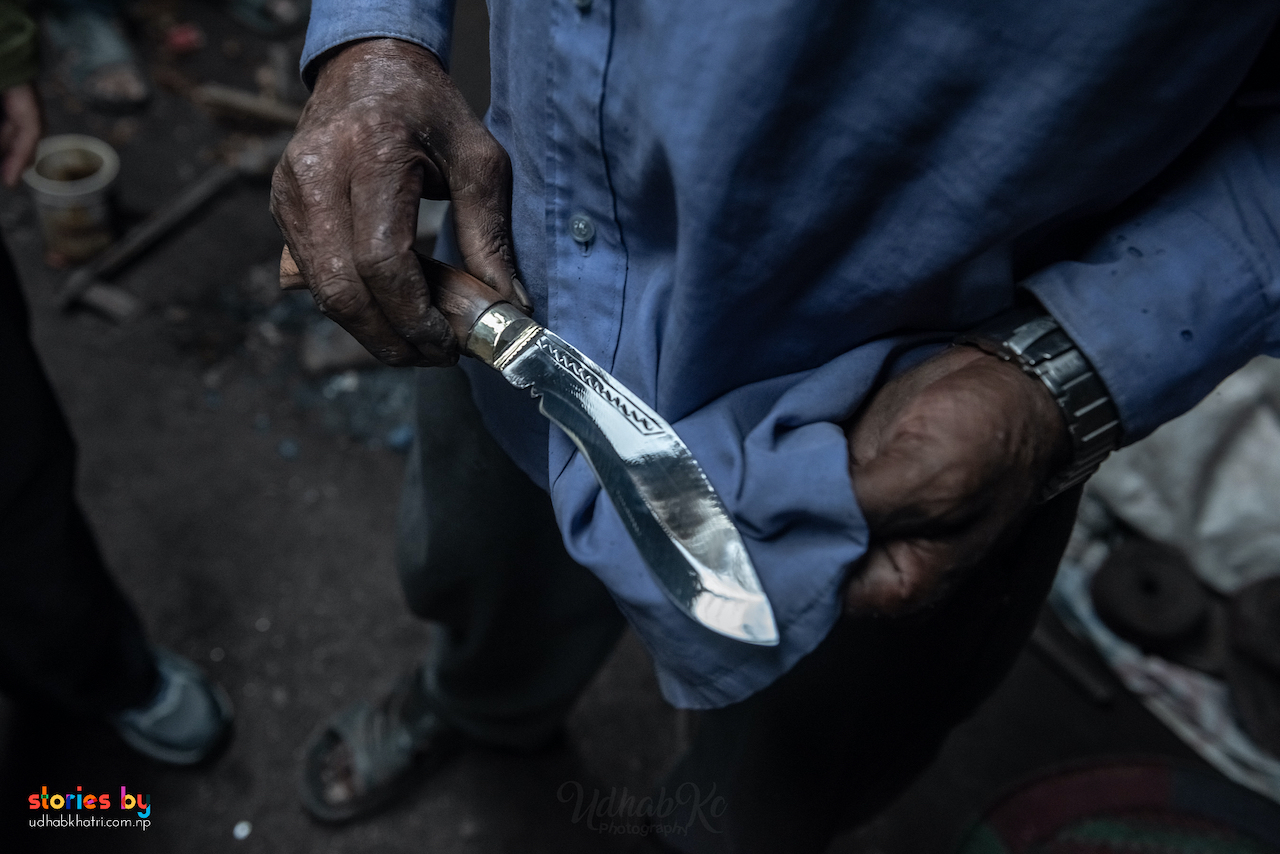
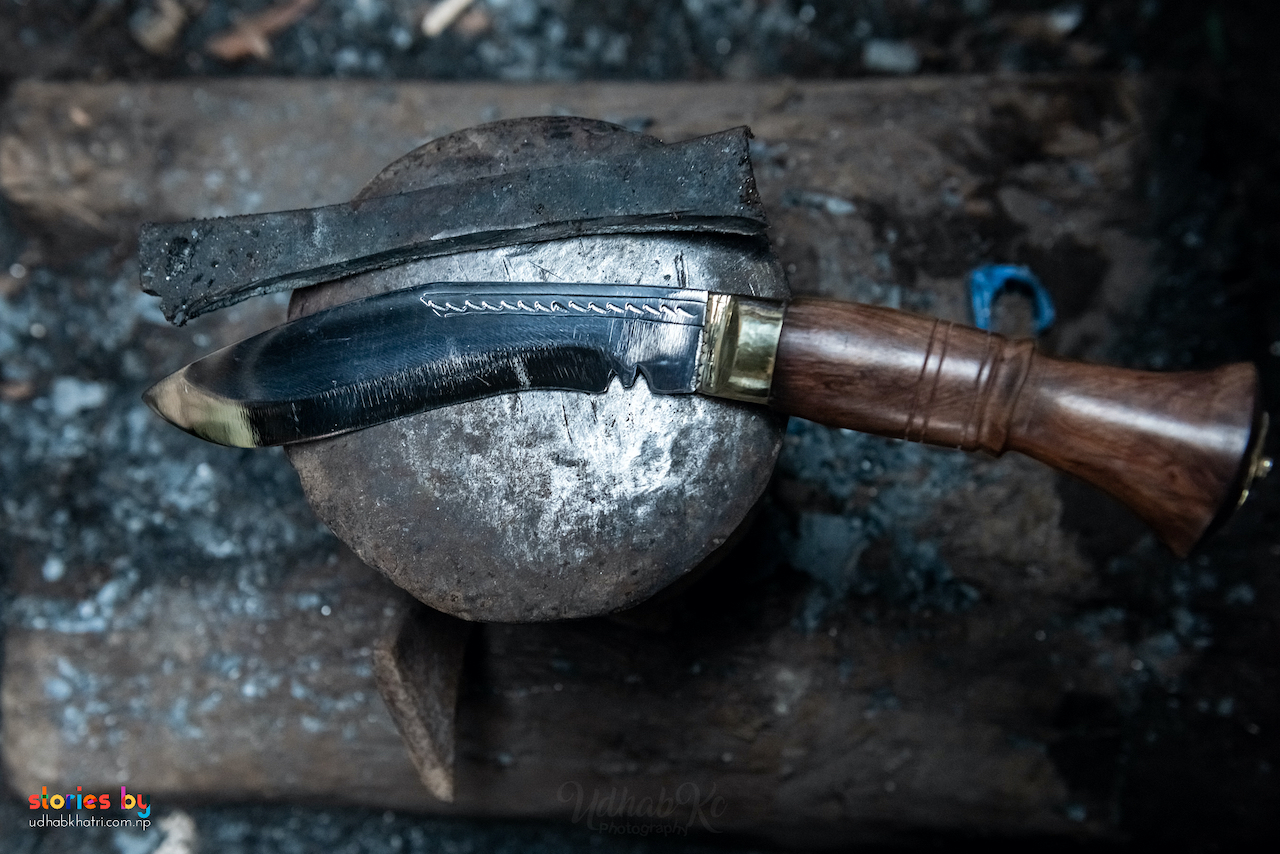
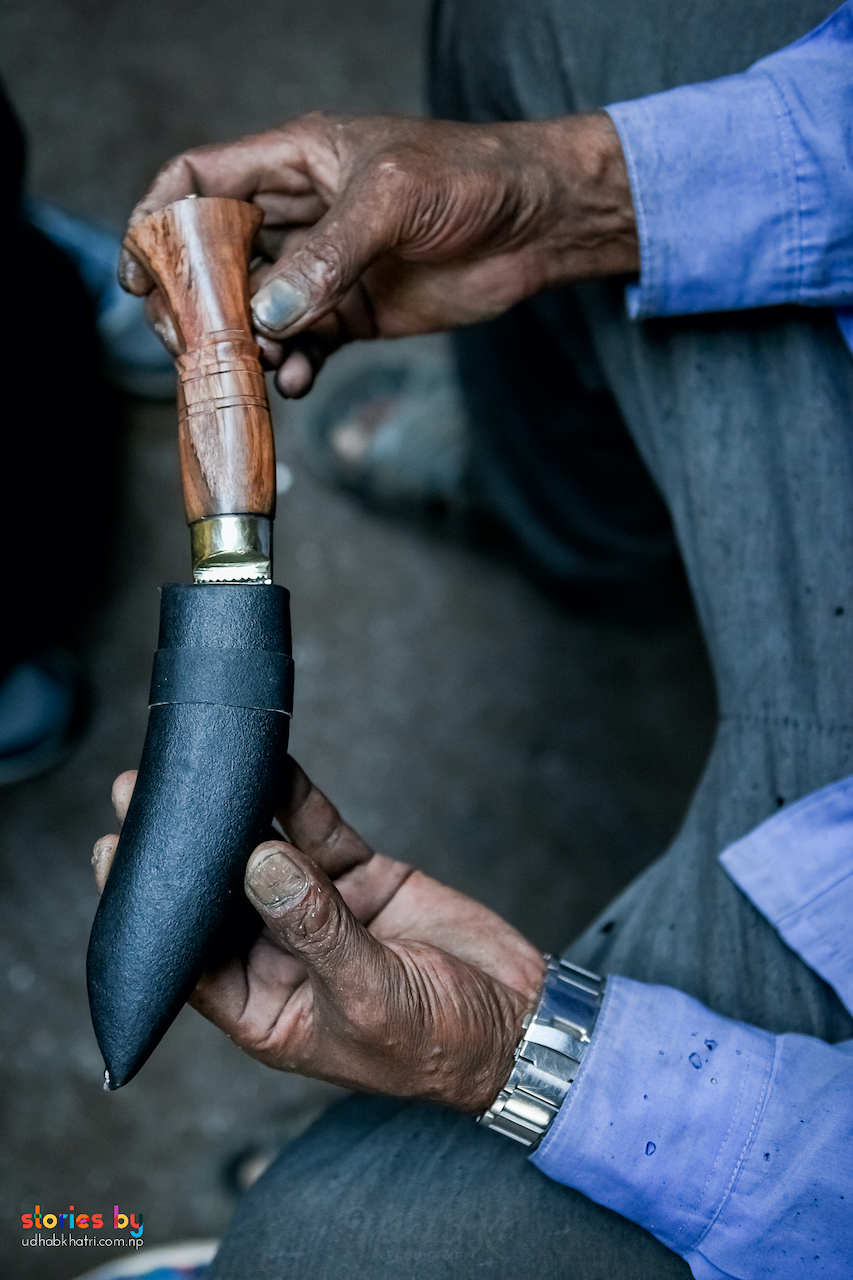
Work produced during multiple visits to Indra Sunar's workspace for the Backstreet Academy Khukuri Making workshop.
The Khukuri is not just a weapon or a tool.
It is a symbol of identity, tradition, and pride — forged with the same fire and steel that have shaped Nepal's history.
Browse all photo stories
More Photo Stories

Photography City Guides