Lalitpur,
the city of artisans
Where Buddhist courtyards and Newar craft have endured for a thousand years
Lalitpur — meaning "city of beauty" in Sanskrit — sits just south of Kathmandu across the Bagmati River, and yet it feels like an entirely different world. Where Kathmandu moves fast and loud, Patan holds still. Its old city is built around a series of ancient Buddhist monastery courtyards called bahals, its streets lined with craftsmen whose families have worked in metal, stone, and wood for generations. For a documentary photographer, Patan offers a quieter, more contemplative version of the valley's visual richness — one that rewards unhurried observation.
Patan Durbar Square & the surrounding alleyways
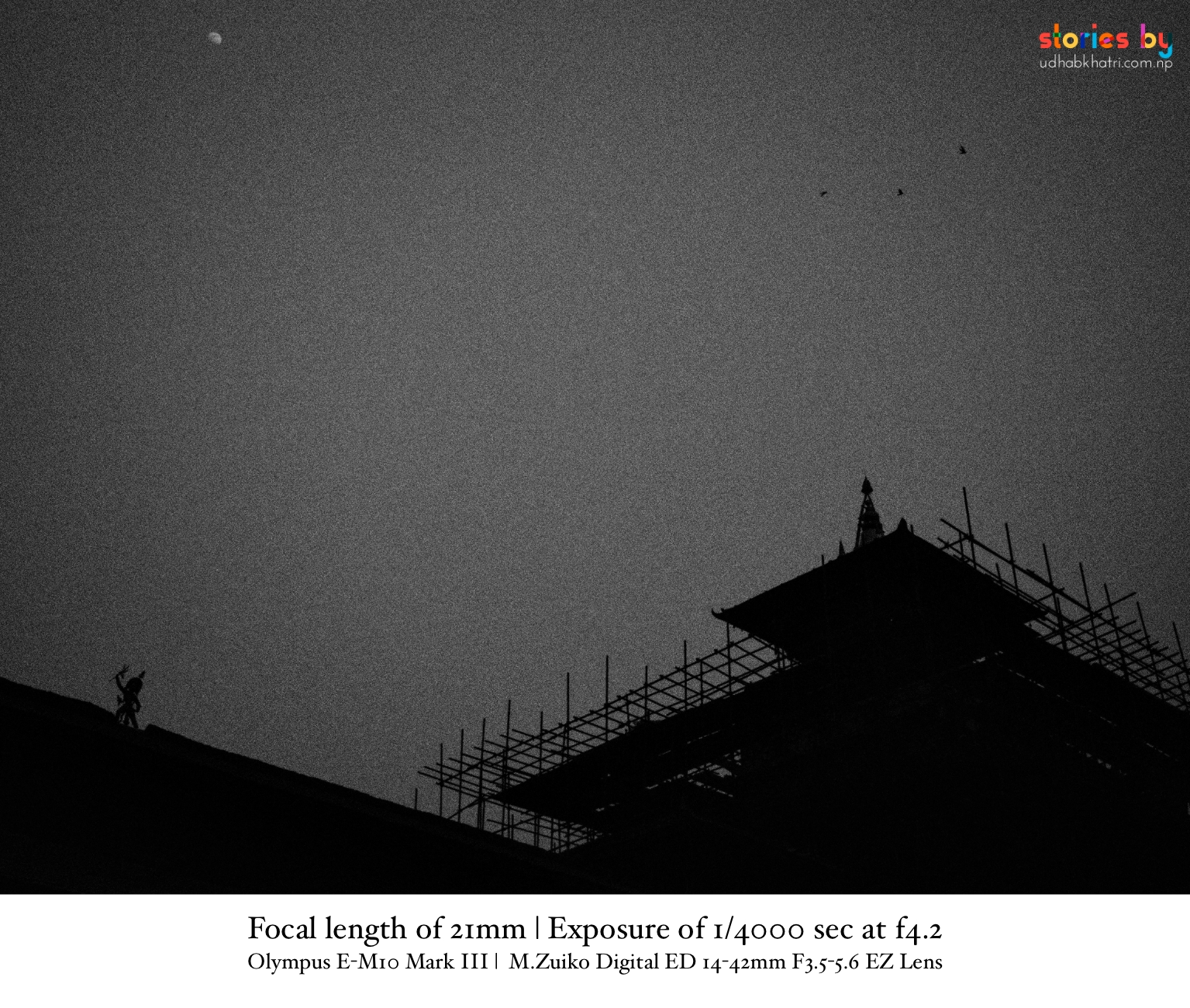
Patan Durbar Square is considered by many to be the finest concentration of traditional Newar architecture in Nepal — perhaps in all of Asia. The square was the ceremonial heart of the Malla kingdom of Lalitpur, and its temples, palaces, and courtyards were built and refined over five centuries between the 12th and 17th centuries. Unlike Kathmandu's Durbar Square, which absorbed significant earthquake damage in 2015, much of Patan's square remains in a remarkable state of preservation.
The Krishna Mandir, built in 1637 by King Siddhi Narayan Malla, is the square's most singular structure — a stone shikhara temple in a style more commonly found in North India than Nepal, its friezes depicting scenes from the Mahabharata and Ramayana in exquisite carved relief. Opposite it, the Bhimsen Temple rises above the square's northern end, its golden upper storey a landmark visible from across the neighbourhood.
The Patan Museum, housed inside the old royal palace, is one of the finest museums in South Asia for understanding the metalwork and artistic traditions of the Kathmandu Valley. Even if you do not enter, the museum's inner courtyards — accessible with the Durbar Square ticket — are extraordinary architectural spaces with a quality of light that rewards patient observation.
But the real Patan begins in the lanes behind and around the square. The neighbourhood of Mangal Bazaar to the south is where craftsmen still work in open workshops — metalworkers beating copper and brass into ritual vessels and statues, woodcarvers producing the intricate lattice window frames that define Newar architecture. These are not tourist performances; they are working livelihoods, and the sounds and smells of the craft — hot metal, sawdust, the tap of a mallet — are as much a part of the place as its temples.
Woven into the lanes south of the square is the Bagalamukhi Temple, a powerful tantric shrine dedicated to one of the ten Mahavidyas — fierce goddess forms in the Hindu-Tantric tradition. The temple draws a steady stream of devotees, particularly on Tuesdays and Saturdays. The atmosphere is charged and intimate — butter lamps, vermilion, the smell of incense, faces in concentrated prayer — quite different from the more publicly visible temples of the square itself.
Come at dawn when the square belongs to the sweepers, the flower sellers, and the first devotees. The Krishna Mandir's stone friezes catch early light beautifully — use a longer focal length to compress the carved figures against a background of sky or brick. The museum courtyard has a quality of contained, reflected light that makes for exceptional portraits of craftsmen and visitors alike.
Visit on a Tuesday or Saturday when the flow of devotees is highest. The courtyard is intimate and the butter lamp light at dusk is extraordinary. Ask before photographing anyone in active prayer — this is a deeply personal space. Focus instead on the offerings, the hands, the architecture framing moments of devotion.
The metalworking workshops along Mangal Bazaar are best in the morning when craftsmen are at full work. The contrast between dark workshop interiors and the bright street outside creates natural chiaroscuro. Stand at the doorway, let your presence become familiar, and wait before raising the camera.
Hiranyavarna Mahavihara (Golden Temple)
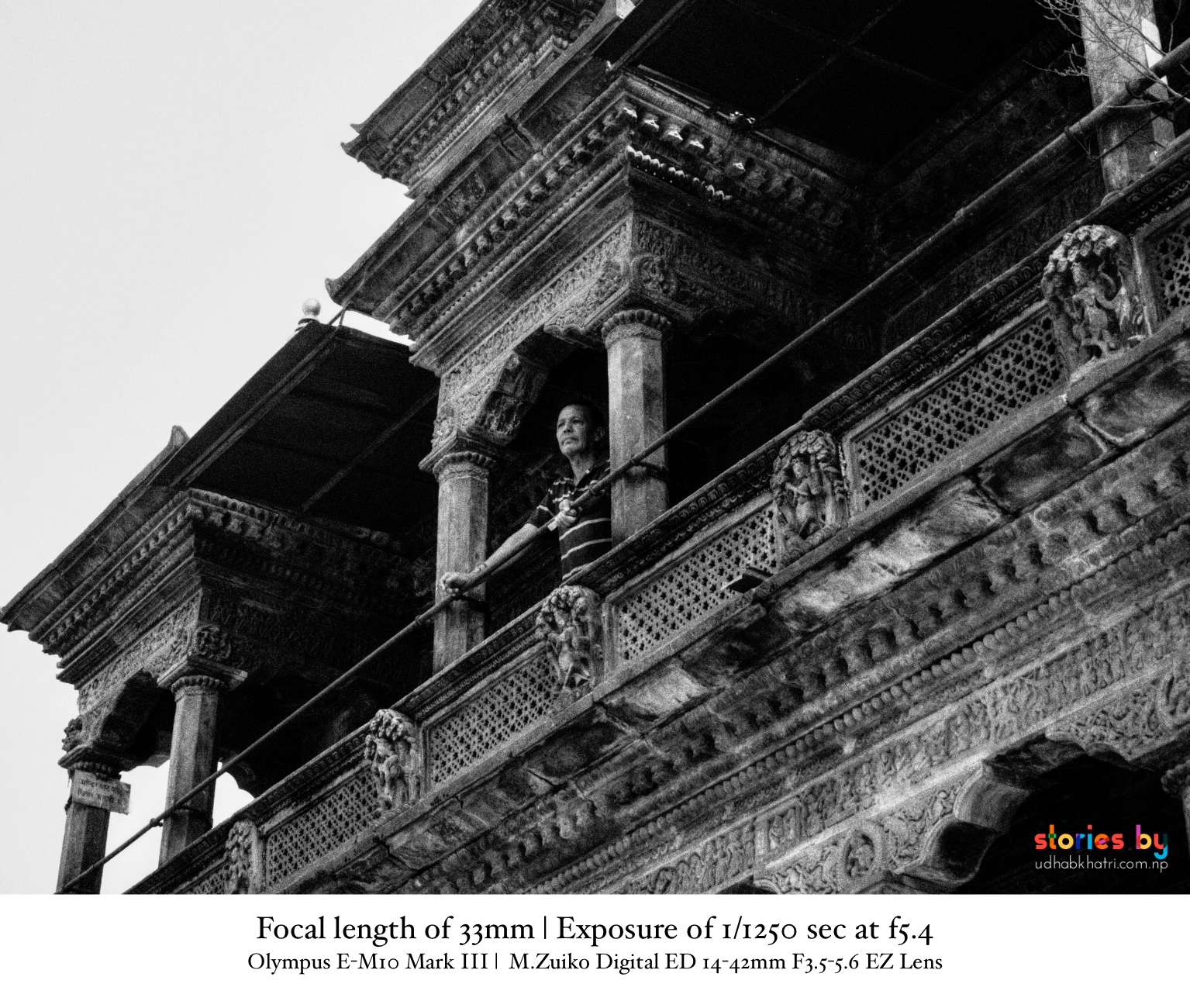
A short walk north of the Durbar Square, accessible through a narrow lane and announced by a low doorway that requires you to bow as you enter, the Hiranyavarna Mahavihara — commonly known as the Golden Temple — is one of the oldest and most active Buddhist monastery courtyards in the Kathmandu Valley. Its origins date to the 12th century, and the monastery has been in continuous use ever since.
The main shrine building is covered in gilded copper repoussé panels — an extraordinary display of traditional Newar metalwork that gives the temple its name. The courtyard around it contains a miniature replica of the main shrine, several smaller chaityas and shrines, and a resident tortoise in a small pond said to carry the sins of worshippers. The atmosphere is deeply contemplative: monks, elderly devotees, and the occasional art historian all moving slowly through the same gilded space.
The monastery is still administered by local Newar Buddhist families, with children from the neighbourhood serving as bare chhen (novice monks) for a period in their youth — a tradition that connects this place not just to religious practice but to the social fabric of Patan itself.
The low entrance doorway creates a natural threshold shot — figures framed by the dark arch against the golden courtyard beyond. Inside, the gilded surfaces reflect light in complex ways; the best moments are transitional — a monk pausing, a woman placing an offering, a child circling the inner shrine. Shoot with sensitivity; this is an active place of worship, not a gallery.
Khokana & Bungamati
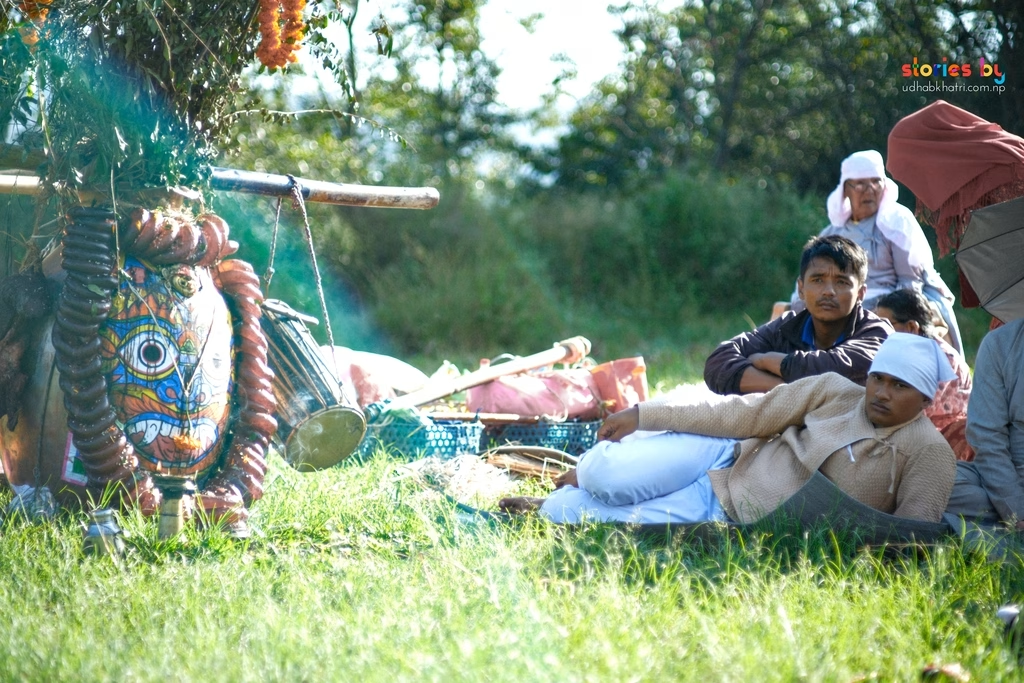
South of Patan, the road descends from the urban plateau of the valley toward two of its most intact Newar villages: Khokana and Bungamati, barely two kilometres apart and each preserving a way of life that the cities have largely lost.
Khokana is famous for its mustard oil — the village has produced cold-pressed mustard oil using traditional wooden press wheels for centuries, and the oil-pressing is still done by hand in the communal press house. The main square, presided over by the Shekali Mai Temple, is one of the finest examples of a traditional Newar tole (neighbourhood square) in the valley. The village was severely damaged by the 2015 earthquake and much of it is still in various stages of reconstruction — itself a remarkable documentary subject about resilience, loss, and the effort to rebuild identity alongside buildings.
Bungamati, a short walk south, is perhaps best known as one of the two homes of Rato Machhindranath — the god of rain and harvest, worshipped by both Hindus and Buddhists across the valley. Every year, an enormous chariot is built and pulled through the streets of Patan in a months-long procession; at the end of the festival, the deity returns to Bungamati for six months of the year. The village square contains the main temple of Machhindranath, surrounded by traditional houses, woodcarving workshops, and the quiet rhythm of a community that lives, in many ways, as it always has.
Visit the oil press house early — the pressing is typically done in the morning, and the interior light filtering through the dark space onto the turning wooden wheel and workers' forms is extraordinary. The reconstruction work after the earthquake — scaffolding, bare brick, craftsmen rebuilding — is powerful documentary material that won't be there for much longer.
The woodcarving workshops here produce work destined for temples across the valley and beyond — find the craftsmen at their benches and let the work fill the frame. The village square in late afternoon light, with the Machhindranath temple as anchor, is one of the finest compositions in the valley. If you visit during Rato Machhindranath Jatra season, the chariot under construction is an unmissable subject.
Entry Fees
Most of Patan is free to walk and explore. The heritage zone around Durbar Square has an entry fee.
SAARC nationals: NPR 500 · Nepali citizens: Free
Separate entry: NPR 500 (foreigners)
Nepali citizens: Free
No entry requirement
No entry requirement
Fees subject to change. Verify current rates at the entrance or with the Lalitpur Metropolitan City heritage office.
Festival Calendar
Patan's festivals are among the most sustained and visually rich in the valley. Several last for days or weeks, transforming the city's streets, squares, and community relationships entirely.
A logical walking route
Patan's old city is compact and entirely walkable. The route below covers the Durbar Square area in the morning, then moves outward to the Golden Temple before the afternoon. Khokana and Bungamati are best as a separate half-day outing to the south.
Khokana and Bungamati are approximately 6–8 km south of Patan Durbar Square. Best reached by taxi or a short bike ride. Allow a full morning for both villages together.