Destination — Kathmandu Valley
Kathmandu,
Where ancient ritual and daily life share the same pavement
Kathmandu,
the old city
Where ancient ritual and daily life share the same pavement
Kathmandu's old town is not a museum. It breathes. Every morning, flower sellers arrange marigold garlands outside temples that have stood for five centuries. Priests ring bells in courtyards that double as children's playgrounds. Merchants weigh spices on the same scales their grandparents used. For a street photographer, this city does not offer "moments" — it offers an unbroken, living conversation between past and present, and your job is simply to listen and look.
Location 01
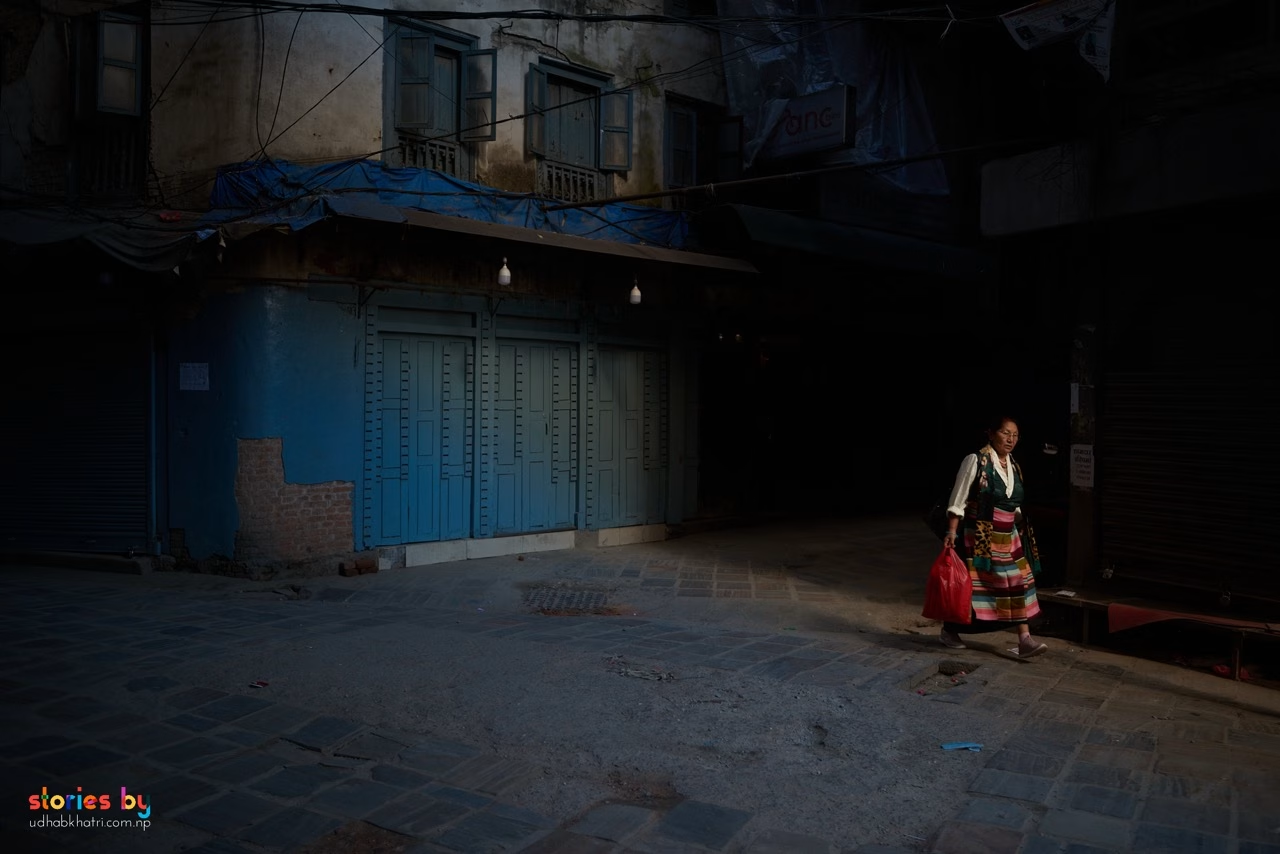 Photo — Ason Bazaar
Ason Bazaar & Thamel Backstreets
Photo — Ason Bazaar
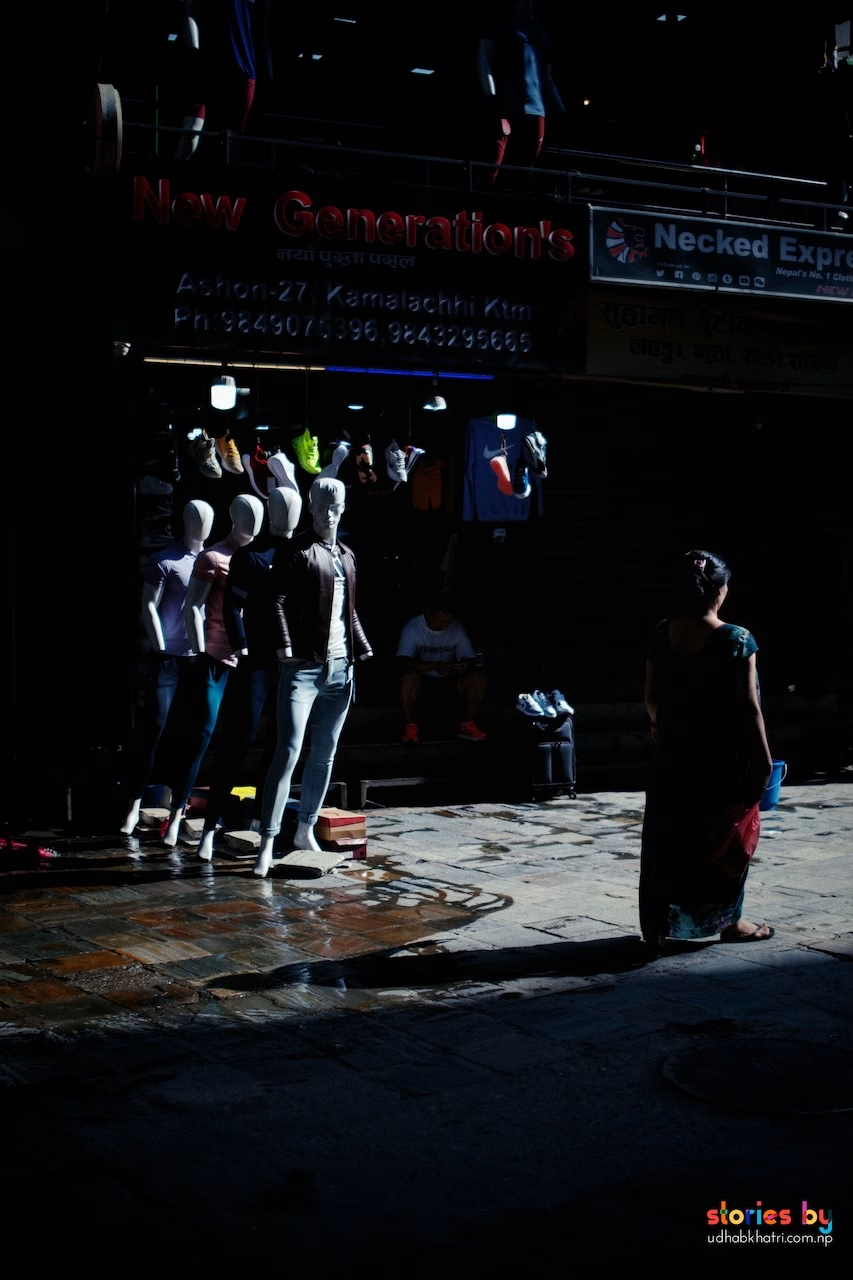
Ason has been the commercial heart of Kathmandu for over a thousand years. Long before roads, it was the intersection of trade routes connecting Tibet, India, and the Newar kingdoms. Today it remains one of the city's most dense, unfiltered crossroads — a spice market, a fruit bazaar, a shrine junction, and a neighbourhood all at once.
At the centre of the intersection stands the Annapurna Temple, a small but deeply revered shrine dedicated to the goddess of abundance. Every morning, traders begin their day with an offering here before opening their shops. The ritual is quiet, habitual, and deeply photogenic — incense smoke against the angular wooden architecture, marigold petals on worn stone.
The market trades in a staggering range of goods: dried fish, Himalayan spices, grains, religious paraphernalia, and medicinal herbs. The layers of commerce here — wholesale traders, small retailers, street vendors, porters moving sacks — create a visual density that rewards patience and a wide eye.
Photographer's Eye — Ason
Look for the weighing rituals — the old brass scales, the practiced hands, the transaction that hasn't changed in generations. The light at dawn falls directly into the intersection; catch it on the spice sacks, the coloured powders, the temple metalwork. Position yourself low, near the Annapurna shrine, and let worshippers move through your frame.
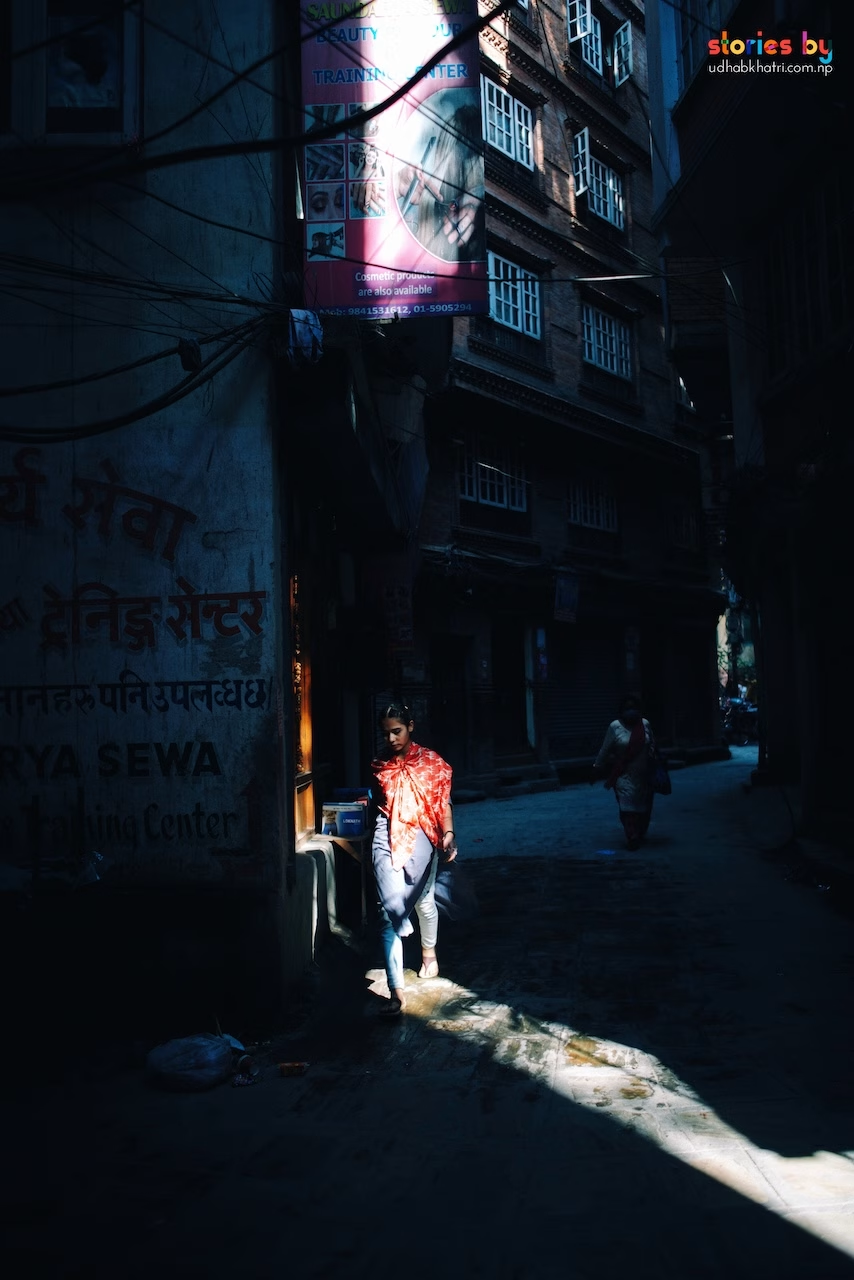
A short walk north, Thamel's main streets are tourist infrastructure — gear shops, guesthouses, souvenir stalls. But step one block back in any direction and a different city emerges. The backstreets retain a working neighbourhood underneath the tourism overlay — vegetable vendors, motorcycle repair shops, chiya stalls where porters rest between loads, and residential houses where families have lived for generations regardless of who moves in next door.
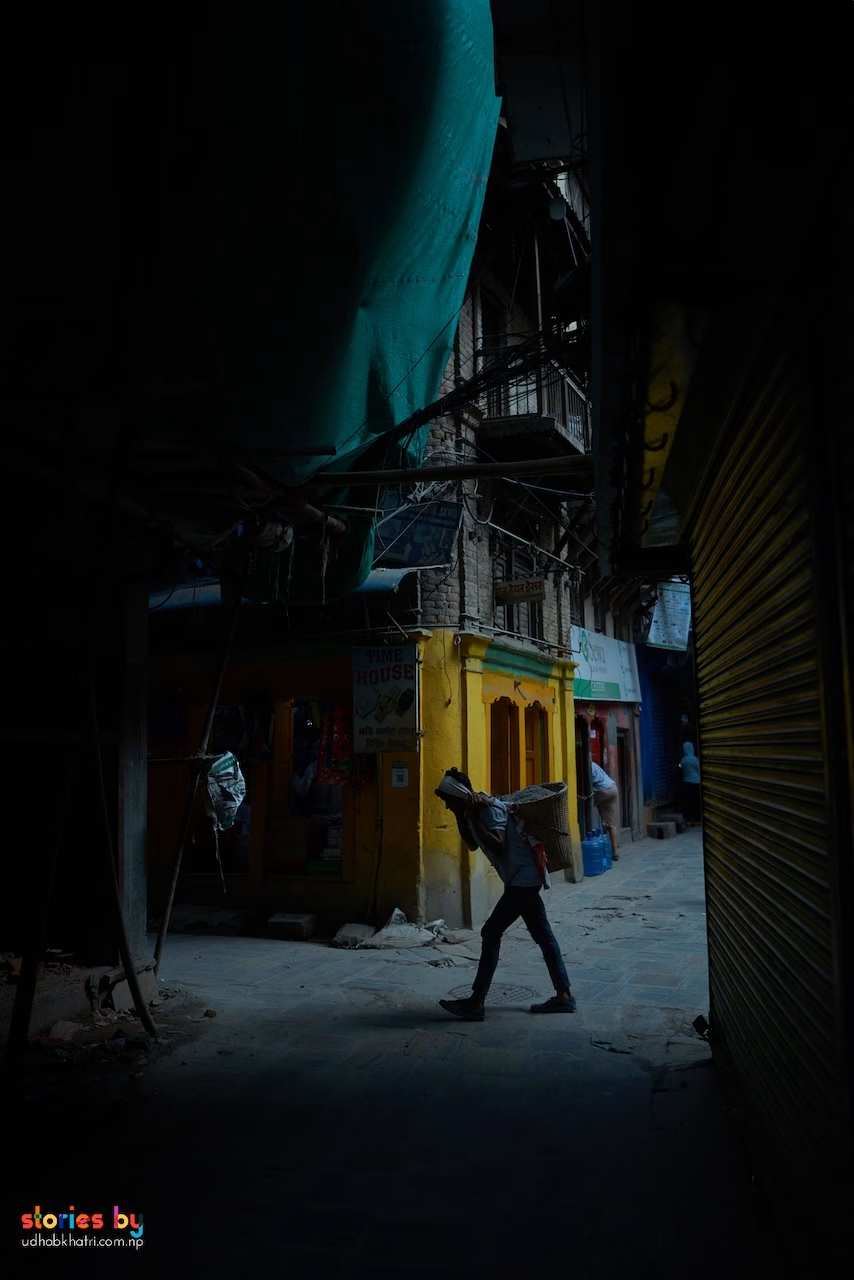
The contrast is genuinely interesting as a documentary subject: the same lane can hold a hand-painted trekking permit sign and a freshly garlanded deity niche. Early morning is when this is most visible — before the cafés open, the streets belong to supply chains, small temples receiving their first offerings, and men with dokos (bamboo baskets) moving goods through routes that predate the tourist economy entirely.
Photographer's Eye — Thamel Backstreets
Be at the edges of Thamel by 6 am — where the tourist zone frays into local life is where the tension and the story are. The chiya stalls are gathering points; sit, order tea, wait. Follow the doko carriers; they are moving along supply routes that lead to the city's real kitchens and storerooms.
Kathmandu — Street
 Photo
Photo
 Photo
Photo
 Photo
Photo
Photo
Photo
Photo
Location 02
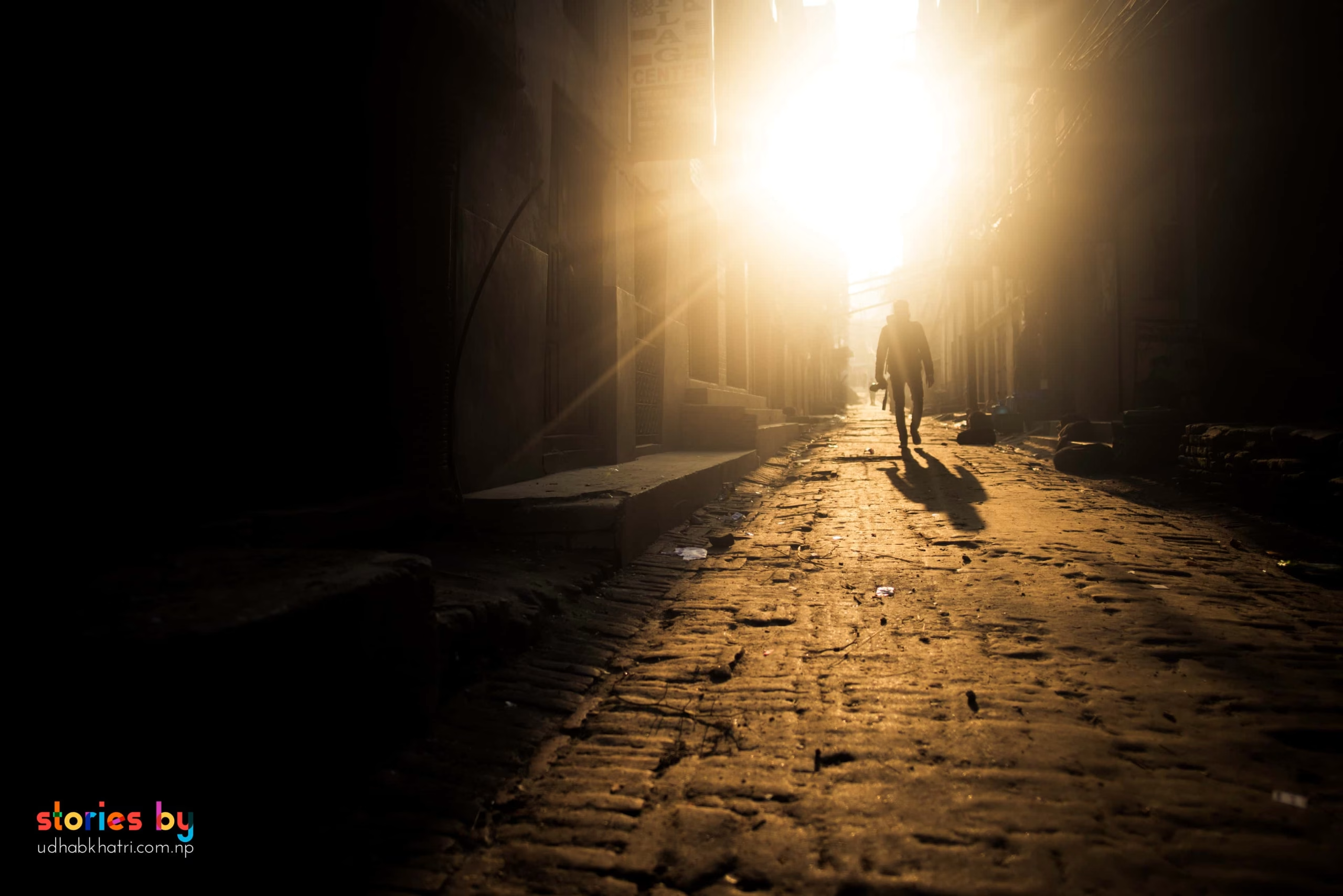 Photo — Indrachowk
Indrachowk
Photo — Indrachowk
Indrachowk is named for Indra, the Vedic god of rain and sky, and it is here that Kathmandu's most spectacular festival — Indra Jatra — reaches its emotional peak each autumn. The square is presided over by the Akash Bhairav Temple, whose deity is revealed only during the festival period: a massive blue-faced mask displayed in the upper window, drawing thousands of devotees.
Throughout the year, Indrachowk operates as a major textile and bead market. Rows of shops selling glass beads, pote (the glass bead necklaces worn by married Newar women), wool, and cloth spill onto the street. The trade here is largely conducted among women — buying, comparing, bargaining — and it gives the square a very different energy from the male-dominated commercial spaces nearby.
The architecture at Indrachowk is dense and layered — temples, shrines, and old Newar merchant houses with their carved wooden façades all competing for space in a compact square that has changed little in its bones since the medieval period.
Photographer's Eye
The bead sellers offer extraordinary colour and detail — fill the frame with the stacked glass strands against weathered skin and hands. During Indra Jatra, the square transforms completely; position yourself near the Akash Bhairav window at dusk when the oil lamps are lit. Year-round, watch for women selecting pote — it is a deeply personal, culturally loaded transaction.
Location 03
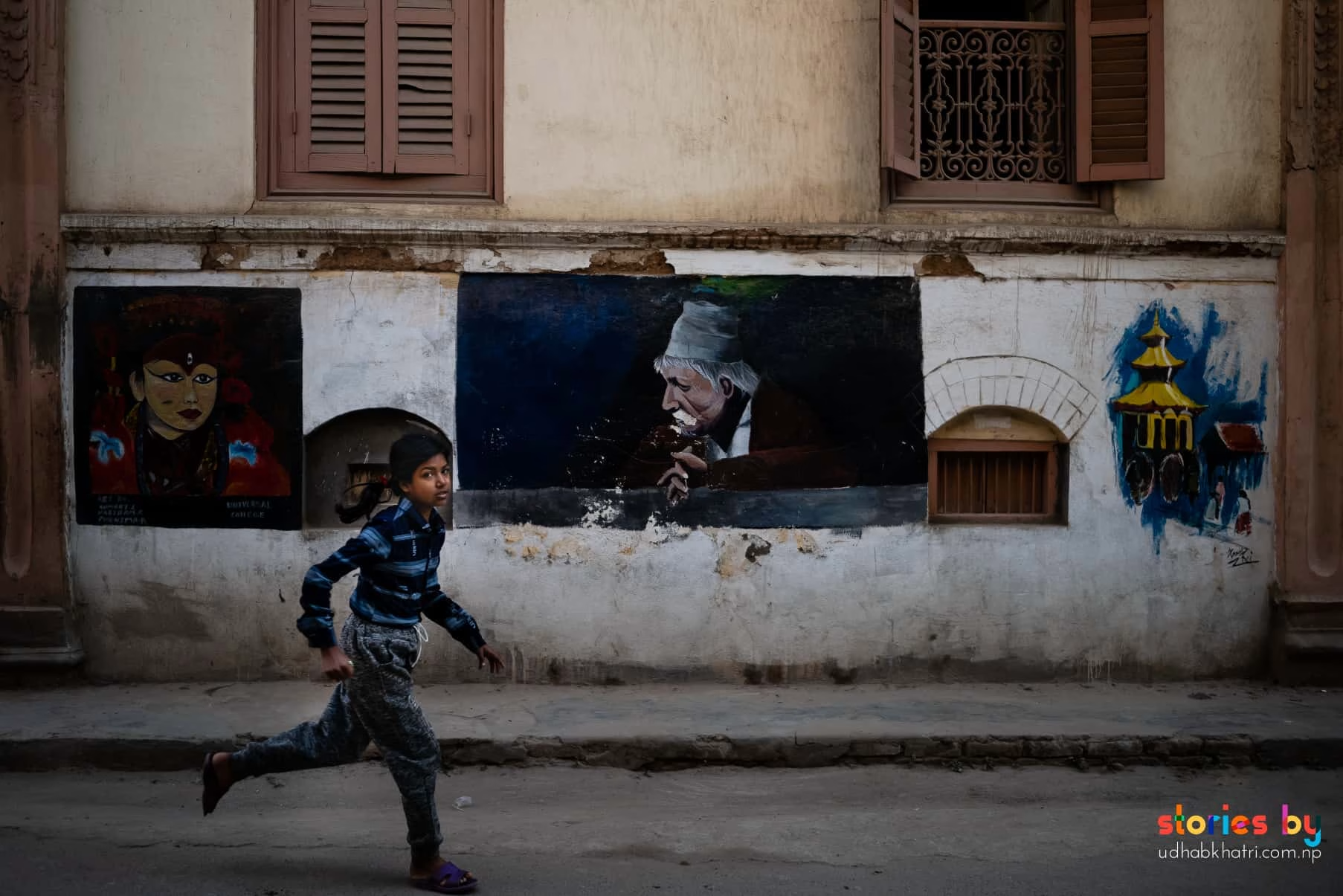 Photo — Makhan Tole
Makhan Tole
Photo — Makhan Tole
Makhan Tole is the wide street that runs between Ason and Basantapur Durbar Square — the ancient royal processional route, once lined with the city's most important merchants. Makhan means butter in Newari, and the street was historically known for its dairy traders. Today it remains one of the most atmospheric streets in the old city, with an unbroken row of narrow Newar shop fronts, each with its own goods and its own worn wooden threshold.
Unlike the tight alleys nearby, Makhan Tole is wide enough for light to flood in. The buildings on either side — many of them three or four storeys of traditional brick, carved windows, and age-blackened wood — frame the sky in a way that is almost cinematic. Pilgrims, vendors, cyclists, and tourists all share the same narrow band of pavement.
Photographer's Eye
Use the width of the street to your advantage — stand at one end and compress the layers of activity with a longer focal length. The carved wooden windows overhead make for powerful frames within frames. Watch the shop owners in their morning routines: rolling up shutters, arranging goods, drinking tea in their doorways.
Location 04
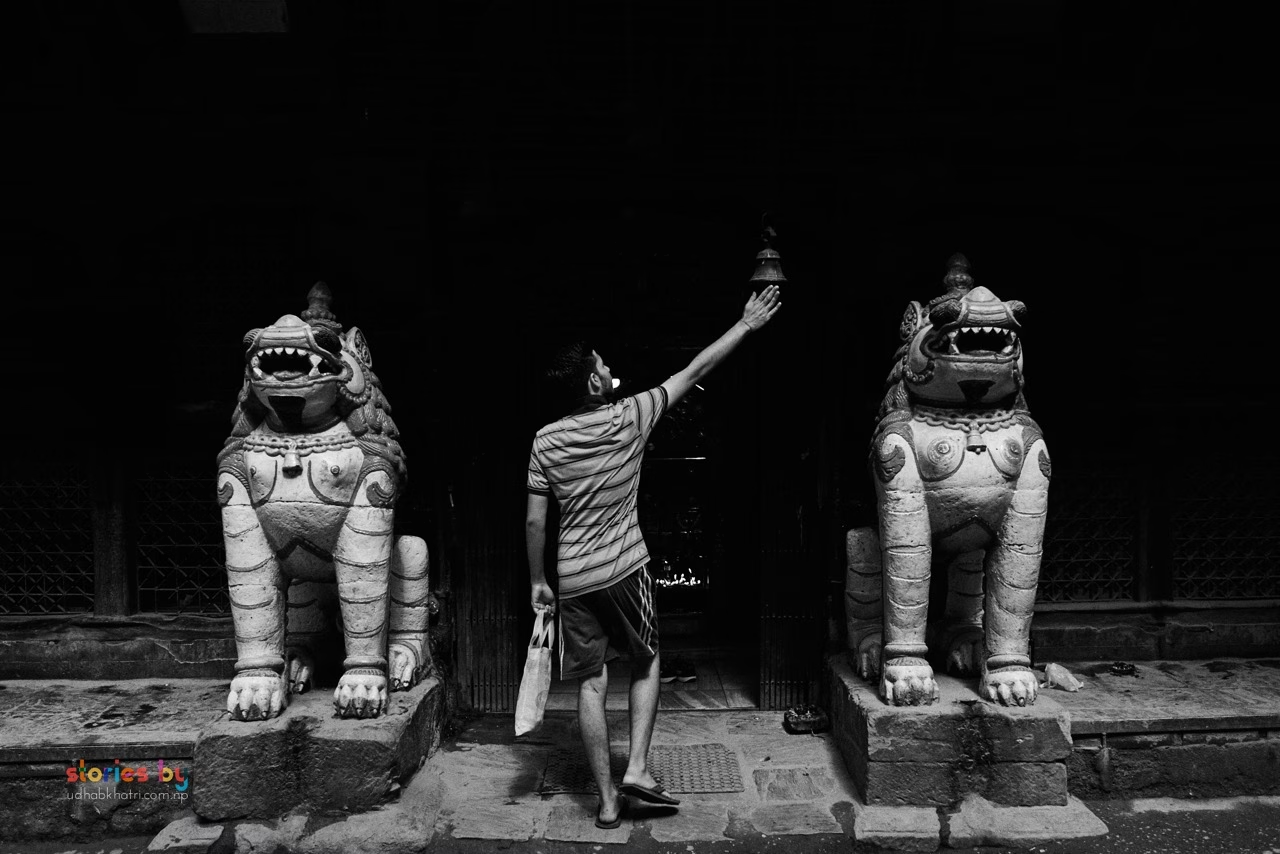 Photo — Nardevi lanes
Nardevi & Ikha Narayan Area
Photo — Nardevi lanes
A short walk off the main bazaar axis, the lanes around Nardevi and Ikha Narayan belong to a quieter, less-photographed Kathmandu. These are residential neighbourhoods where traditional Newar life continues largely undisturbed. Elderly women sit in doorways sorting lentils. Children come home from school in bright uniforms. Local men gather at the water spouts — the ancient dhunge dhara (stone water conduits) that have served the neighbourhood for centuries.
The Nardevi Temple, dedicated to a fierce tantric form of the goddess Kali, is one of the old city's more powerful religious spaces — less visited, more atmospheric. The streets immediately around it have some of the finest examples of traditional Newar domestic architecture still inhabited and lived-in rather than restored for tourism.
Photographer's Eye
Move slowly here. The neighbourhoods around Nardevi reward those who sit, watch, and wait. Look for the contrast of the ordinary and the sacred — a deity niche in the wall of an everyday building, a child playing in a courtyard that contains a four-hundred-year-old shrine. These lanes have a quality of light — filtered, reflected off old brick — that is unlike anything on the main thoroughfares.
Location 05
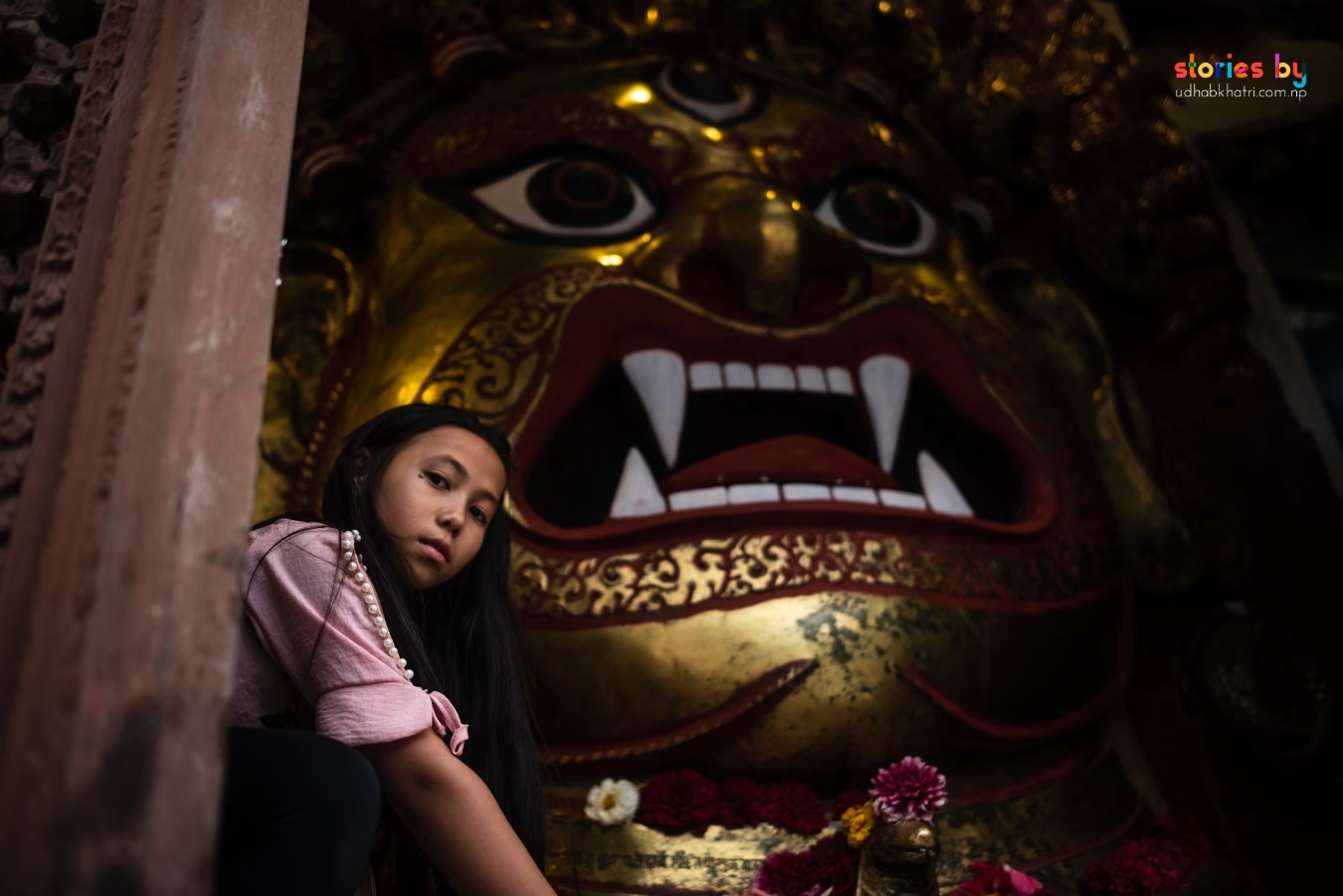 Photo — Basantapur Durbar Square
Basantapur Durbar Square & Hanuman Dhoka
Photo — Basantapur Durbar Square
Basantapur Durbar Square is the old royal palace complex of the Malla kings, who ruled Kathmandu from the 12th to the 18th century. The square contains over fifty temples and monuments, including the towering Taleju Temple, accessible to non-Hindus only during the Dashain festival. The entire complex is a UNESCO World Heritage Site, though it is simultaneously and emphatically a living neighbourhood — not a cordoned museum.
The Hanuman Dhoka — the old royal palace, named for the guardian deity Hanuman at its gate — contains a series of inner courtyards that most visitors never reach. The Nasal Chowk, the main ceremonial courtyard, still hosts important state rituals. The Mul Chowk, deeper inside, is one of the finest examples of Malla-era palatial architecture in Nepal: carved struts, a gilded gate, the inner sanctum of Taleju. The 2015 earthquake damaged several structures significantly; the rebuilding and restoration work happening alongside daily life is itself a profound documentary subject.
The square's public areas are continuously alive — sadhus, vendors, students, devotees, pigeons, and tourists all occupying the same space with entirely different intentions.
Photographer's Eye
Arrive at dawn before the tourist crowds. The square in early morning belongs to the locals — the flower sellers, the priests, the old men feeding pigeons on the steps of the Maju Deval. At dusk, the warm light on the brick temples is extraordinary. Inside Hanuman Dhoka, the inner courtyards have a hushed, dimensional quality — strong geometric architecture, devotional objects, shafts of light through carved lattice windows.
Location 06
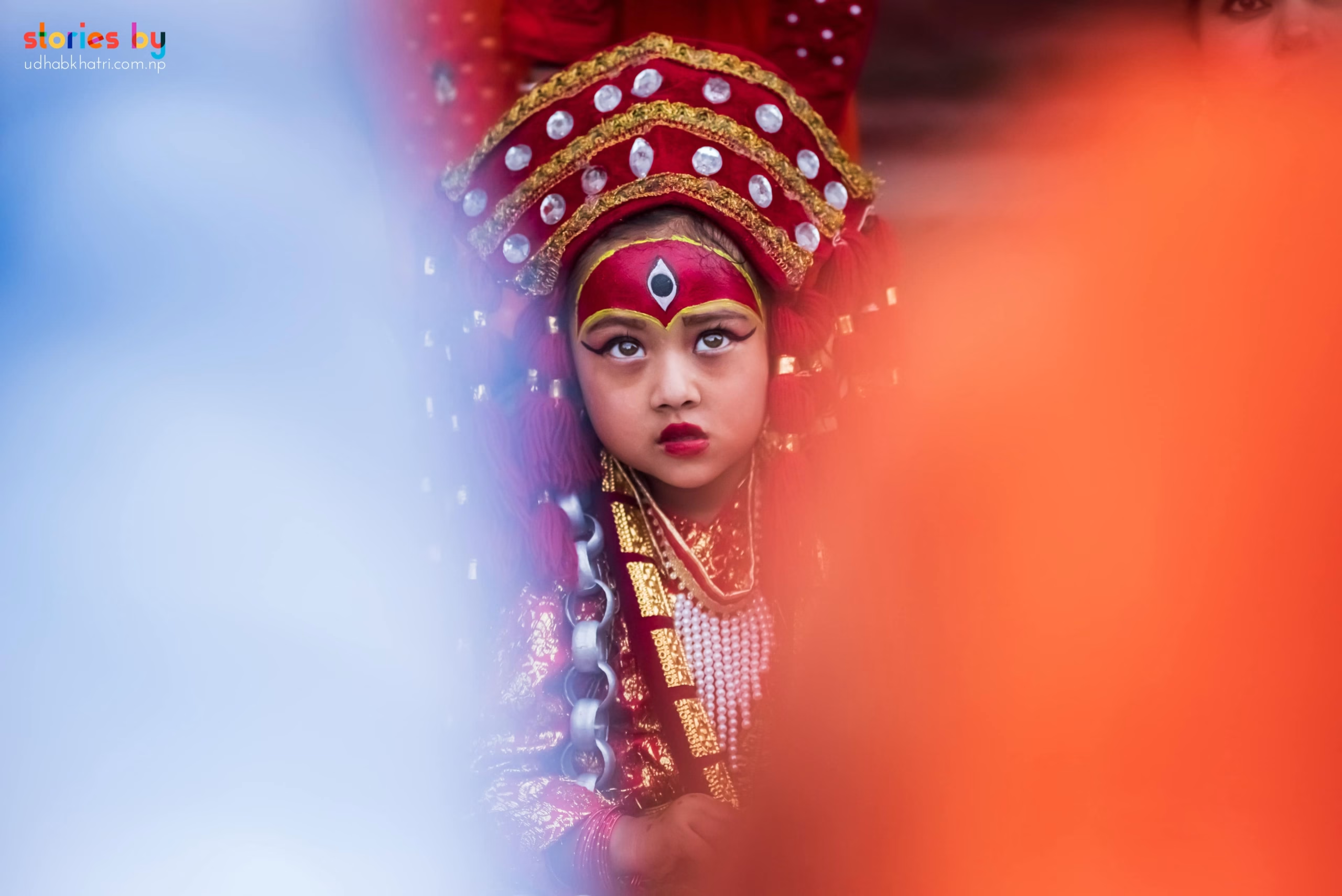 Photo — Kumari Ghar courtyard
Kumari Ghar
Photo — Kumari Ghar courtyard
On the southern edge of Durbar Square stands the Kumari Ghar — the residence of the Royal Kumari, a young prepubescent girl selected through an ancient Newar tradition to embody the goddess Taleju in living form. She is worshipped as a living deity by both Hindus and Buddhists, venerated by the President of Nepal each year during Indra Jatra, and consulted by heads of state. When she reaches puberty, she is retired and a new Kumari is selected through an elaborate process involving astrological readings, physical examination, and ritual tests.
The building itself — a three-storey brick palace built in 1757 by King Jaya Prakash Malla — is one of the finest examples of Newar craftsmanship in the valley, with extraordinarily detailed carved wooden windows and lattice screens. Visitors may enter the courtyard and sometimes, if fortunate, glimpse the Kumari briefly appearing at her window. Photography of the Kumari is strictly and absolutely forbidden.
Photographer's Eye
The story here is not the Kumari herself — it is the people who come to wait for her. Devotees standing with folded hands, eyes upward, in absolute stillness. The carved wooden architecture of the courtyard rewards close, patient observation. Photograph the threshold, the offerings left at the base of the door, the attendant priests. The restraint of not photographing the Kumari is itself part of understanding what this place means.
Location 07
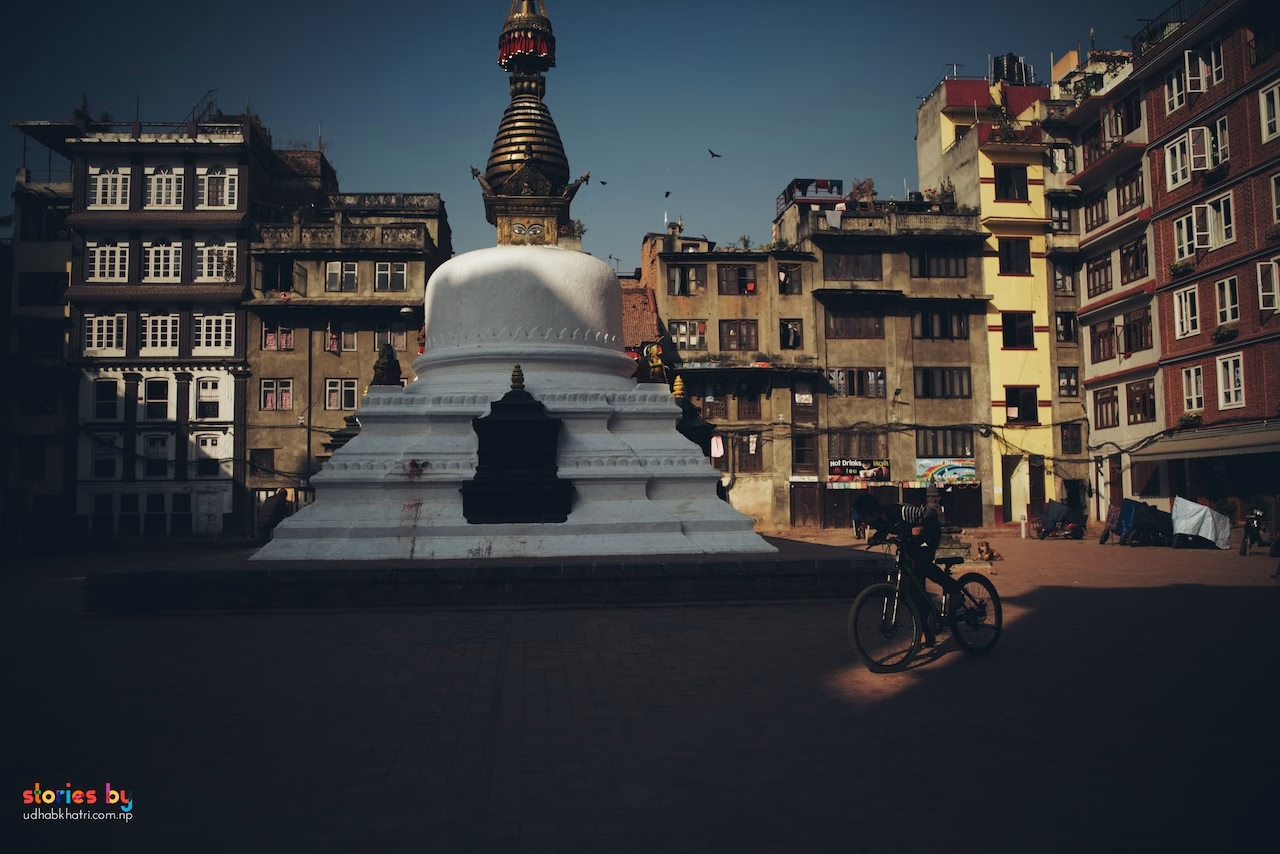 Photo — Basantapur alleyways
Alleyways around Basantapur
Photo — Basantapur alleyways
Behind and around the Durbar Square lies a dense web of lanes that most visitors never enter. These alleys — some barely wide enough for two people to pass — are where Kathmandu's Newar identity is most tangible and most private. Entire extended families share courtyard houses, bahals (Buddhist monastery courtyards), and neighbourhood squares called toles. The pace of life here is neither for tourists nor for cameras in any commercial sense — it is simply the way people live.
The alleys connect a series of small courtyards, each with its own neighbourhood deity, its own water spout, its own character. Some open unexpectedly into ancient Buddhist bahals with whitewashed walls and lotus ponds. Others dead-end into domestic interiors — a cooking fire, laundry, a grandmother spinning wool. Getting lost is not just permitted here; it is the method.
Photographer's Eye
Bring a wide lens and slow your pace to a deliberate walk. The geometry of these alleys — converging lines, doorways within doorways, figures in silhouette against light at the far end — is extraordinary compositional material. Watch for the contrast of scale: a tiny shrine in a massive wall, a child in a vast empty courtyard. Move with respect; you are in people's homes. A nod and a smile before raising the camera goes a long way.
Location 08
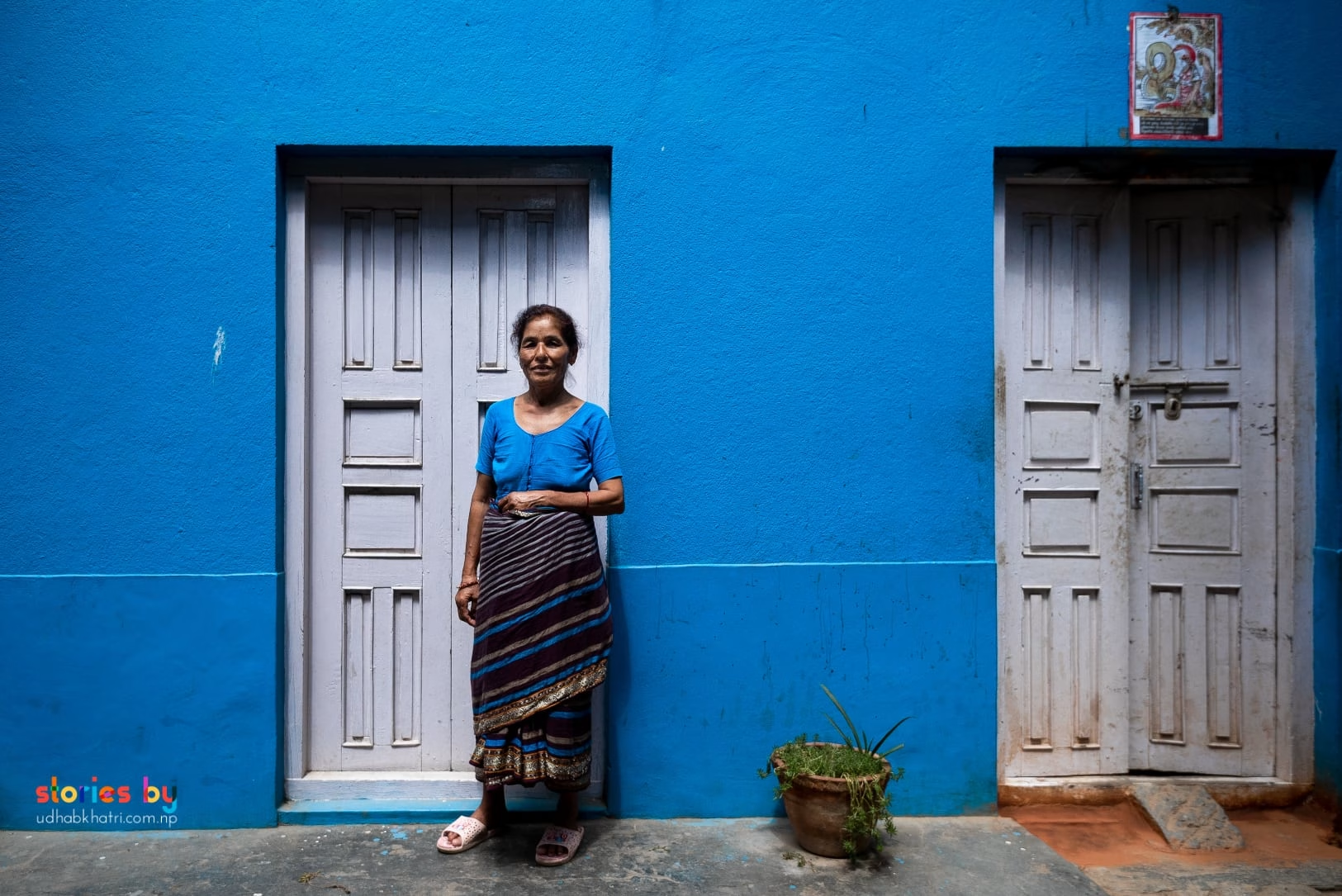 Photo — Kirtipur
Kirtipur
Photo — Kirtipur
Kirtipur sits on a fortified hilltop southwest of Kathmandu city, and its geography is inseparable from its history. This was the last Newar kingdom to resist conquest by Prithvi Narayan Shah in the 18th century — a resistance so fierce and prolonged that after finally taking the city, Shah ordered the noses and lips of the male inhabitants cut off as punishment. The story lives in the identity of the town and in the faces of its elders.
Today Kirtipur is one of the most intact Newar settlements in the valley. The old town, concentrated on the hilltop, has narrow lanes, ancient temples — including the Uma Maheshwar Temple and the Chilancho Vihara, the oldest stupa in the valley — and a pace of life that feels distinctly removed from the chaos of Kathmandu below. Weaving is a traditional Kirtipur craft; hand looms can be heard and seen in several houses along the main lanes.
From the hilltop, on a clear morning, the Himalayan range stretches across the horizon — Langtang, Ganesh Himal, Manaslu, and further west — providing a powerful backdrop for portraits and environmental photographs.
Photographer's Eye
Walk up through the steep lanes from the base — the ascent itself, with its stone steps and neighbourhood shrines, is worth photographing. Look for the weavers at their hand looms in doorways and ground-floor rooms. The views from the Uma Maheshwar Temple platform — old town roofscape against the Himalaya — are among the finest elevated compositions in the valley. Come back for the late afternoon light on the brick.
Bonus Location
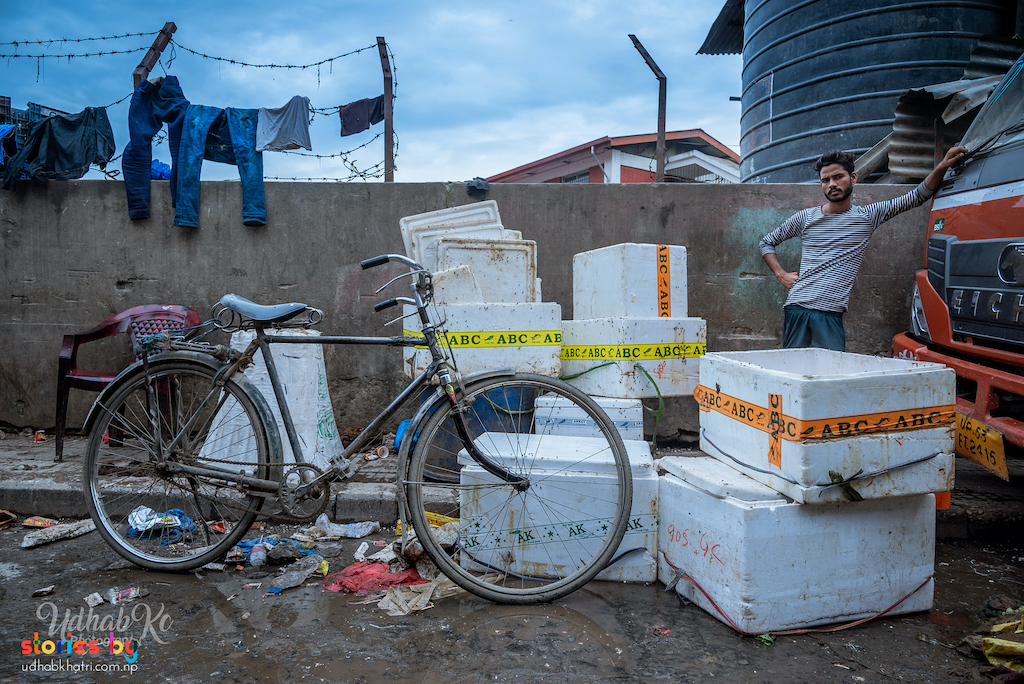 Photo — Kalimati, horizontal
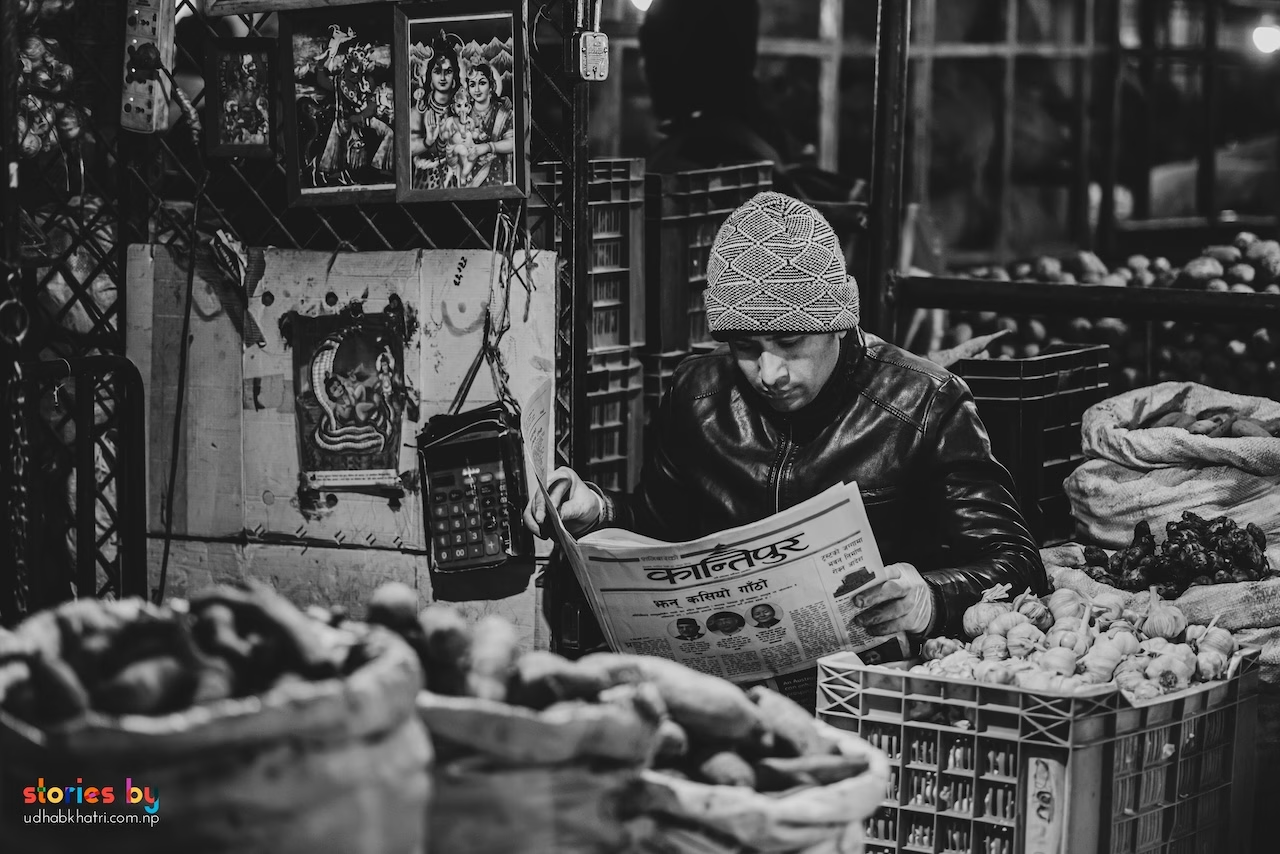 Photo 1
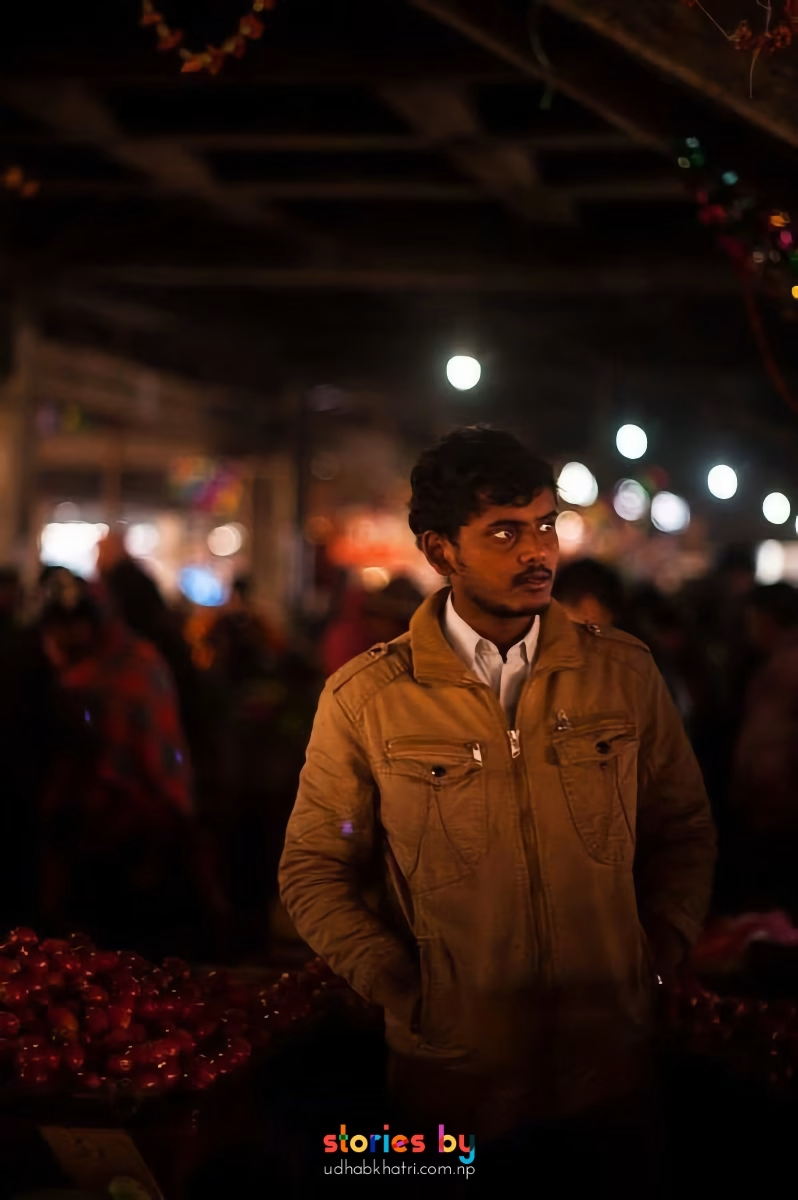 -->
Photo 2
-->
Photo 2
Kalimati Vegetable Market
Kalimati is Kathmandu's largest wholesale vegetable and fruit market — and one of the most photogenic places in the city, provided you are willing to be there before the sun rises. By 5 am the market is already in full motion: trucks arriving from Terai farms, porters unloading enormous sacks of produce, wholesalers and retailers negotiating prices in the half-dark, all of it illuminated by bare bulbs and the slow arrival of dawn light filtering through the open market sheds.
This is not a tourist destination. It is a working wholesale market, and that is precisely what makes it interesting. The faces here belong to farmers, traders, labourers, and the network of people who feed a city of a million. The scale of the produce — mountains of cauliflower, towers of tomato crates, carpets of green leafy vegetables — gives the market a visual abundance that is genuinely remarkable. Come early, move quietly, and let the work happen around you.
Photographer's Eye
The window between 5 and 6:30 am is the golden period — artificial light mixed with the first blue of dawn creates a quality you cannot replicate later in the day. Look for the porters in motion, the close transactions between buyer and seller, the geometry of stacked crates and sacks. By 8 am the wholesale rush is largely over and the light has become flat and ordinary.
Photo — Kalimati, horizontal
Photo 1
-->
Photo 2
At a Glance
Entry Fees
Most of Kathmandu's old city is free to walk through. A few heritage sites charge entry.
Basantapur Durbar Square
Foreign visitors: NPR 1,000
SAARC nationals: NPR 500 · Nepali citizens: Free
SAARC nationals: NPR 500 · Nepali citizens: Free
Hanuman Dhoka Museum
Included in Durbar Square ticket
NPR 300 additional for museum interior
NPR 300 additional for museum interior
Kumari Ghar (courtyard)
Free to enter the courtyard
Photography of the Kumari: strictly prohibited
Photography of the Kumari: strictly prohibited
Ason, Indrachowk, Makhan Tole
Free — public streets
No entry requirement
No entry requirement
Kirtipur (old town)
Free — open neighbourhood
No entry requirement
No entry requirement
Taleju Temple
Open to non-Hindus once a year
During Dashain festival only
During Dashain festival only
Fees subject to change. Verify current rates at the entrance or with the Kathmandu Metropolitan City heritage office.
When to be here
Festival Calendar
Kathmandu's old city transforms during its festivals. These are not performances for visitors — they are living religious and community events that have shaped these streets for centuries. Being present with a camera during any of these is a privilege.
March / April
Bisket Jatra
Bhaktapur's New Year festival — massive chariot processions, a tug-of-war between east and west city.
April / May
Rato Machhindranath Jatra
Patan's months-long chariot procession — one of Asia's longest running festivals.
August / September
Indra Jatra & Kumari Jatra
Eight days. The living goddess is carried through the streets. Indrachowk and Durbar Square are the epicentre.
September / October
Dashain
Nepal's longest national festival. Taleju Temple opens. Animal sacrifice at Hanuman Dhoka. A deeply intimate family ritual.
October / November
Tihar & Mha Puja
Five days of light. The Newar Mha Puja — a ritual of self-worship and identity — is unique to this community.
November
Chhath Puja
Dawn worship of the sun at riverbanks — extraordinary light, extraordinary devotion. The Bagmati ghats fill before sunrise.
How to move
A logical walking route
The old city is compact and best navigated on foot. The route below connects all locations naturally, beginning at the bazaar and ending at the square. Allow at least half a day; a full day if you intend to linger.
Thamel backstreets
→
Ason Bazaar
→
Indrachowk
→
Nardevi lanes
→
Makhan Tole
→
Basantapur Durbar Square
→
Kumari Ghar
→
Basantapur alleyways
Start early in Thamel's backstreets before the tourist activity begins, then walk south toward Ason. The entire route from Thamel to the alleyways takes 20–30 minutes at a walking pace; allow much longer if you stop to photograph. Kirtipur works best as a separate half-day outing — approximately 30 minutes by taxi or bus from Thamel.
These streets have been photographed for generations.
They still have more to give.
Keep exploring
Other locations worth your time
Every corner of the Kathmandu Valley has its own light, its own stories, its own pace.
Lalitpur
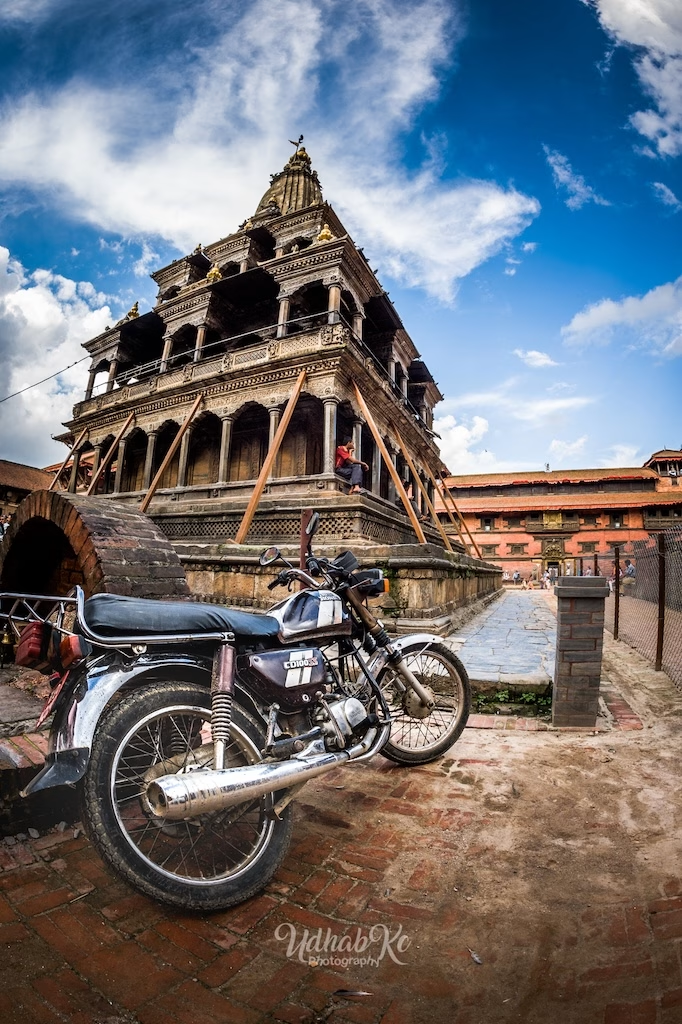
The city of artisans — Buddhist courtyards, living craft workshops, and Patan's extraordinary Durbar Square.
Explore →
Bhaktapur
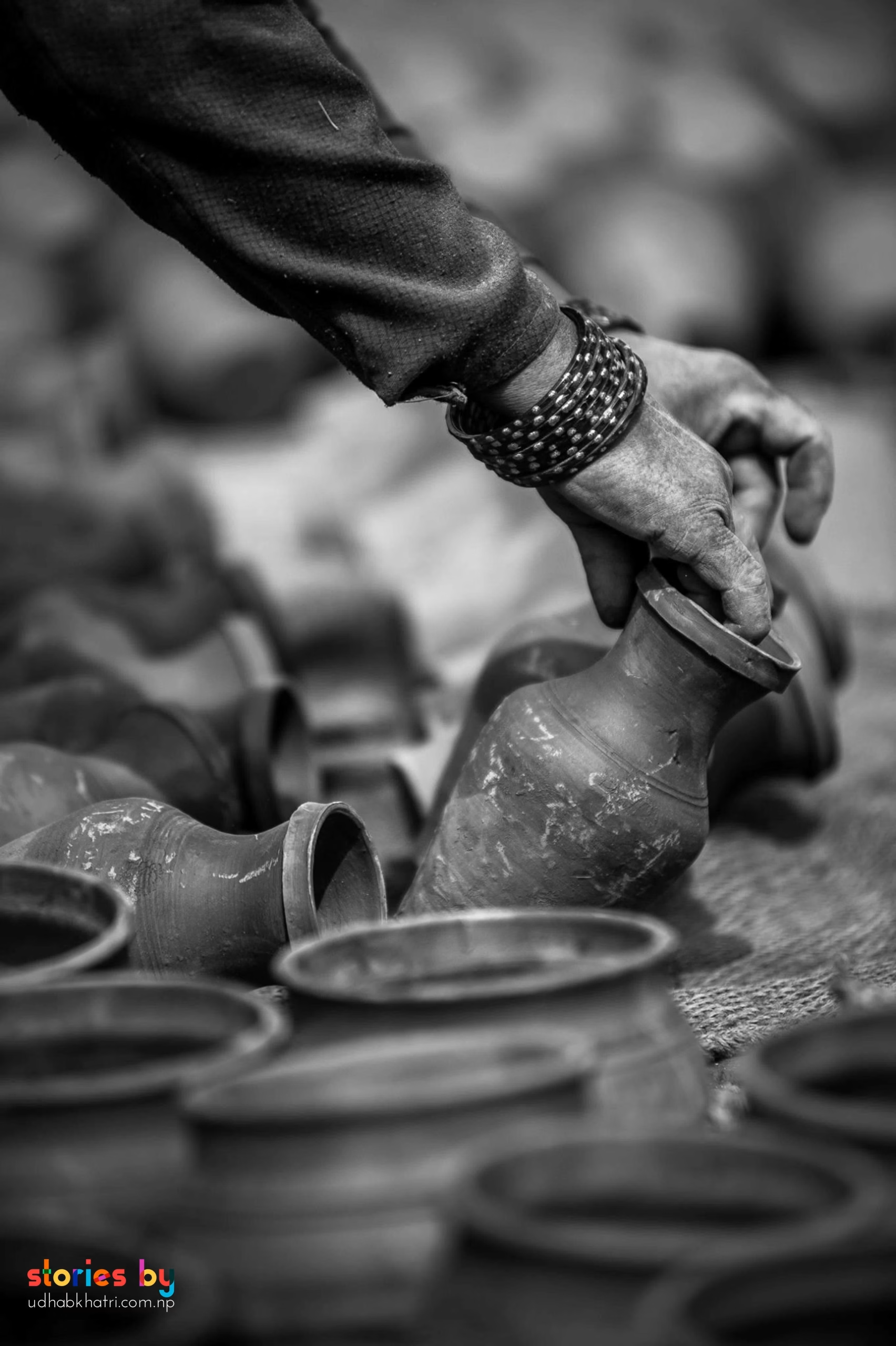
The valley's most intact medieval city — brick lanes, the Nyatapola temple, and the potters' square.
Explore →
Boudhanath
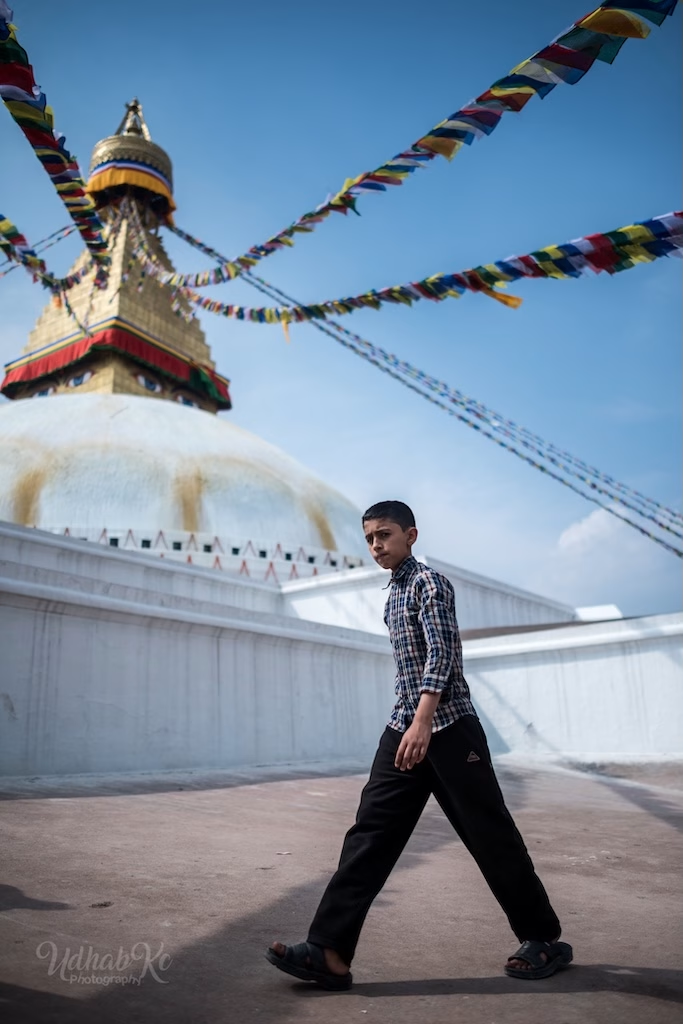
The great stupa — a living centre of Tibetan Buddhism, circumambulation, and quiet devotion at every hour.
Explore →
Manang
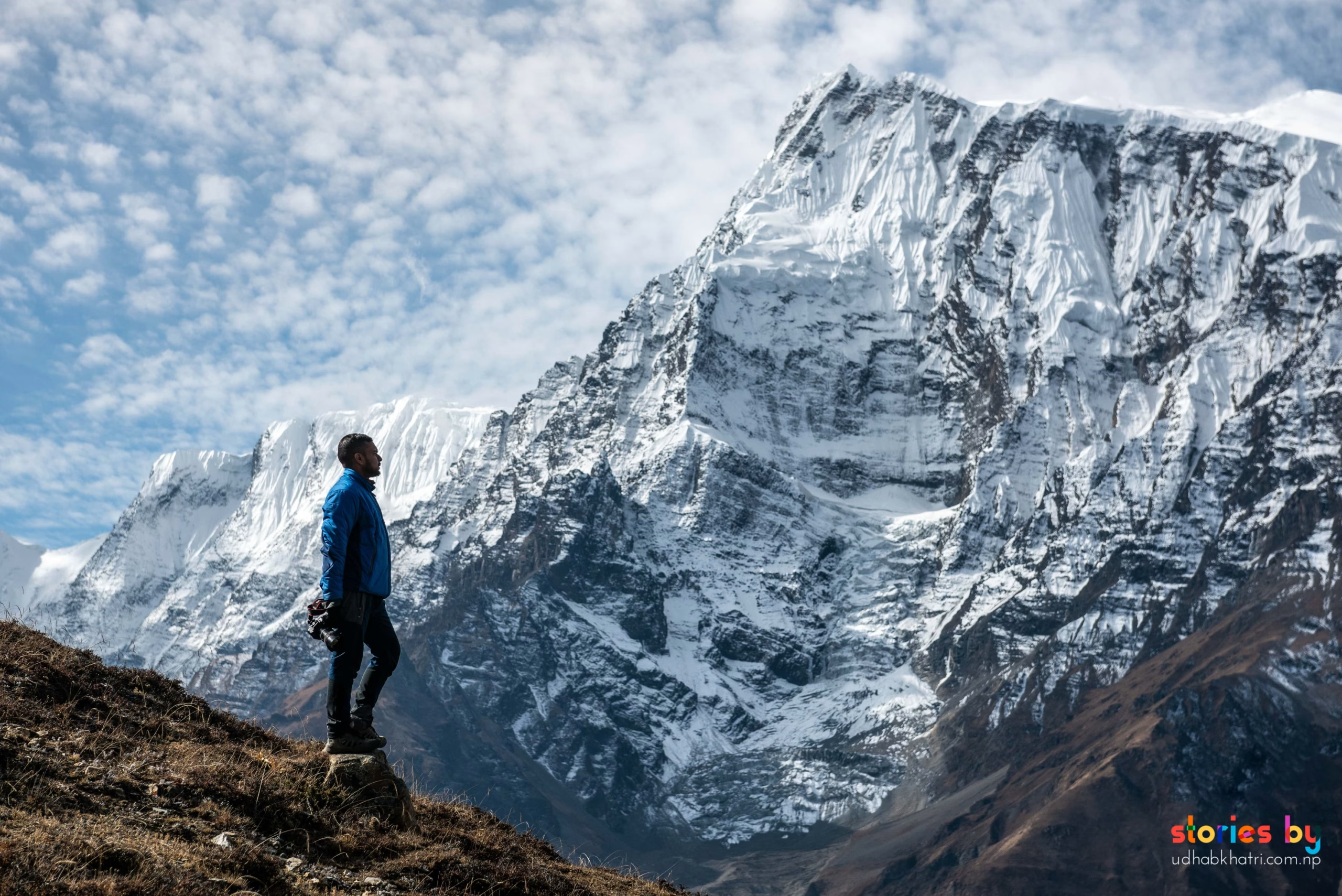
High on the Annapurna Circuit — a Tibetan-influenced village beneath some of the world's most dramatic peaks.
Explore →
Nar Phu
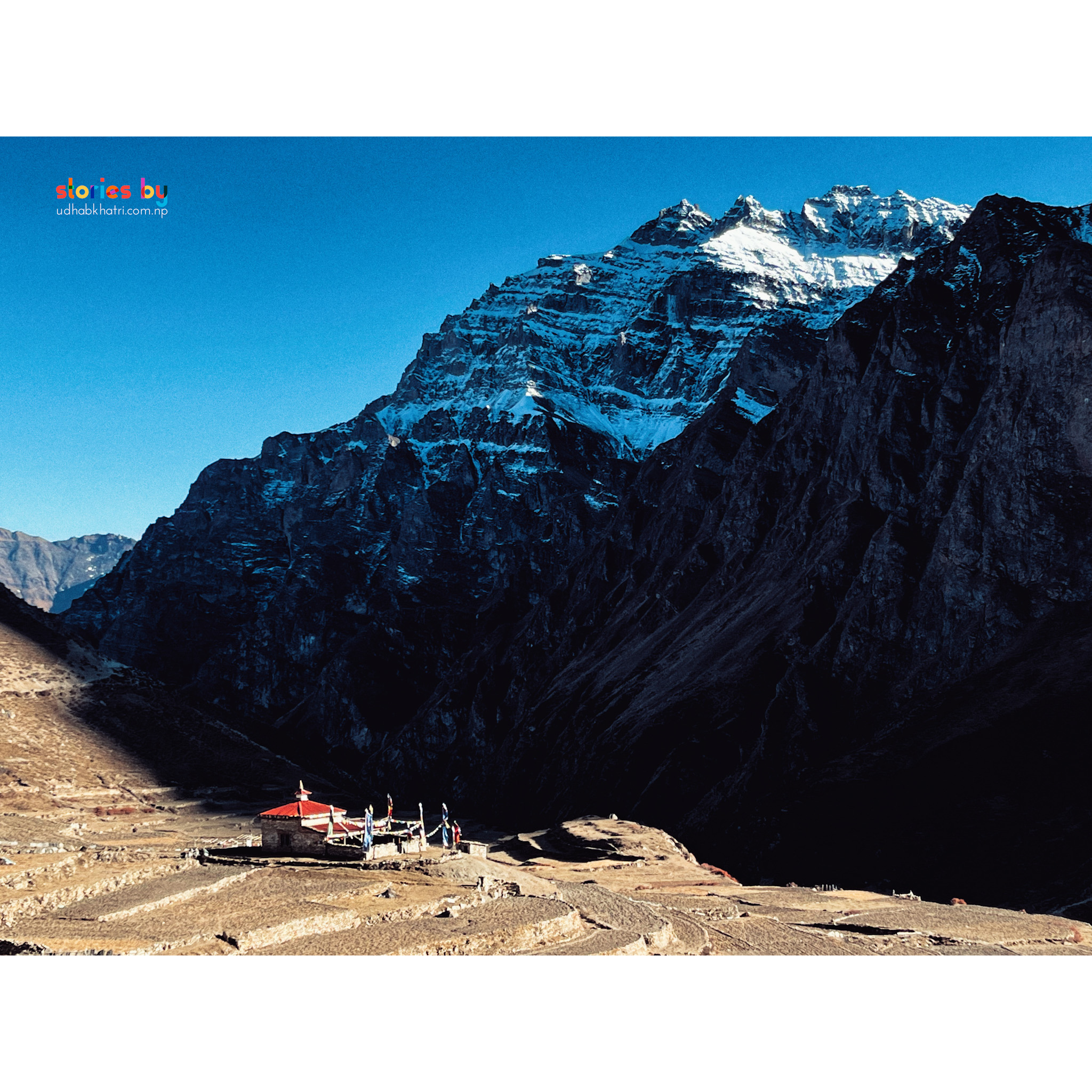
One of Nepal's most restricted and least-visited valleys — ancient cliff villages, high passes, pure Tibetan culture.
Explore →
Mustang
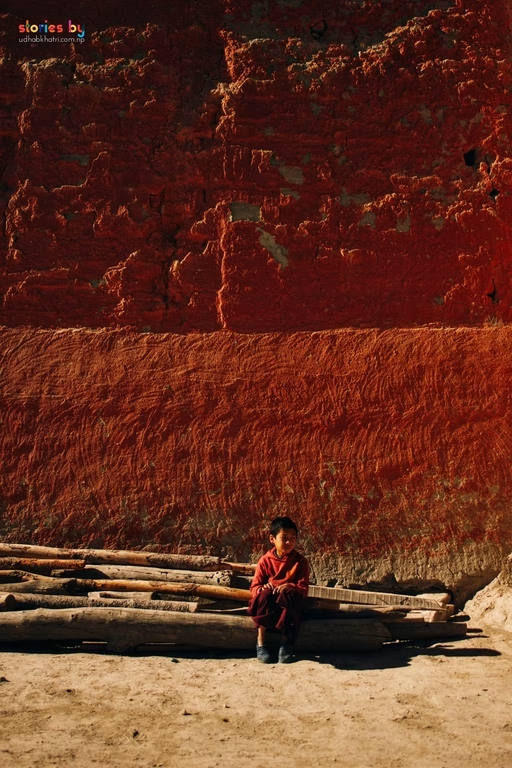
The forbidden kingdom — desert canyons, cave monasteries, and the walled city of Lo Manthang at 3,840m.
Explore →
From the field
Related photo stories
Documentary work and visual essays from the same streets and valleys.