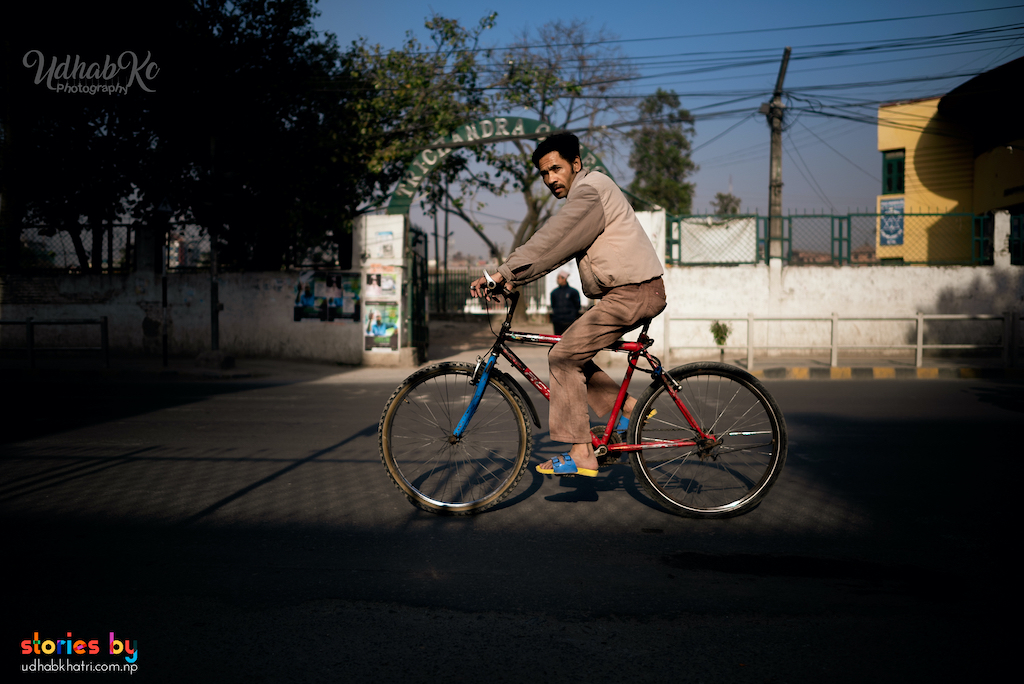
A Simple One-Hour Street Photography Exercise
This one-hour exercise is built around limitation. Not to restrict creativity, but to sharpen attention. It mirrors how I actually work on the street and reflects the ethics behind my photo stories.
Step 1: Choose One Location and Stay There
Pick a single spot and commit to it. A street corner, a temple entrance, a tea shop, a crossing. Do not move.
I prefer places with directional light and some separation between foreground and background. Clean frames matter more than activity. If the background does not work, I do not continue.
Step 2: Observe Without Shooting
For the first part of the hour, I do not lift the camera. I watch how people move through the space. Where they pause. How the light falls on faces, walls, and the ground. When the crowd increases and when it thins out.
This is where most photographs are lost or found.
Step 3: Pre-Frame and Decide the Photograph
Once the light and background feel right, I choose the frame. I decide where the subject should appear. I set exposure using aperture priority mode and stop thinking about settings.
The frame exists before the person arrives. This approach keeps me from chasing moments or getting too close. The photograph remains candid and uninterrupted.
Step 4: Wait and Shoot Selectively
Now I wait. I do not shoot every person that enters the frame. I wait for alignment: light, expression, gesture, distance.
During this hour, I may take thirty photographs or fewer. Sometimes less than ten. If nothing aligns, I leave without a single frame. That is still a successful walk.
Why This Exercise Matters
This is not about productivity. It is about restraint. The exercise teaches patience, respect for space, and confidence in waiting. It supports an ethical approach to street photography where moments are observed, not extracted.