Swayambhu,
the self‑created hill
The all‑seeing eyes of the valley — a photographer's pilgrimage from street to stupa
Swayambhu is more than a single monument; it is a visual journey that begins in the lively lanes of the old city and climbs through hidden neighborhoods to a hilltop crowned by one of the world's most recognizable Buddhist stupas. For photographers, the entire walk — from the narrow backstreets of Chettrapati to the giant golden Buddhas of the park below and the steep stone stairs of the eastern entrance — is as rich as the destination itself. Every step offers a frame waiting to be made.
Walking from Thamel / Asan / Indrachowk
Swayambhu sits on a hill west of the old city centre, and the walk to it is one of the most rewarding street‑photography routes in Kathmandu. From Thamel, Asan, Indrachowk, or Basantapur, you thread your way through the neighbourhoods of Chettrapati, Dallu, and Dhalku — residential lanes that see almost no tourists but are full of visual incident: bicycle repair stalls, open‑front grocery shops, small neighbourhood shrines, street barbers, and the constant flow of early‑morning trade.
The route is roughly 20–30 minutes on foot, but allow an hour or more because you will stop constantly. The light at 7 am cuts diagonally through the narrow lanes, illuminating dust motes, steam from tea stalls, and the textures of old brick and peeling paint. A single normal prime (35mm or 50mm) is all you need; the simplicity forces you to work with the available light and the geometry of the streets.
Don't rush. The journey is the point. Look for doorways within doorways, the contrast between dark interiors and bright street, and the morning rituals of shopkeepers — opening shutters, arranging goods, offering incense at small door‑frame shrines. The lanes of Chettrapati and Dhalku offer some of the valley's best unposed street portraiture opportunities.
 Photo
Photo
 Photo
Photo
 Photo
Photo
 Photo
Photo
Swayambhu Buddha Park
At the foot of the western side of the hill sits the Swayambhu Buddha Park, home to three towering golden Buddha statues — one standing, two seated — that dominate the open plaza. They are modern additions but photograph exceptionally well, especially when the late‑afternoon sun turns the gold surfaces warm and luminous. The scale of the statues against the greenery and the hill behind creates a depth of field that is rare in the dense old city.
Wide‑angle lenses (16‑24mm) work best here, allowing you to emphasize the monumentality of the figures while including visitors and devotees for scale. The park also offers a resting point before the climb to the stupa, and its openness is a visual contrast to the narrow streets you just left behind.
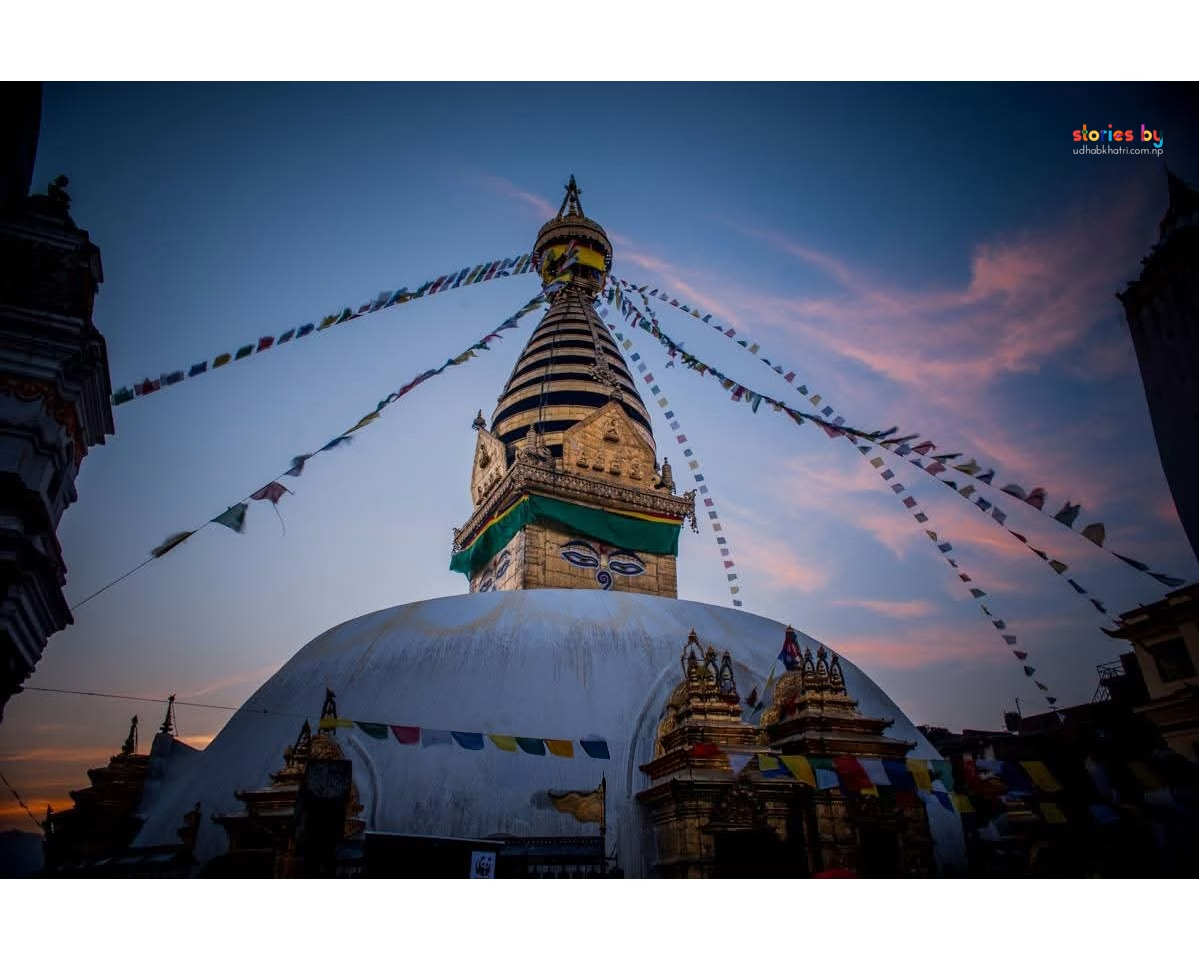 Photo — Buddha Park
Position yourself low to the ground and shoot upward with a wide lens to make the standing Buddha tower over the frame. The interplay of gold and blue sky works best in the hour before sunset. Include a single devotee in the composition to give the image human scale and narrative tension.
The 365 Stone Steps
While most visitors drive to the western gate, the eastern stairway — all 365 steep stone steps — is the traditional ascent and far more photogenic. The stairs climb straight up the hillside, lined with ancient stone sculptures, resting spots, and vendors selling candles and incense. Monkeys patrol the railings with a confident sense of ownership.
Photographing the climb is a study in vertical composition. The steps create a strong leading line that draws the eye upward, and the dappled morning light through the canopy gives the scene a cinematic quality. Use the compression of a longer lens (70‑105mm) to stack the layers of pilgrims, steps, and trees into a single dynamic frame.
Stand at the base and shoot straight up the staircase with a telephoto to compress the ascent. Alternatively, climb to the top and look down: the descending stairs, the valley beyond, and the silhouette of a devotee climbing toward you is a powerful composition. Morning mist adds atmosphere.
 Photo
Photo
 Photo
Photo
 Photo
Photo
 Photo
Photo
Saraswati Temple & the Eastern Ridge
On a wooded hill just east of the main Swayambhu complex stands the modest but atmospheric Saraswati Temple, dedicated to the goddess of wisdom and music. It is reached via a short path from the eastern stairway, and the hilltop offers an entirely different vantage point: from here you look back across a small valley toward the main stupa, its golden spire rising above the trees.
The temple itself is a simple pagoda‑style structure visited mainly by students seeking blessings before exams, and the peace here is a striking contrast to the activity around the main stupa. The view of the stupa from this ridge is one of the least‑photographed angles on Swayambhu — a compositional opportunity for photographers looking to make an original frame of a much‑photographed icon.
Use the trees as a natural frame for the distant stupa. A medium telephoto (70‑200mm) compresses the forest, the valley, and the golden spire into a single landscape‑documentary frame. Morning mist in the valley between the two hills adds depth and mystery.
 Photo — View from Saraswati Hill
The Main Stupa & Surrounding Courtyards
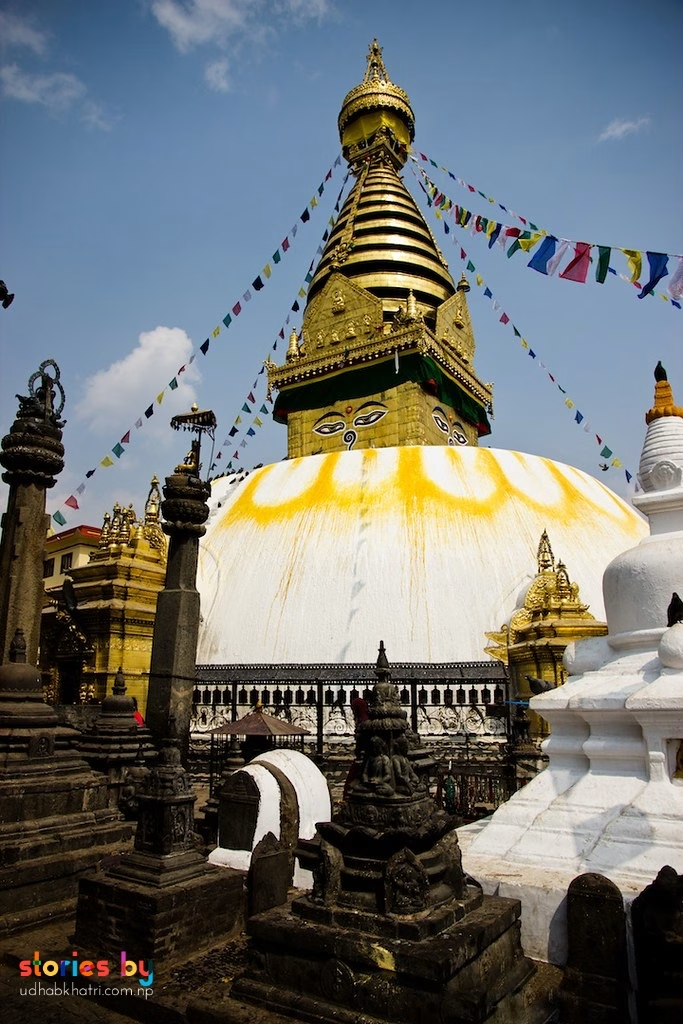
The main Swayambhu Mahachaitya — the great white dome with its soaring golden spire and painted eyes — is the climax of the walk. But the area around it is equally rich: the surrounding courtyard is filled with smaller shrines, columns of prayer wheels, stone chaityas, resident monkeys, and a constant ebb and flow of pilgrims, monks, tourists, and vendors. The two white shikhara towers — Pratapapur and Anantapur — anchor the eastern edge of the plaza, their Hindu forms a visual counterpoint to the Buddhist stupa.
The eyes of the stupa are best photographed from the east, catching morning light that hits the gold directly. At dusk, the platform facing west offers a panoramic view over the Kathmandu bowl, with the setting sun silhouetting the stupa and turning the valley haze golden. The butter lamps at the shrines around the stupa come alive as the light fades, creating pools of warm, flickering illumination against the cool twilight.
Avoid shooting only the eyes; the surrounding context — a devotee spinning a prayer wheel, a monkey on a ledge, the smoke of incense catching the light — tells a richer story. A wide zoom (24‑70mm) covers almost everything. For the butter lamps at dusk, a fast prime (35mm f/1.4 or 50mm f/1.8) and a steady hand will let you work with the available light without flash.
Just behind the main stupa, the small pagoda of Harati Devi is one of the most intimate devotional spaces on the hill. Mothers bring their children here for blessings, and the offerings — flowers, sweets, and burning oil lamps — create a dense, visual intimacy. Use a short telephoto (85mm) to isolate faces and hands without intruding on the prayer.
 Photo — Swayambhu Stupa
Entry Fees
Only the main stupa complex charges a small entry fee. The surrounding areas (Buddha Park, stairways, Saraswati Hill) are free.
SAARC nationals: NPR 50 · Nepali citizens: Free
No entry requirement
No extra entry requirement ( inside the Main Stupa courtyard )
The Swayambhu ticket is checked at the western gate (main vehicle entrance) and the top of the eastern stairs. Keep your ticket until you leave the complex. Fees subject to change.
A logical walking sequence
Start early in the old city, walk through the backstreets to the Buddha Park, ascend the eastern steps, visit Saraswati Hill, and end at the main stupa for the late‑afternoon light.
Allow a full morning or afternoon depending on pace. The walk from the old city to the base is about 30 minutes, the climb up the steps takes 15‑20 minutes, and the stupa complex deserves at least an hour of exploration. Sunrise and sunset are the two prime windows for light, so plan accordingly.