Mustang,
the hidden kingdom
Where the wind carves the valley and the light paints the cliffs
Mustang is a land of deep contrasts. Lower Mustang, accessible without special permits, winds through the Kali Gandaki valley between apple orchards, whitewashed villages, and sacred shrines. Upper Mustang, restricted and remote, leads to Lo Manthang — the walled capital of an ancient Tibetan kingdom. Both halves share the same immense sky and the same feeling of having stepped into another world. For a photographer, the entire region is a study in light, texture, and the relationship between arid landscape and human resilience.
The Kali Gandaki Valley: Jomsom, Marpha, Muktinath & Lupra

Jomsom is the gateway to Mustang — a windy administrative centre with a small airport and a wide riverbed. The constant wind shapes the prayer flags and the dust, and the late‑afternoon light turns the valley golden.
Dhumba Lake, a short distance from Jomsom, is a turquoise jewel with Nilgiri reflected on its surface. The best photographs come in the morning, before the wind roughens the water and the mountain doubles perfectly. A wide‑angle (24mm) captures the full reflection; a polarising filter deepens the blues and cuts the glare. In spring, the surrounding meadows are dotted with wildflowers, adding foreground interest to the stark mountain backdrop.
Marpha is the valley's most photogenic village: cobbled lanes, whitewashed houses, and apple orchards that contrast sharply with the arid surroundings. Its narrow alleyways are best in the early morning when the light skims the walls and creates deep, graphic shadows.
Muktinath is a sacred site for both Hindus and Buddhists. Its 108 water spouts and an eternal flame draw pilgrims from across Nepal. If you are coming from the Annapurna Circuit, after crossing Thorong Pass (5,416 m) you descend directly behind the Muktinath temple — a place of rest and renewal after the hardest stage of the trek. Behind the temple, a steep trail climbs to an upper viewpoint at around 4,300 m, offering sweeping views of Jharkot and Jhong villages against the arid mountains. Nearby, the high pass of Gyu La provides an alternative route toward Jhong and Lupra, rewarding the extra effort with solitude and dramatic panoramas.
Lupra sits on the banks of the Panda River, a small, often‑overlooked settlement with a unique flat‑roofed architecture. You can walk right into the riverbed and use the sandy beach and flowing water as a foreground to photograph the entire village against the adjoining hills — a composition rarely seen in the valley. The village is home to a 12th‑century Bonpo monastery, one of the oldest in the region. Bon, the pre‑Buddhist religion of Tibet, is believed to have originated in the Zhang Zhung kingdom of Western Tibet before the 7th century, initiated by the legendary teacher Tonpa Shenrab Miwoche. Bon rituals include exorcism ceremonies, sky burials, and mountain worship. The monks here often practise in isolation, but they join the community during festivals, offering a rare glimpse into a living tradition. Near the village, ancient meditation caves are carved into the cliffs, where practitioners have retreated for centuries — quiet, dark spaces that make for powerful documentary subjects with a fast prime lens.
Terri village - Across the river from Kagbeni, a half‑day walk leads to Terri Lake (3,345 m) and the village of Tiri. The round trip takes about 3.5 hours. Terri Lake sits in a basin of rusty desert hues, with the surrounding mountains reflecting in its still water on calm mornings — a minimalist, contrast‑rich landscape that photographs beautifully with a telephoto (70‑200mm) to compress the layers of colour. Just beyond the lake, Tiri village feels almost abandoned: old stone houses, narrow alleys, and a haunting silence that makes every frame feel like a rediscovery. The light here, especially in the late afternoon, casts long shadows across the crumbling walls — perfect for moody, environmental portraits and detail shots. A wide‑angle (24‑35mm) captures the desolation of the village, while a 50mm isolates the textures of peeling paint and weathered wood.
At Dhumba Lake, use a wide‑angle (24mm) to capture the full reflection of Nilgiri at sunrise. In Marpha, a 35mm or 50mm prime isolates the textures of white walls and wooden windows. At Muktinath, a 70‑200mm lets you photograph pilgrims under the water spouts from a respectful distance. The entire Mustang landscape is mostly desert and relentlessly windy — but if you wait and watch, the play of sunlight and shadow across the cliffs and the occasional green patch of a village oasis can produce wonderfully contrasty, layered images.

Villages Between Marpha and Tatopani
The path down the Kali Gandaki passes through hamlets worth a pause: Tukuche, a Gurung village with a large monastery and Dhaulagiri looming behind; Kalopani / Lete, at the deepest point of the gorge where mountain walls rise on both sides; and Ghasa, a settlement among pine forests known for its birdlife. Each offers quiet, wide‑angle landscape opportunities where the scale of the mountains dwarfs the human presence.
From Tatopani to the Annapurna Sanctuary
At Tatopani (literally "hot water") you can rest in natural hot springs and decide whether to continue south or change direction. From here a trail climbs toward Ghorepani and the famous Poon Hill viewpoint, then joins the classic ABC (Annapurna Base Camp) route at Chhomrong. This allows you to combine a Lower Mustang trek with one of the most iconic Himalayan walks in a single continuous journey.
Lo Manthang & the Forbidden Kingdom

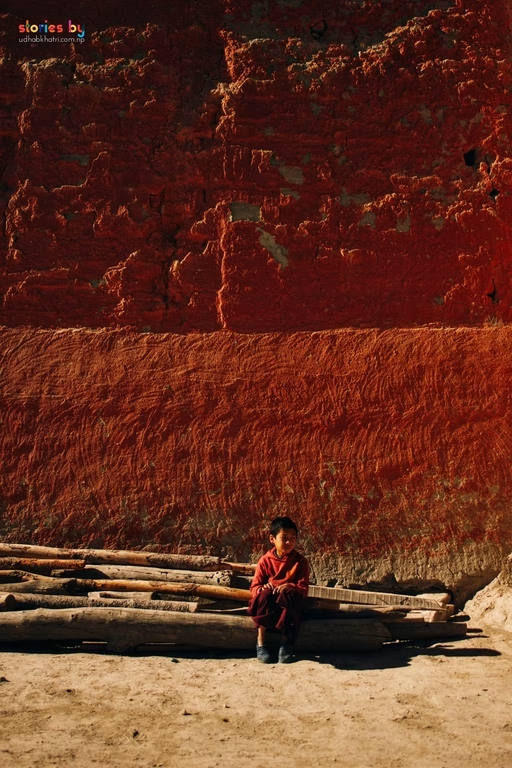
Beyond Kagbeni, the landscape transforms into a high‑altitude desert dotted with cave monasteries and fortified villages. The trail climbs through Chele, Samar, and Syangboche, where ancient meditation caves are carved into the cliffs above the trail — dark, cool spaces that have hosted practitioners for centuries. Dhakmar and Tangbe are striking clusters of red‑walled houses, their colours intensified by the arid surroundings. Lo Manthang, the walled capital of the ancient kingdom, is the final destination: dirt streets, the king's palace, and the monasteries of Thubchen and Jampa. If your visit coincides with the Tiji Festival (May), you'll witness masked ritual dances symbolising the victory of good over chaos — an extraordinary photographic subject.
The region also holds a deeper, more solemn layer: sky burials, an ancient practice where the deceased are offered to vultures, are still performed in designated sites near the villages — though these are sacred and should never be photographed without explicit permission. Near the northern border, the Korala Pass marks the frontier with Tibet, a remote checkpoint where the landscape opens into vast, wind‑scoured plains. A registered guide is mandatory for Upper Mustang, and you must travel in a group of at least two. The restricted permit costs USD 50 per person per day and helps preserve the region's fragile culture and environment.
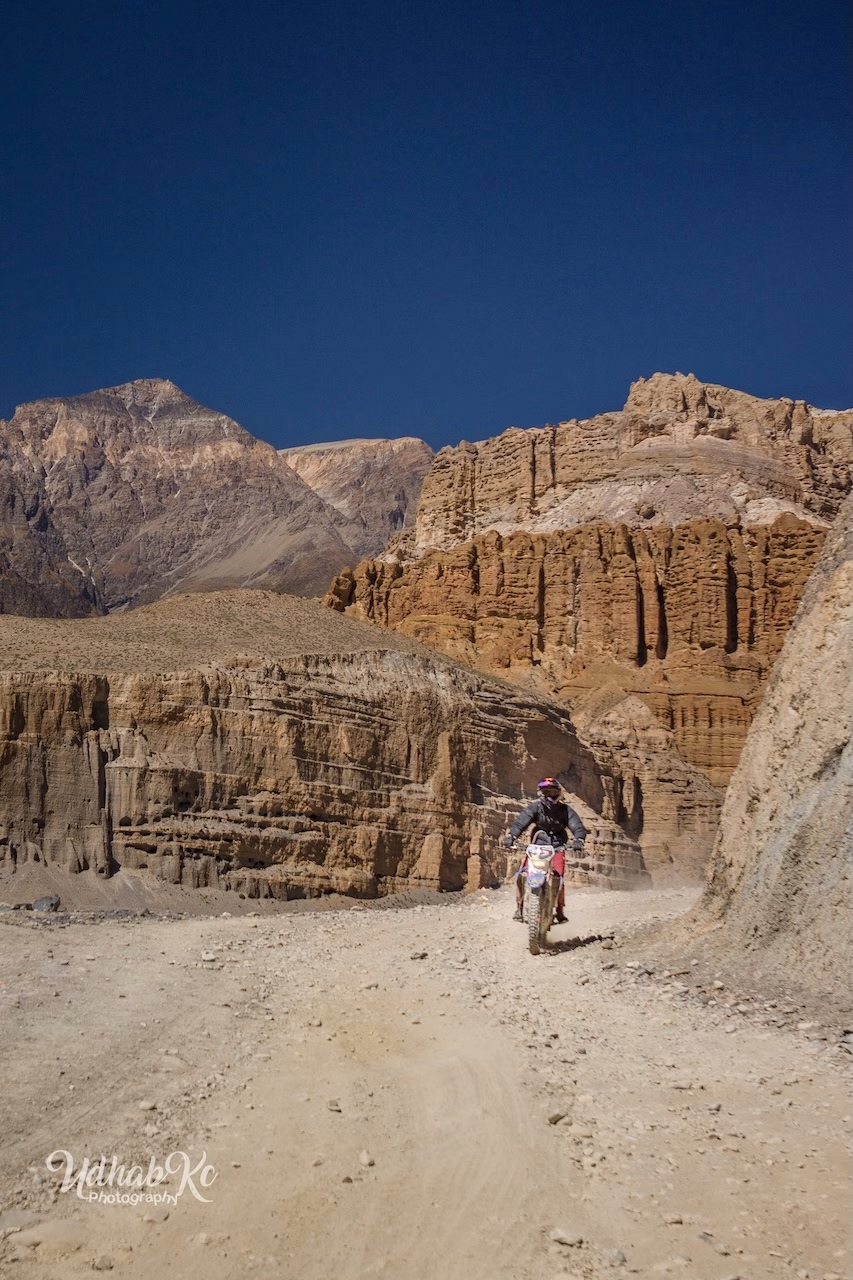
The ochre cliffs and deep blue sky create a natural colour palette. Use a telephoto (70‑200mm) to compress the layered rock formations, and a wide‑angle (24mm) to capture the scale of the desert with a figure for context. The monasteries' interiors are dark; a fast prime (35mm f/1.4) will help you work with the available light. During Tiji, position yourself at the edge of the ceremonial ground and use a 70‑200mm to isolate the masked dancers against the bare landscape. The meditation caves require a fast lens and a steady hand — tripods are often impractical, so brace yourself against the rock walls.

 Photo
Photo
 Photo
Photo
 Photo
Photo
 Photo
Photo
Permits & Fees
Lower Mustang requires only the ACAP permit. Upper Mustang requires an additional restricted‑area permit and a mandatory guide.
Foreigners: NPR 3,000 · SAARC: NPR 1,000
Required only for Lo Manthang and surroundings
Note: For Upper Mustang, if the royalty paid for a mountain expedition is less than the trekking permit fee, the difference amount must be paid separately. Permits must be arranged through a registered agency. Fees are subject to change. Verify current rates before departure.
Safety in Mustang
Average elevations range from 2,800 m to over 4,000 m. Upper Mustang involves no technical passes, but acclimatisation remains essential. The wind can be relentless — protect your gear and your skin.
Read our complete trekking safety guide for Nepal. It covers acclimatisation, travel insurance, what to pack, and how to handle emergencies on the trail.
Read the safety guide →