Why It Works – Reading the "Stage" Before the Actor Walks In
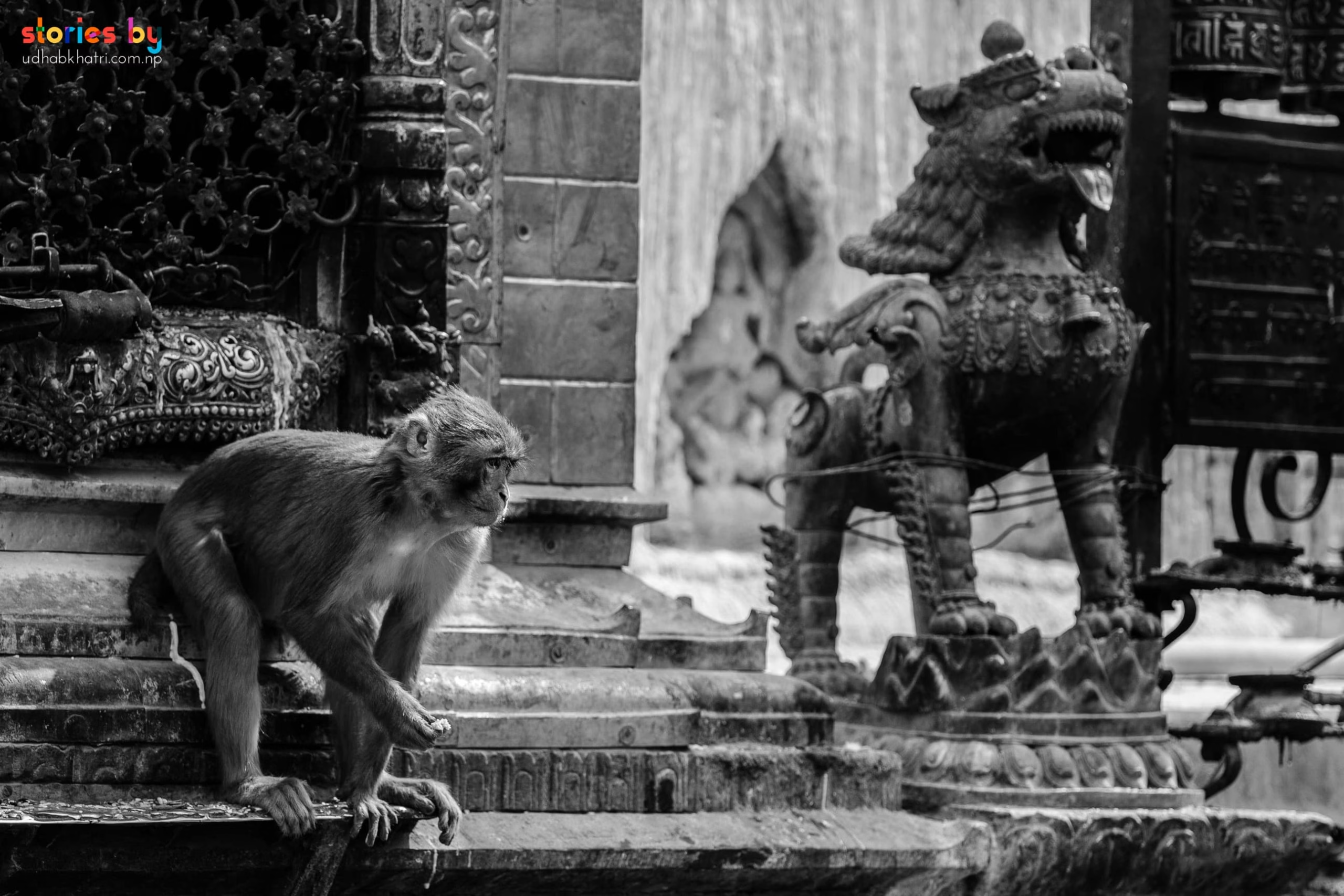
To construct an image that possesses real geographic and emotional context, you have to invert your process. Stop looking for people. Start looking for the "stage." Treat the architecture, the heavy stone doorways, the narrow corridors, and the intersecting shadows of Kathmandu as a predetermined theater set. If you lock down a composition that is visually powerful on its own terms, you are no longer chasing fleeting moments; you are simply waiting for life to occupy the space you’ve pre-visualized.
The Spatial Reality of Kathmandu's Architecture
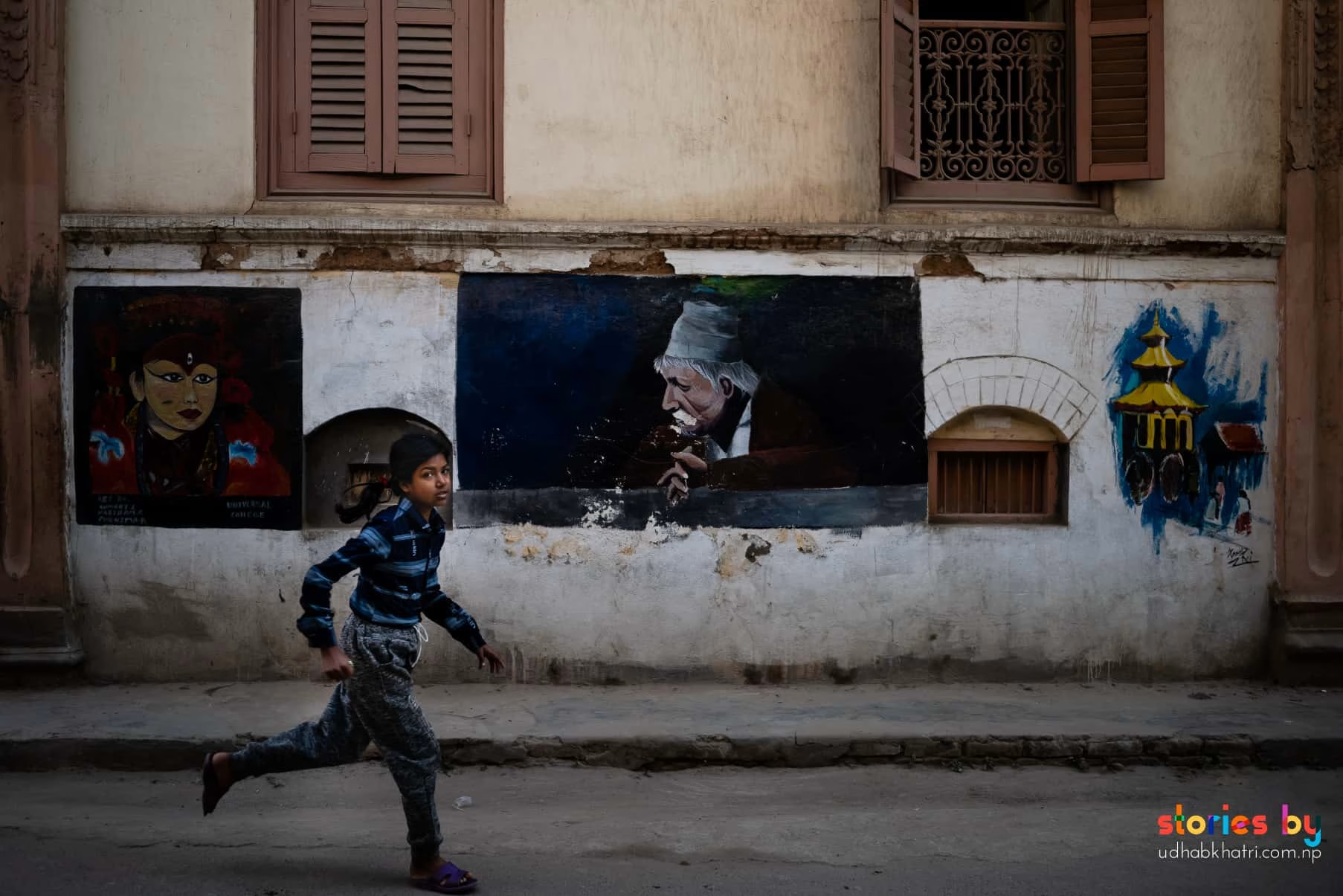
The layout of the Kathmandu Valley wasn't built for modern lenses—it was built for defense, community, and domestic ritual. The deep, low-clearance brick archways (Pali), the dark interior courtyards (Bahals), and the claustrophobic, towering street corridors are structurally unique. They are not merely "pretty textures"; they dictate human geometry. They force people to duck, to squeeze past each other, to step from blinding sunlight directly into pitch darkness.
A dark, hollow window in a cracked Newari building or an oversized iron gate isn’t just a cool shape—it represents privacy, socio-economic divides, and the boundary between private lives and public routines. When you learn to analyze a wall or an alleyway before someone walks through it, you are identifying the boundaries of local life. You are recognizing that the environment itself is a dominant character in the story, and the human passing through it is the fleeting punctuation mark.
What the Masters Can Teach Us
The historical masters of street work didn't run around chasing faces; they anchor their narratives inside the geometric logic of the city.
Henri Cartier-Bresson (The Geometry of Alignment): We often talk about his "Decisive Moment," but we forget that he spent hours waiting for it inside a pre-composed frame. In his famous shot of the man jumping over a puddle behind the Gare Saint-Lazare, the fence and posters were framed perfectly first. He built the stage. The runner was simply the actor closing the visual loop. If you apply this to an ancient chowk, you compose the geometric shadows of the temple pillars first, then wait for the stride of a passerby to lock the composition together.
Fan Ho (The Architecture of Mood and Scale): Fan Ho treated Hong Kong’s urban landscape like a high-contrast dramatic stage. He would find massive geometric slices of light falling between towering city buildings and wait for a single, small human silhouette to walk into that spotlight. His work teaches us that by making the background massive and the human small, you amplify the emotional scale of individual routine against the weight of a city.
Josef Koudelka (The Strength of the Boundary): Koudelka's framing is brutal and deliberate. He uses physical walls, horizons, and stark architectural lines to trap his subjects visually within the frame. He demonstrates that a strong architectural background doesn't just hold the subject—it contextualizes their existence, turning a simple candid snapshot into an enduring document of human placement.
The Technical Strategy: The Art of "Fishing"
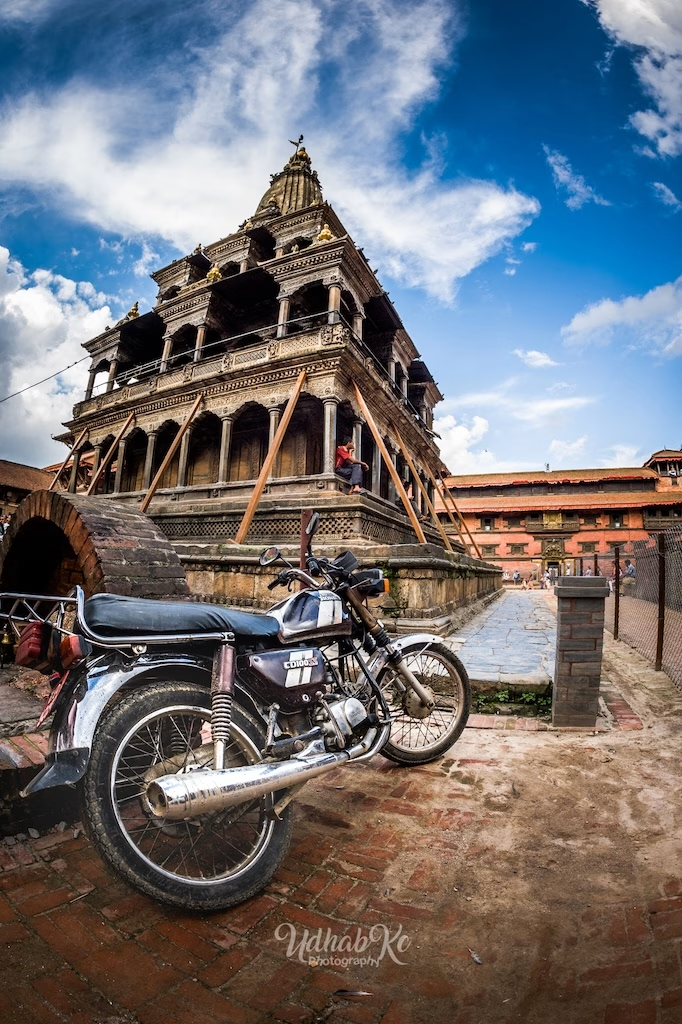
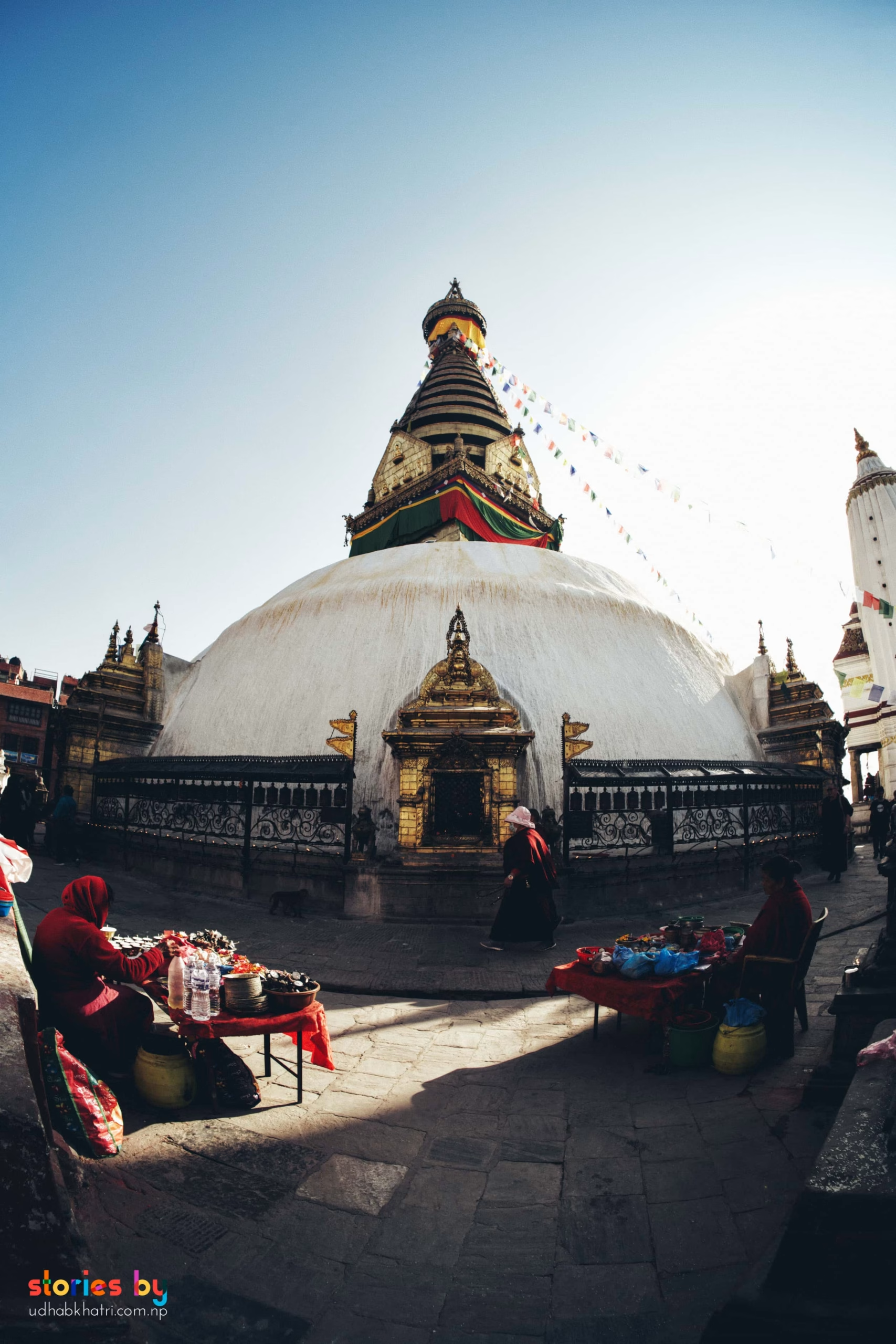
In street photography, there are two primary methods: hunting and fishing. Hunting is walking constantly, reacting dynamically to moments as they break. Fishing is finding your stage, casting your line, and sitting completely still.
Field Guardrails: Dos and Don'ts
Do prioritize temporal tension: Look for moments where the era of the stage conflicts with the era of the actor. When you place a teenager wearing modern headphones and a bright jacket sprinting past a dark, 200-year-old wooden pillar, your technical geometry automatically delivers a deeper comment on generational shifts in the Kathmandu Valley.
Do evaluate the scale: Don't always zoom in or step closer to fill the frame with the person's face. Let the wall dominate two-thirds of the image. By reducing the human scale against the architectural background, you invite the viewer to read the cracks, the history, and the environmental weight surrounding the subject.
Don't shoot a dead stage: A stage is only effective if it channels movement naturally. Don't waste time waiting at an interesting wall if it's located in a dead alleyway where no traffic passes. Look for natural bottlenecks—places where local foot traffic is forced to slow down, turn a sharp corner, or step into a shaft of light.
Don't get impatient after two minutes: True fishing requires stamina. If you move on after sixty seconds because "nothing is happening," you are letting the best frames slip away. Commit to a good composition for at least ten to fifteen minutes. Watch how the shifting light changes the stage, and wait for the exact right character to cross your portal.
How to Implement It: The Empty Frame Test
The next time you are shooting in the historical pockets of Patan, Bhaktapur, or central Kathmandu, practice this discipline before your finger touches the shutter mechanism:
Bring the camera to your eye and compose a shot of an architectural feature. Now, ask yourself honestly: If no human ever walks into this frame, is this still a powerful photograph of an environment?
If the answer is no—if the frame feels empty, boring, or visually flat without a person to save it—then your stage isn't strong enough. Break the composition down and find a better angle. But if the empty frame already looks like an evocative painting of light, shadow, and texture, hold your ground. Secure your footing, lock your exposure values, and wait for the street to give you its actor.