Why It Works – Killing the "Postcard" Trap
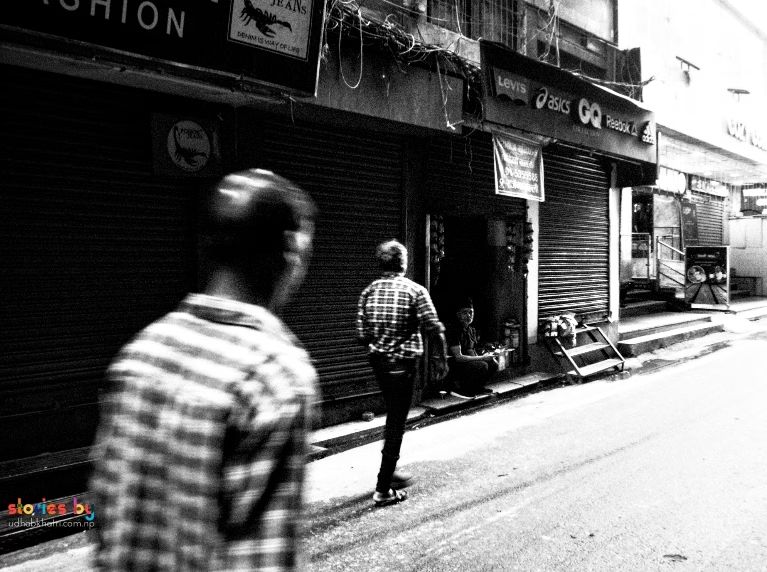
The Postcard Trap happens when your brain stops reacting to the raw reality in front of you and instead tries to recreate images designed for travel brochures. If we only use our cameras to chase clean, exotic loops, we end up sanitizing our environment. We hit a wall where every street portfolio starts looking identical. To grow, we have to learn how to let the real, beautiful, chaotic world back into our viewfinders.
Why It Matters: The Context of the Kathmandu Valley
Kathmandu is one of the most photographed valleys on earth, which makes it an absolute minefield for visual clichés. For decades, outsider viewpoints established a specific visual narrative of Nepal: ancient, mystical, spiritual, and untouched by time.
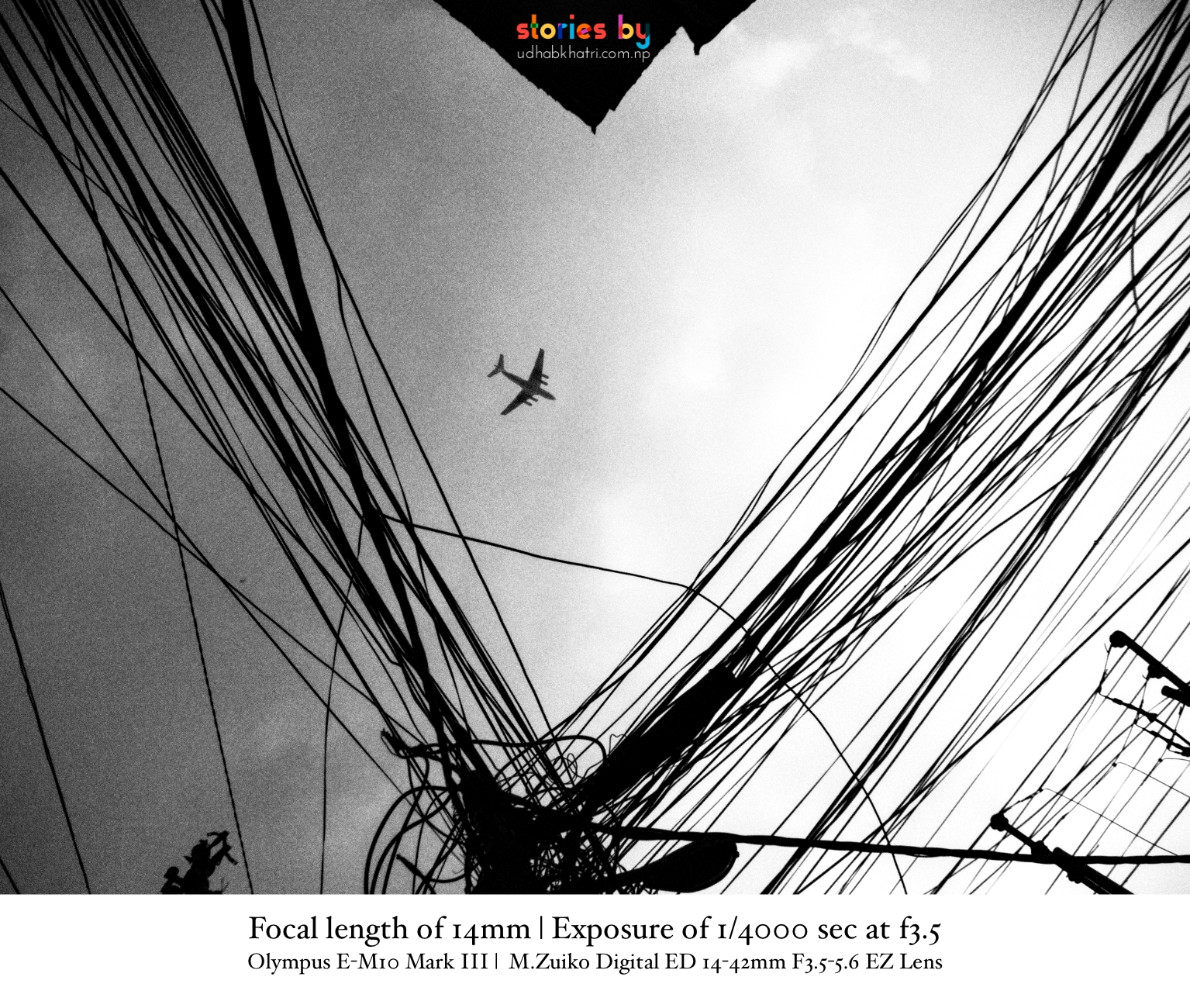
But if you actually live and shoot here, you know that Kathmandu’s true identity is friction. It is a 14th-century temple flanked by a concrete commercial building, with a massive, tangled nest of black internet cables cutting right through the sky. It’s a person in traditional dress buying vegetables while paying with a QR code on their smartphone.
When you intentionally crop out the cables, the plastic wrappers, the modern vehicles, or the concrete walls just to make the photo look "purely ancient," you are erasing the contemporary history of our home. You are choosing a pretty lie over an honest truth. The magic of Kathmandu street photography isn’t hidden in the un-tainted past; it’s in how the ancient world stubbornly refuses to die while colliding head-on with the modern world.
What the Masters Can Teach Us
The best street photographers in history didn't care about clean, postcard perfection. They leaned directly into the messy, uncurated realities of their environments.
Alex Webb (The Master of Layers and Chaos): If Webb shot in Kathmandu, he would never crop out the street clutter. Webb is famous for his incredibly complex, packed frames where multiple unrelated things happen simultaneously across different layers. He proves that chaos isn’t a distraction—it’s the actual energy of the street. Let the infrastructure frame your human subjects instead of evading it.
Martin Parr (The King of Anti-Aesthetics): Parr built a career by shooting the exact opposite of what people consider "beautiful." He looks for the gritty, the mundane, and the slightly awkward realities of modern consumer life. He teaches us that a photo of a cheap plastic chair resting against an ancient stone pillar can say vastly more about our current cultural landscape than a perfectly lit, isolated shot of the pillar alone.
William Eggleston (Finding the Extraordinary in the Boring): Eggleston proved that you don’t need an exotic subject to make a masterpiece. He shot old tricycles, plain diner tables, and plain walls. If we apply his mindset here, a simple, weathered tea shop counter or an old rusted padlock on a shop shutter becomes a profound story about local routine—requiring no majestic background monuments to save the frame.
The Field Manual: What to Look For
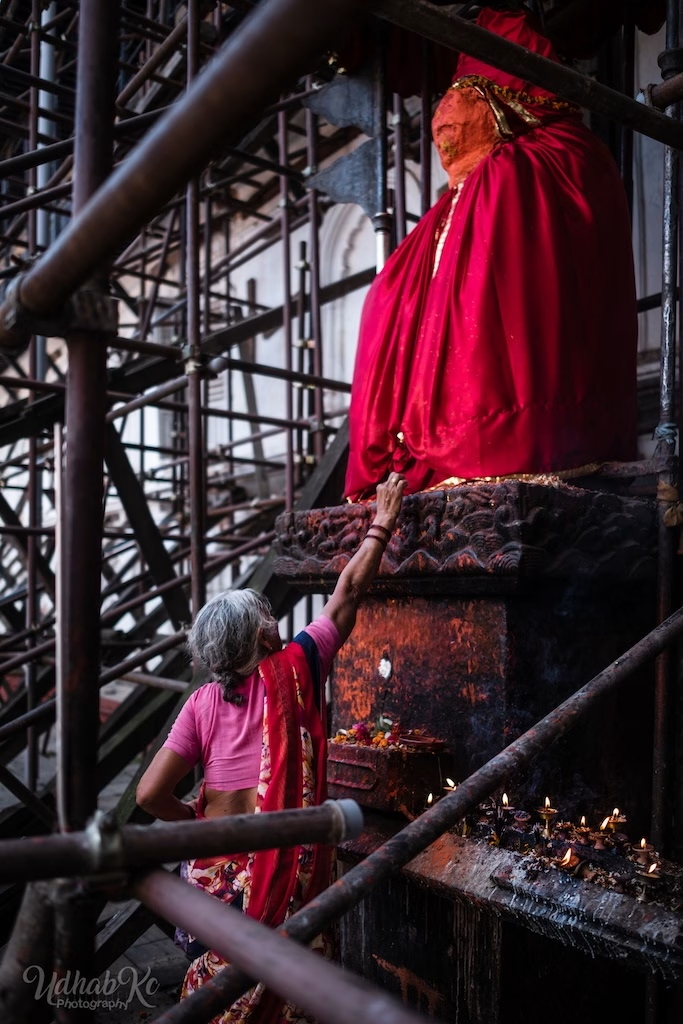
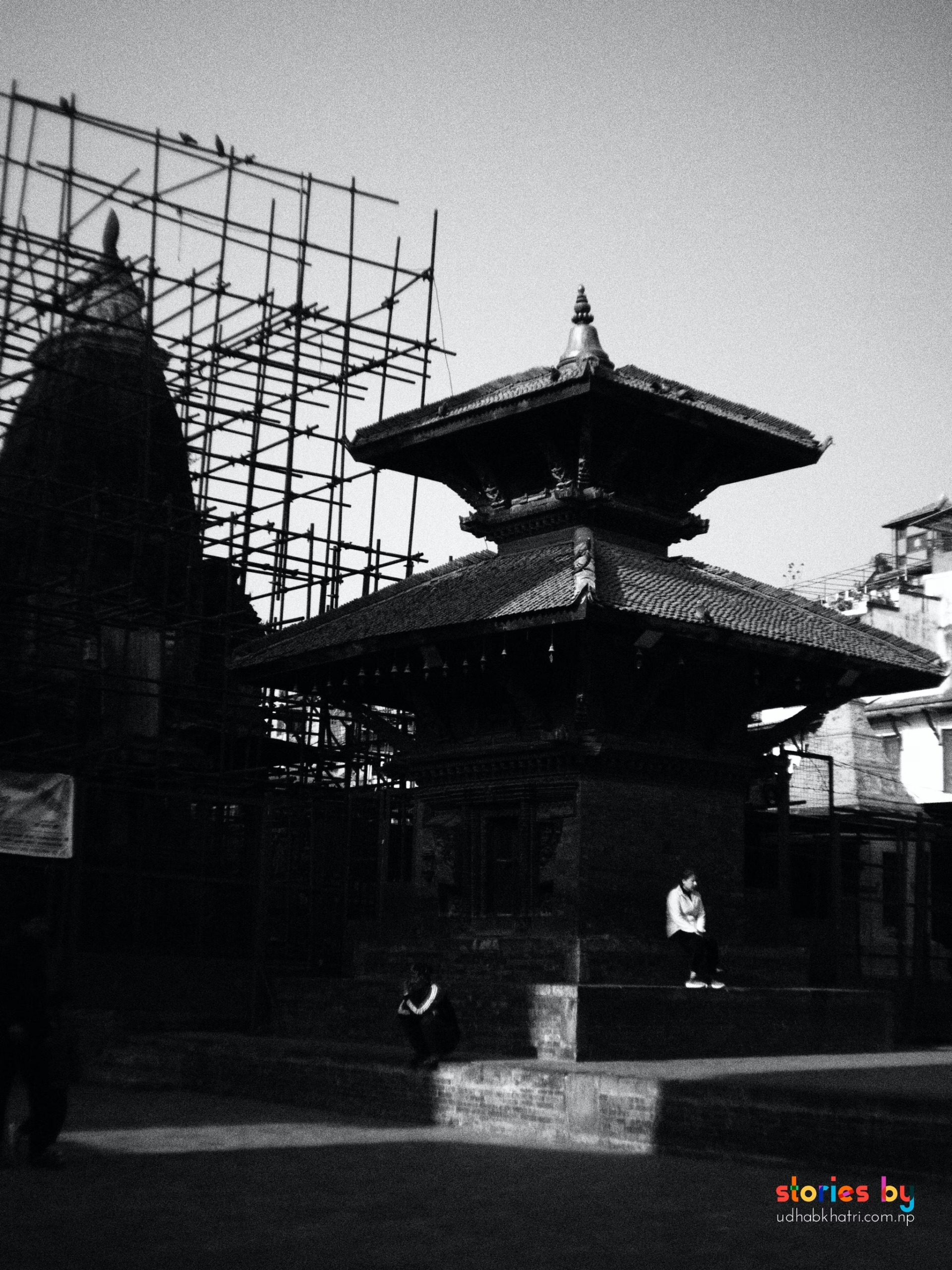
Instead of looking for visual harmony, look for juxtaposition. Find places where different eras, classes, or cultures collide in a single frame:
The Rules of Engagement: Dos and Don'ts
Do step back and widen your frame: If you see a beautiful ancient doorway, don't just shoot a tight crop of it. Back up. Let the messy street traffic, the parked motorbikes, and the overhead wires into the composition. Use those "distractions" as leading lines or framing boundaries.
Do embrace the "ugly" light: Postcards demand golden hour. Real life happens at 1:00 PM under harsh, unforgiving sunlight. Use those deep, brutal shadows to cut your frame into bold geometric shapes, hiding the clichés in darkness and highlighting the unexpected human element.
Don't treat people like exotic props: If you find yourself thinking, "Wow, that person looks so old and traditional, they will look great in my frame," pause. You are objectifying them for an aesthetic score. If you can’t capture their actual actions, routine, or human dignity within that space, skip the shot.
Don't over-curate your background: Stop waiting for the perfect, clean background where no modern elements exist. If a city bus drives through your frame and blocks a temple, see how the reflection in the bus window or the movement of the passengers creates an authentic dialogue with the historic background.
How to Implement It: First Thought, Wrong Thought
The most practical way to train your brain out of this trap is a simple mental exercise you can do while actively walking the street:
When you are walking and a scene instantly jumps out at you as a "perfect photo," do not take it yet.
Acknowledge that the reason your brain recognized it so fast is because you’ve seen a version of it a hundred times before. That is your "First Thought." Now, challenge yourself to find the second or third thought.
Change your height, take three steps to the left to intentionally bring a modern element into the frame, or wait for someone to walk by who completely disrupts the expected mood of the scene. By refusing the easy, pre-packaged shot, you force yourself to create an image that belongs entirely to your timing, your gut, and the unvarnished spirit of the street.