How I approach street photography before lifting the camera
Street photography, for me, begins long before the camera reaches my eye. It starts with slowing down — reading light, space, and rhythm — and deciding whether a moment is worth being photographed at all.
My approach is intentionally simple. I mostly work with a single focal length, almost always with prime lenses. My favourite is 28mm (full-frame equivalent) — wide enough to include context, close enough to stay honest. Limiting myself this way removes choice and sharpens attention. I don't think about zooming; I think about position.
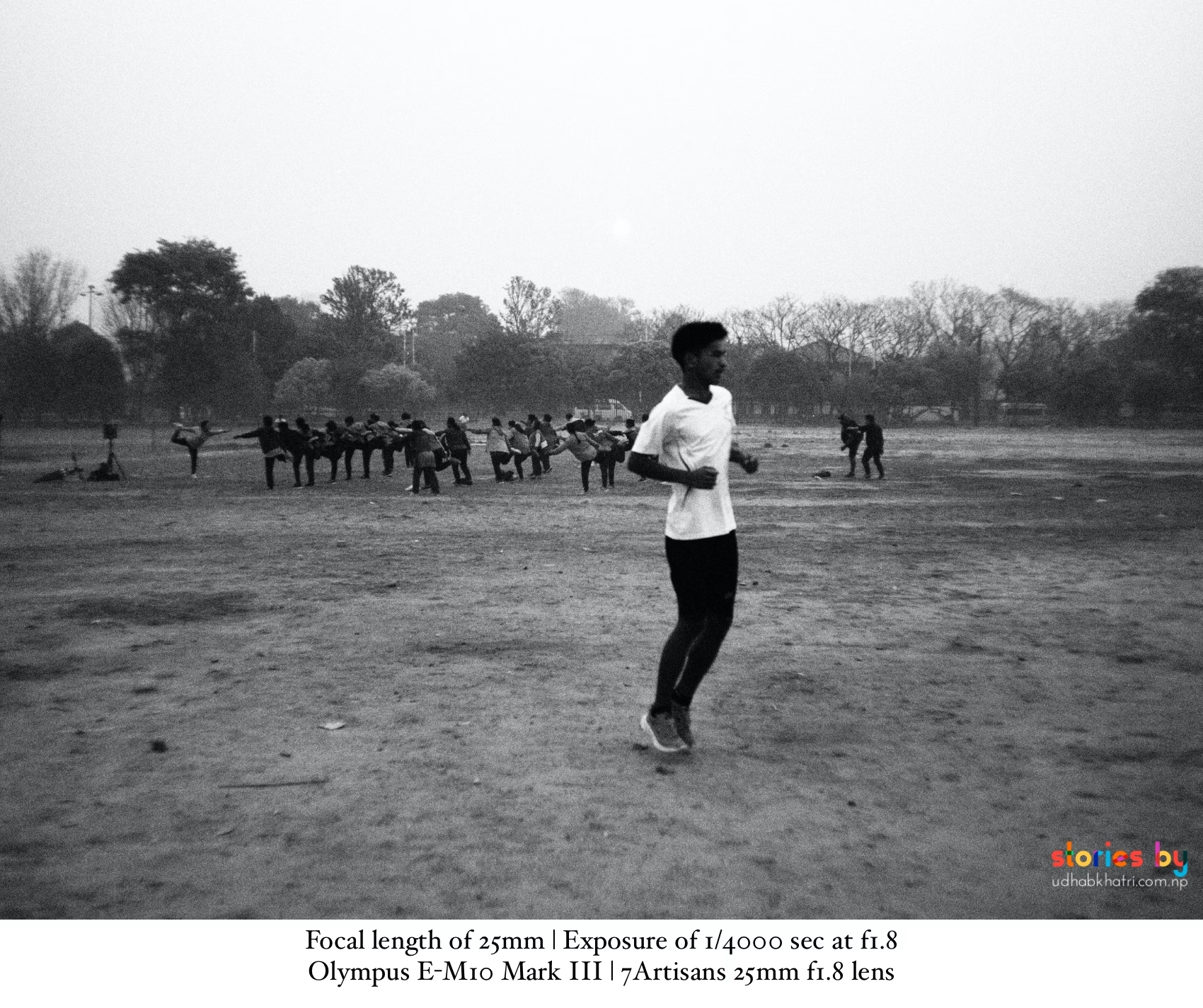
Most of my work is black and white. I'm drawn to contrast, to how light carves shapes out of darkness — strong highlights meeting deep shadows. Color often feels secondary. What matters more to me are natural expressions, body language, and quiet gestures.
Instead of chasing people, I choose the background first. I look for clean frames, strong light, and visual tension. Once the frame is ready, I wait. The subject completes the photograph when they enter the space at the right moment.
A large part of my process is what I call fishing. The background is set. The light is right. Now I wait for the right person to walk through it. This removes the anxiety of hunting — and produces frames that feel inevitable rather than grabbed.
Technically, I keep things simple. I mostly work in aperture priority mode, letting the camera handle the rest so I can stay focused on observation. On a typical photowalk, I make around 30–40 frames. Sometimes fewer than ten. If I don't see value in a potential image, I don't take it. I'd rather walk, wait, and observe than force a photograph.
When I'm not shooting, I'm still working. I'm scouting backgrounds, watching how light moves through streets, noticing crowd flow, and understanding when certain activities repeat. If nothing aligns, I don't push it — I store that knowledge for the next walk.
Before every serious photowalk, I take a free walk — no camera to my eye. I study light sources and their direction, observe how people move through space, and note patterns in behavior. I tend to avoid overly crowded scenes. My images often revolve around a single subject, separated by contrasty light and shadow.
That's why many of my photographs lean toward faceless or anonymous characters. The absence of identity allows the moment, the light, and the form to speak louder than the individual.
By the time I lift the camera, the decision is already made.
The frame exists. I'm simply waiting for the moment to complete it.