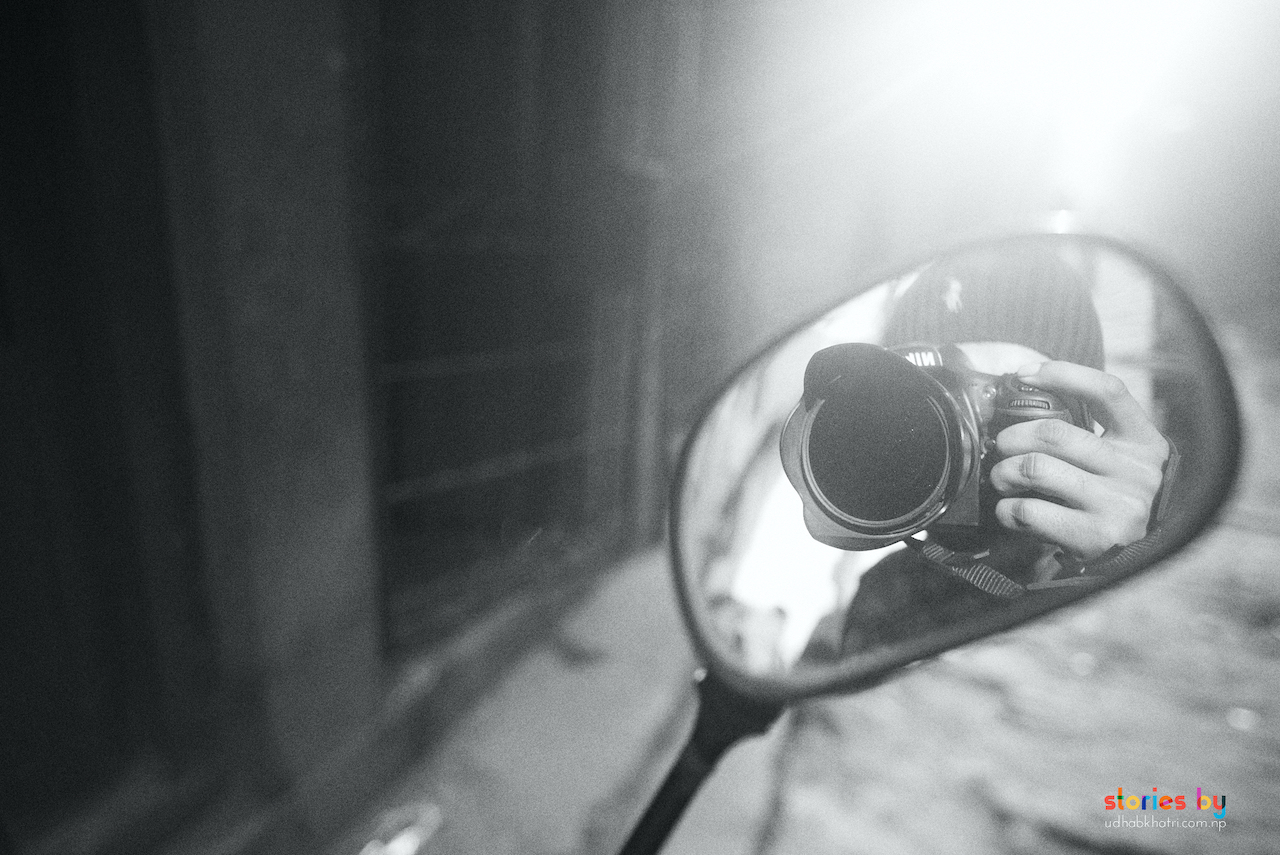
Behind the Work
Street photography, for me, is not about directing people.
It is about observing life as it unfolds.
I rarely approach strangers. I don’t stage scenes. I don’t set people up for a photograph.
My goal is simple: Capture the street as it is.
1. I Don’t Chase Subjects — I Read the Street
Instead of walking up to people, I scout.
I look for:
Often, I find a background first. Then I wait. I observe how people move through the space. I study their rhythm. I anticipate their direction.
The photograph happens when subject and environment align naturally. It is less about reaction and more about awareness.
2. Light First, Always
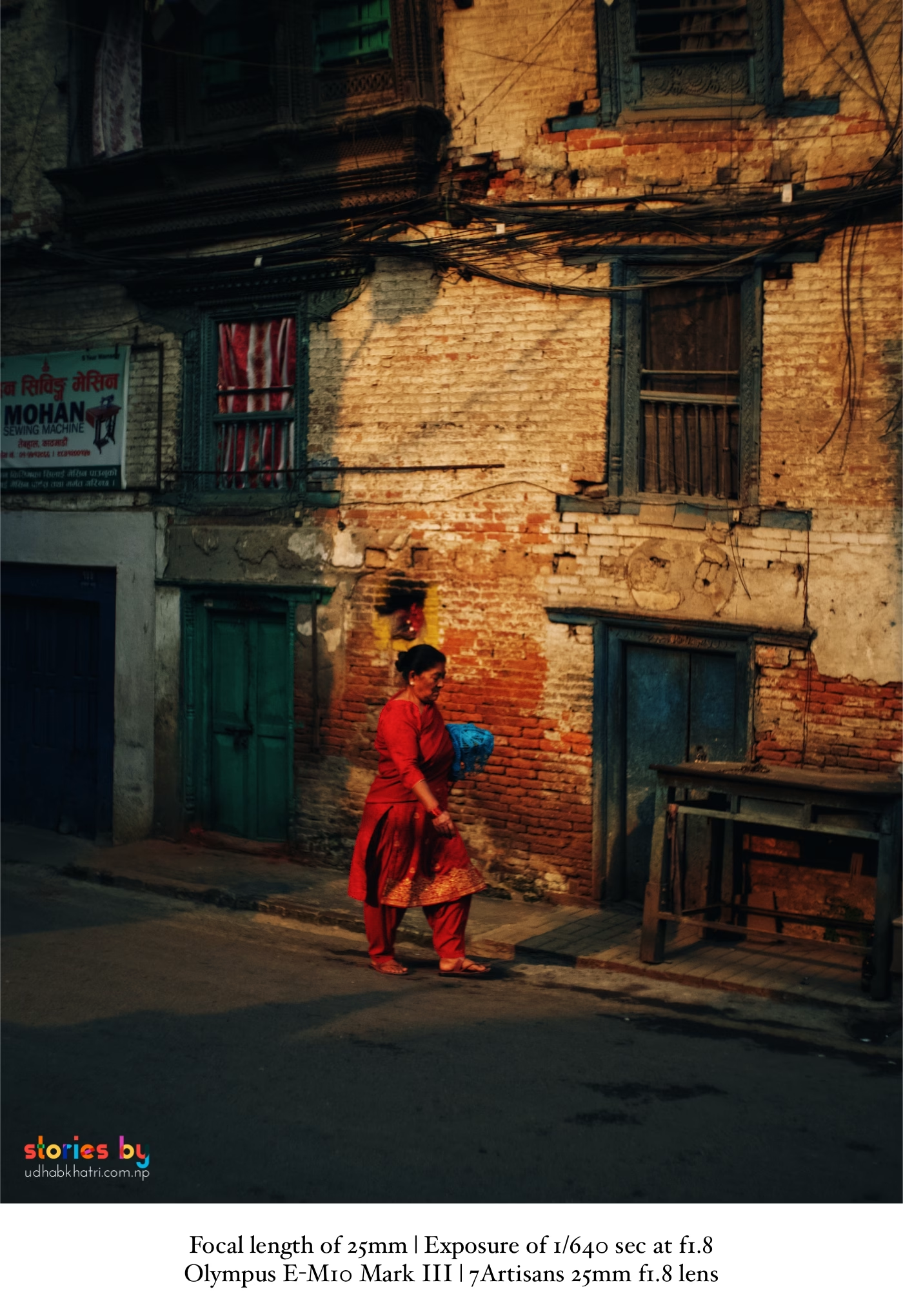
Light defines the street. After finding the right location, the next thing I read is the direction of light, its intensity, and shadow patterns.
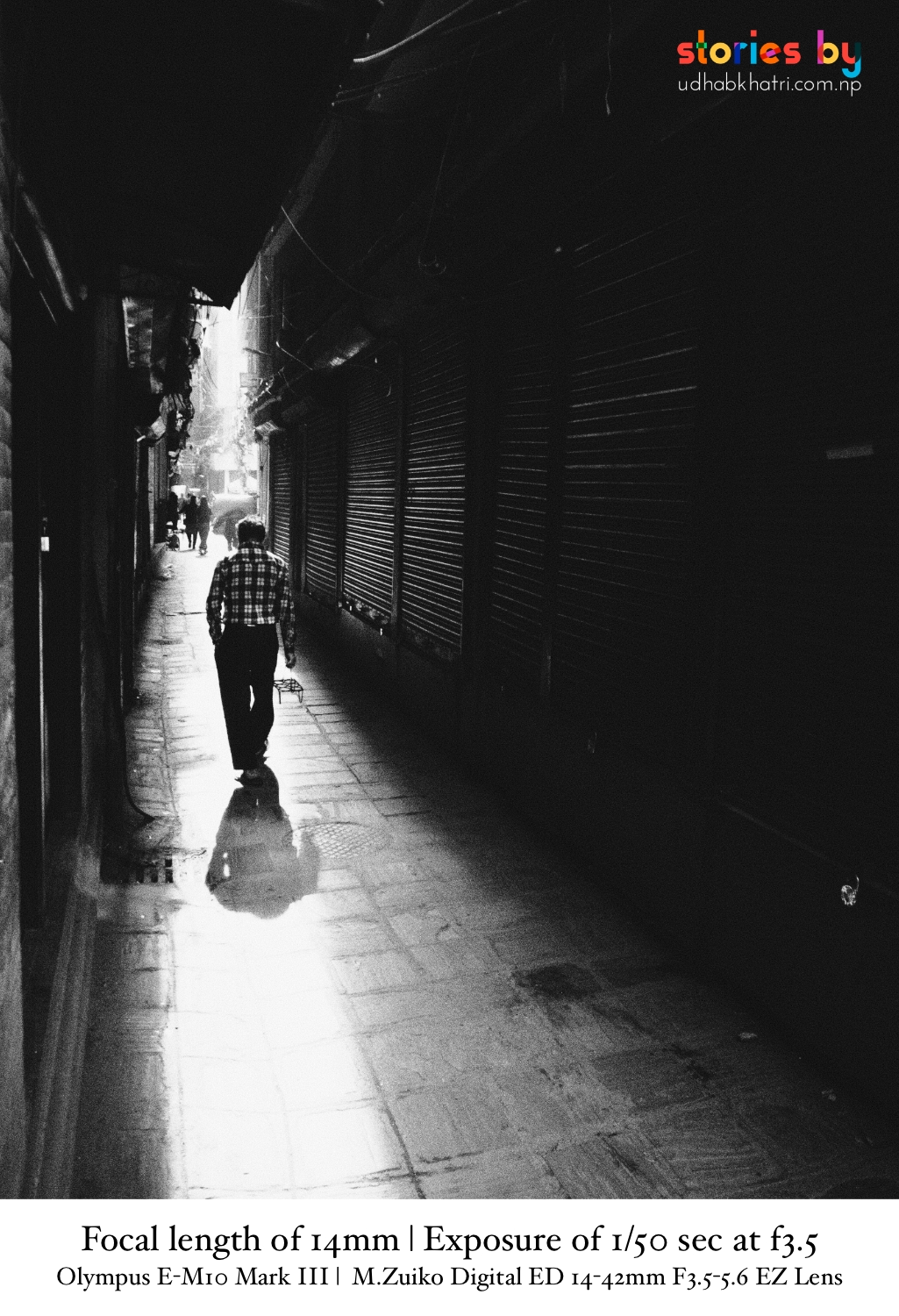
Morning & Evening: I look for directional light coming through alleyways. Sometimes backlit. Sometimes slicing across the street. This kind of light creates depth and separation. It turns ordinary moments into dramatic frames.
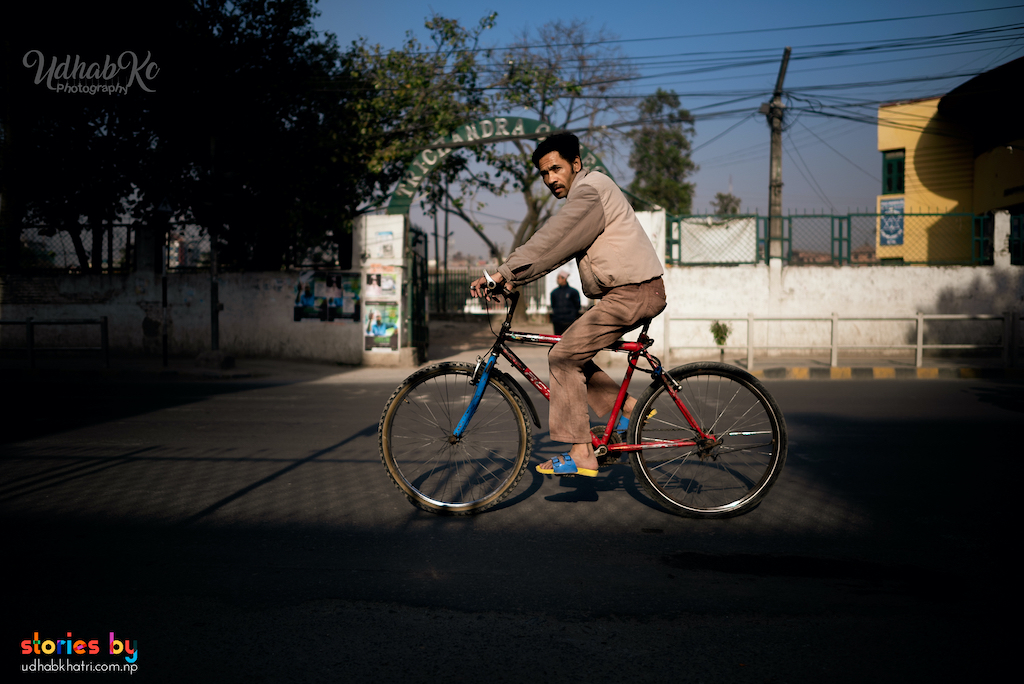
Harsh Midday Light: Most photographers avoid it. I embrace it. During harsh daylight, I choose backgrounds with strong shadows, wait for subjects to step into strong light, and let contrast define the image.
My signature images often have strong contrast, deep shadows, bright highlights, and visible grain. I don’t fight light. I work with it.
3. Editing Philosophy — Respect the Street
I believe street photography should reflect the street. I prefer minimal editing. I shoot RAW + JPEG/HEIF.
My JPEGs are already set to my preferred look — black and white, heavily influenced by Kodak Tri-X 400. Most of the time, I keep images close to straight out of camera (SOOC), do small tonal adjustments, and avoid heavy manipulation.
Street photography, for me, is documentation with emotion — not digital construction. My primary editing software is Pixelmator Pro. When editing on the go, I use Adobe Lightroom. Editing should enhance what was there — not change what happened.
4. Why I Prefer 28mm
My preferred focal length is 28mm. It is not too wide. It is not too tight. With 28mm, I don’t need to get uncomfortably close, I still capture the environment, and I can create environmental portraits naturally. It allows balance between subject and surroundings.
For tighter street portraits, 50mm and 85mm also work beautifully. I personally enjoy 85mm when I want cleaner frames, less clutter, strong compression, and intimate street portraits. Each focal length changes how you see. Choose one. Learn it deeply.
5. The Most Common Mistake in Street Photography
Most beginners focus on gear, camera settings, lens switching, and manual mode perfection. I made that mistake too.
Many instructors recommend full manual mode. There is nothing wrong with it — but on the street, hesitation kills moments. When you are changing settings, you are not observing.
On the street, you should focus on:
Your camera should feel invisible. Take one prime lens. Plan your photowalk. Understand your light beforehand. Put your camera on Aperture Priority mode. Then focus on seeing — not adjusting.
Final Thought
Street photography is not about control. It is about patience. About light. About timing. About respecting real life.