Why It Works #06 – Scale, Isolation, and the Child’s Boredom
In the middle of a powerful moment of collective devotion, like a Namaz prayer in Kathmandu, the atmosphere is heavy with discipline and focus. As a street photographer, your instinct might be to capture the scale of the prayer, but the real story often lies in the “human glitch”—the one person whose mind is elsewhere.
In this frame, the story is found in the contrast between the rigid, prayerful lines of the adults and the quiet, restless boredom of a small boy standing by his father. By focusing on his upward gaze, we capture the universal experience of childhood: being physically present in an adult world while your mind wanders toward the sky.
This is the sixth post in my “Why It Works” series, where I break down street photographs to explain why they connect.
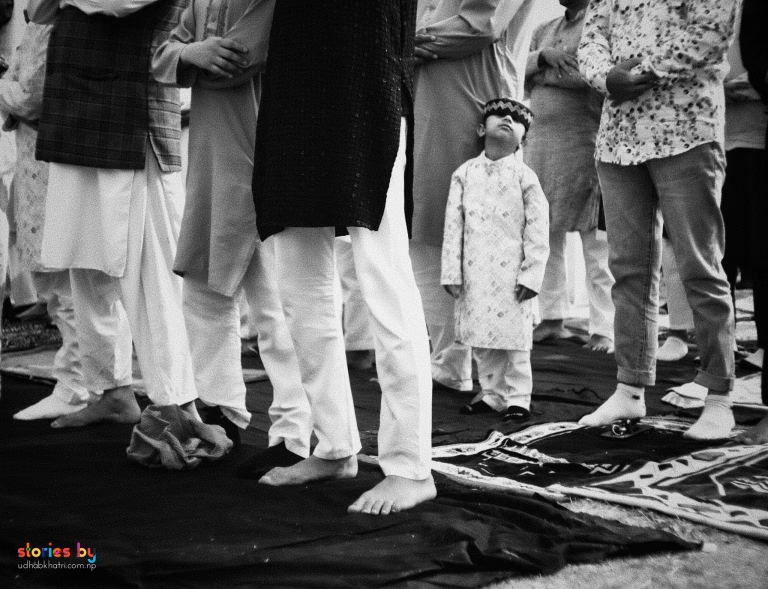
Image Breakdown
Composition (Scale and Perspective): By lowering the camera to the boy’s eye level, the praying adults become a wall of repetition. This emphasizes his small scale and highlights how he is physically “hemmed in” by the ceremony, making him the clear center of the story.
Isolation in a Crowded Prayer: While the adults are shoulder-to-shoulder in deep concentration, the boy is the only one breaking the pattern. His face is the only one visible, which instantly draws the student’s eye to his expression of bored curiosity.
The “Breaking” Gesture: The rigid vertical lines of the men in prayer create a sense of order. The boy’s tilted head and skyward gaze break those lines completely, acting as a visual “interruption” that gives the image its energy.
Black and White Contrast: The monochrome palette strips away the colors of the prayer rugs and clothing, forcing us to focus on the textures and the light hitting the boy’s face. It highlights the innocence of his white outfit against the darker tones of the adults.
Rhythm and Repetition: The repeating pattern of feet and legs creates a visual “beat” across the bottom of the frame. In photography, when you establish a strong rhythm and then place a subject that disrupts it, you create an automatic focal point.
The Decisive Moment: The shot works because it was taken at the exact second the boy’s patience wavered. Capturing that upward look during a moment when everyone else is looking down or forward creates a powerful narrative of “innocence vs. tradition.”
Core Insight (Why It Works): The image works because of Emotional Contrast. By placing a bored, curious child in the middle of a disciplined religious ceremony, we create a story that is both respectful of the event and deeply relatable on a human level.
When you are photographing a formal event or a large ceremony, don’t just look for the main action. Look for the person who is reacting differently—the child who is bored, the person distracted by a bird, or someone lost in their own thoughts. It’s these “cracks” in the formality that often hold the most honest street stories. Have you ever found a great photo by looking away from the main event? Let’s talk about finding the “hidden” story in the comments!
Watch the streets around you — the next moment worth photographing is always already happening.
Follow the series here for more insights into street photography in Nepal.