ONE FRAME STORY
Building Complete Narratives Inside a Single Exposure
In street photography, the goal is not simply to capture a person or an event. The goal is to create a complete narrative within one frame.
When we first walk into the street with a camera, we tend to react to what stands out — a face, a gesture, an expression. Over time, we begin to understand that the strength of an image comes from how everything inside the frame works together.
A one frame story is not about complexity.
It is about clarity.
The viewer should immediately understand:
Where to look
What matters
Why the moment feels intentional
This clarity is built through structure.
Visual Hierarchy: Directing Attention With Intention
Every strong image contains hierarchy.
Hierarchy answers a simple question:
What is the anchor of the image?
To establish hierarchy:
Use contrast (light vs shadow)
Use positioning (center vs edge)
Use isolation (space around subject)
Use framing elements
Control background distractions
If everything demands attention, nothing stands out.
A one frame story succeeds when the subject is unmistakable — even inside a busy environment.
Frame Within Frame: Containing the Narrative
A frame within frame technique strengthens structure by placing the subject inside natural boundaries.
Look for:
Doorways
Windows
Arches
Reflections
Foreground silhouettes
Shadow edges
This technique:
Separates subject from background
Adds depth
Reduces visual noise
Creates intention
Instead of photographing someone in open space, shift your position until the environment encloses them naturally.
Often, the street already provides the frame. It only requires awareness.


Organizing Street Chaos
The street is rarely minimal.
It contains:
Signage
Movement
Vehicles
Textures
Layers of activity
The skill lies in organizing street chaos rather than avoiding it.
Ways to create order:
Change your angle to eliminate overlap
Lower or raise perspective
Wait for cleaner spacing between subjects
Use shadow to simplify background
Crop distractions through positioning
Chaos becomes powerful when structured.
Urban Geometry Composition
Geometry provides visual stability.
Rectangles, triangles, diagonals, curves and lines naturally guide the eye.
Use geometry to:
Divide space
Lead toward subject
Create tension
Frame action
Balance weight within the image
Straight verticals create calm.
Diagonals introduce energy.
Curves soften rigidity.
Instead of reacting only to people, begin noticing shapes first. Then allow a human presence to activate the structure.


Street Layering Method
Layering builds dimensional storytelling.
A layered image often includes:
Foreground element
Midground subject
Background context
Layers provide:
Depth
Context
Narrative complexity
Visual richness
For example:
A blurred foreground silhouette, a subject walking through light, and architectural detail behind them create spatial separation.
Depth makes a photograph feel immersive rather than flat.
The key is separation — through space, light or contrast.
Light as Framing Tool
Light does more than illuminate.
It:
Defines boundaries
Creates silhouettes
Carves shapes
Separates layers
Directs attention
Observe:
Direction of light
Hard or soft edges
Highlight placement
Shadow geometry
Sometimes the brightest area becomes the stage.
Sometimes shadow isolates the subject more effectively than brightness.
Light can act as an invisible frame.
Before pressing the shutter, ask:
Is light strengthening the structure?
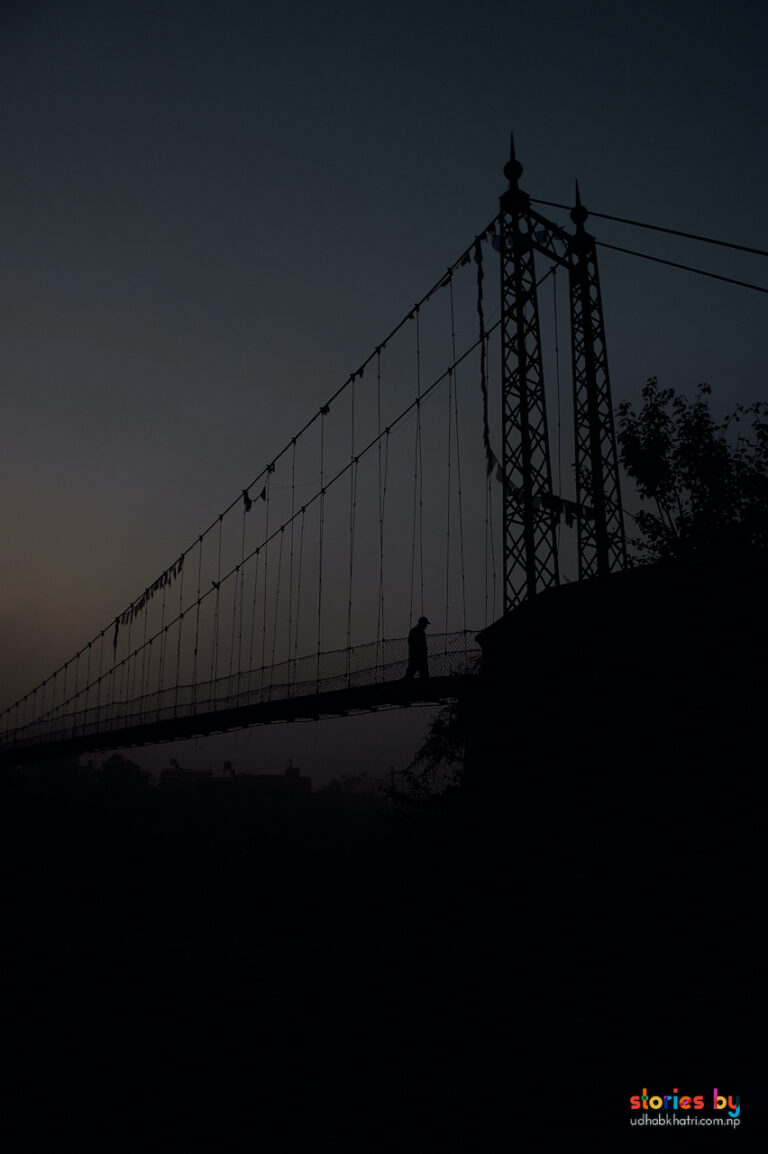

Scene Construction Approach
Street photography is observational, but positioning is deliberate.
Scene construction approach means:
You build the frame first.
Then allow life to enter it.
Steps:
Identify strong background or light
Adjust composition until structure feels balanced
Wait for the right human element
Capture when alignment feels natural
This is not staging.
It is anticipation.
The environment becomes your canvas. The subject completes the narrative.
Bringing It Together
A one frame story works when:
Structure supports subject.
Light supports structure.
Geometry supports balance.
Layers support depth.
Timing supports meaning.
Nothing inside the frame should feel accidental.
Strong street photography is rarely about luck.
It is about awareness, positioning and restraint.
One frame.
One story.
Complete.