Why It Works #04 – Presence and Gesture of a Street Dog
Sometimes the smallest, quietest moments tell the strongest stories.
In this frame, a street dog becomes the subject, showing presence, character, and emotion on Kathmandu’s streets.
This is the fourth post in my “Why It Works” series, breaking down street photographs to explain why they connect.
In street photography, we often feel like we have to chase the action. But sometimes, the strongest story is found in the contrast between movement and stillness. By stripping away the color and focusing on Black and White, we can see the “bones” of this scene—the sharp texture of the market crates and the quiet, sleeping form of the dog. It’s a reminder that even in a city as busy as Kathmandu, there are moments of absolute calm if you know how to look for them.
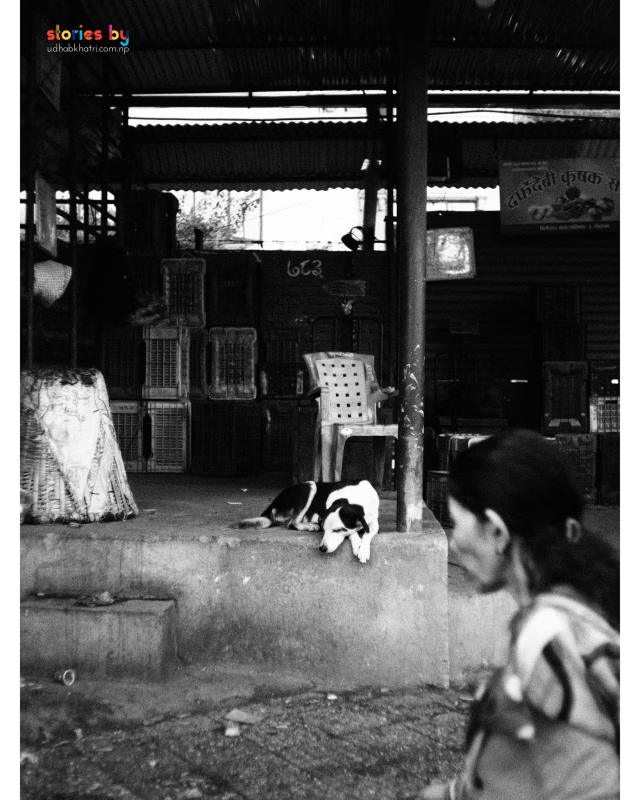
Image Breakdown
Composition
The composition is centered around the sleeping dog, placed slightly above the middle of the frame on the raised platform. This gives it quiet importance without making it feel staged. The human figure is pushed to the edge and partially cropped, reinforcing that the dog—not the person—is the subject.
Framing
The environment acts as a natural frame: the platform edge, pillars, roof, and stacked crates create a contained visual space. The blurred passerby in the foreground frames the scene from the right, adding depth and placing the viewer inside the street rather than outside it.
Contrast (Tonal & Conceptual)
Black-and-white enhances tonal contrast between the light-colored dog and the darker surroundings, making the subject readable even in a busy background. Conceptually, there’s contrast between stillness (sleeping dog) and movement (walking person), which gives the image tension without drama.
Lines and Shapes
Strong horizontal lines from the platform and roof stabilize the image, while vertical pillars divide the space and prevent it from feeling flat. The rectangular shapes of crates and chairs add structure, against which the organic shape of the dog feels softer and more vulnerable.
Scale and Depth
The dog appears small within the larger built environment, emphasizing modesty and ordinariness—very street-photography driven. Foreground blur, mid-ground subject, and background detail create clear depth layers, helping the eye move naturally through the frame.
Gesture and Moment
The dog’s relaxed posture and the passerby’s motion suggest an unremarkable, everyday moment. Nothing is performative. This “nothing happening” quality is exactly what gives the image its honesty and quiet emotional pull.
Why it works overall
All these elements work together to turn an overlooked street moment into a meaningful image—using restraint, layering, and observation rather than spectacle.
Try looking for a “still” subject in a “busy” place. Don’t worry about the colors; just look for interesting shapes and textures.
Stillness can speak louder than motion. Notice the quiet contrasts, the layering, the simple gestures. Let ordinary moments reveal themselves.
This is Why It Works.
When you convert a photo to Black and White, does it change the feeling of the story for you? Let’s talk about why you choose monochrome for certain moments in the comments!
This is the fourth post in the “Why It Works” series.
Observe life around you — even a street dog can become the center of a story.
Follow the series here for more insights into street photography in Nepal.