Why It Works #02 – The Art of the Frame: Creating Focus in Busy Kathmandu Streets
Street photography becomes powerful when layers guide the eye naturally.
In this frame, a young boy sits elevated in front of a shrine while devotees surround him in the foreground. The scene feels busy, yet the subject remains clear.
This is the second post in the Why It Works series, breaking down how composition and layering shape visual storytelling.
One of the hardest things for a new street photographer is dealing with “clutter.” Kathmandu is full of life, but if you try to capture everything, you often end up with a messy photo. In this lesson, we’re looking at how to use the environment itself to “frame” your subject. By creating a frame within a frame, you can tell your audience exactly where to look, even in the middle of a busy street.
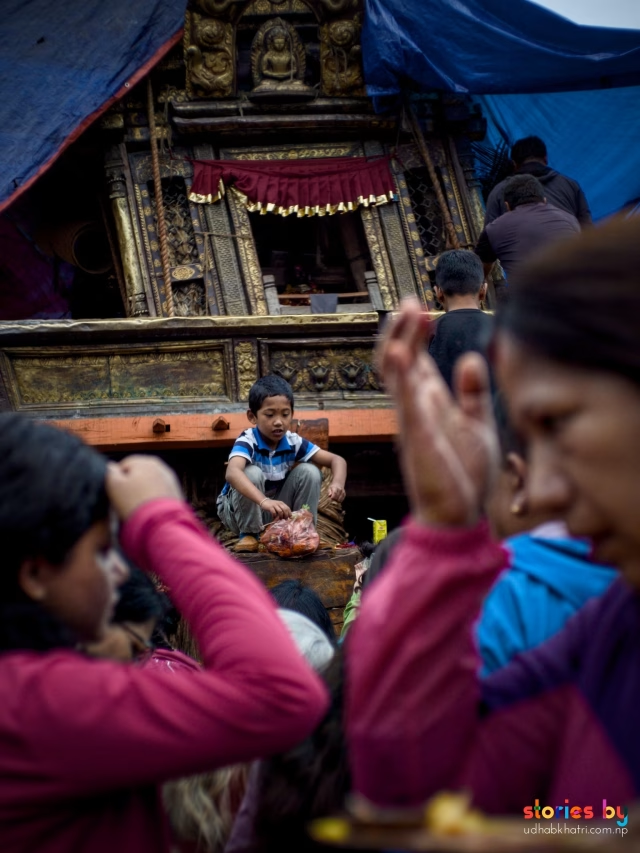
Image Breakdown
-
1. Clear Visual Hierarchy
The boy sits slightly elevated above the crowd.
Height immediately gives importance. Even in a crowded environment, elevation separates him from the rest.
2. Foreground Framing
Blurred hands and heads in the foreground create a natural frame.
They do not compete with the subject but instead guide the eye inward.
This framing effect strengthens depth without feeling forced.
3. Layered Depth
The composition has three distinct planes:
Foreground – blurred devotees
Midground – the boy
Background – the shrine structureThis layering creates dimensional strength and prevents flatness.
4. Repetition of Gesture
Raised hands in prayer appear on both sides of the frame.
This repetition creates rhythm and visual balance.
It also reinforces the cultural context of the moment.
5. Environmental Context
The shrine behind the boy is detailed but not overpowering.
It adds meaning and location without stealing focus.
Context supports the story rather than dominating it.
6. Natural Expression
The boy is engaged in his own activity, not reacting to the camera.
This unposed quality strengthens authenticity.
Candid focus always feels more believable.
7. Controlled Chaos
Crowds usually create distraction.
Here, shallow depth of field and composition control keep the chaos structured.
The frame feels alive but organized.
Core Insight – Why It Works
The image works because layered composition, elevation, and repetition of gesture create clarity within a busy environment.
The subject stands out without isolating him from context.
Next time you’re out, don’t just point at a person. Look for a window, an archway, or even two parked bikes that you can shoot between. Try to find a “natural frame” and see how it changes the focus of your photo.
When photographing crowds, do not fight the chaos. Use it to frame your subject.Look for layers, repetition, and elevation — they naturally organize complexity.
This is Why It Works.
Have you ever tried framing your subject this way? Share your thoughts below!
This is the second post in the “Why It Works” series.
Watch the streets around you — the next moment worth photographing is always already happening.
Follow the series here for more insights into street photography in Nepal.